
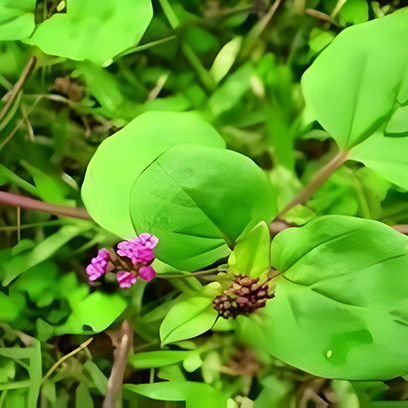
Introduction
Urological disorders are common among men, particularly with advancing age. Conditions such as benign prostatic hyperplasia, recurrent urinary tract infections, urinary retention, and kidney stone disease can lead to significant morbidity. Chronic inflammation, oxidative stress, and impaired urinary drainage are major contributors to disease progression.
In Ayurveda, diseases affecting the urinary system are classified under Mutrakrichra (dysuria), Mutraghata (urinary obstruction), and Ashmari (urolithiasis). Punarnava has been traditionally prescribed for these conditions due to its ability to improve urinary flow, reduce edema, and support renal function.1
Ayurvedic perspective
Punarnava is described as:
- Tikta and Kashaya Rasa (bitter and astringent taste)
- Laghu and Ruksha Guna (light and dry qualities)
- Ushna Virya (hot potency)
- Madhura Vipaka
- Mutrala (diuretic)
- Shothahara (anti-inflammatory)
- Rasayana (rejuvenative)
These properties make it particularly useful in urinary retention, edema, renal disorders, and inflammatory conditions of the urinary tract.
Phytochemical constituents
The principal bioactive compounds include:
- Punarnavine
- Boeravinones (A–F)
- Rotenoids
- Flavonoids
- Lignans
- Alkaloids
- Phenolic compounds
These phytochemicals contribute to the herb’s nephroprotective and anti-inflammatory activities.
Mechanisms in urological health
Diuretic activity:
Punarnava is one of Ayurveda’s most important diuretic herbs. Experimental studies demonstrate increased urine output and enhanced elimination of metabolic waste products, helping relieve urinary congestion and fluid retention.
Anti-inflammatory effects:
Chronic inflammation contributes to LUTS and prostate enlargement. Punarnava suppresses inflammatory mediators and reduces tissue edema, thereby improving urinary function.2
Nephroprotective action:
Oxidative stress and inflammation are major causes of renal injury. Punarnava exhibits nephroprotective effects by reducing oxidative damage, preserving renal architecture, and improving kidney function markers.
Anti-urolithiatic potential:
Research suggests that Boerhavia diffusa inhibits crystal aggregation and supports the prevention of urinary stone formation. It may also facilitate the passage of small calculi through its diuretic effects.
Antimicrobial activity:
Extracts of Punarnava have demonstrated antimicrobial activity against several urinary pathogens, supporting its traditional use in recurrent urinary tract infections.
Role in male urological disorders
Benign prostatic hyperplasia (BPH):
Although direct clinical evidence remains limited, Punarnava’s anti-inflammatory and diuretic actions may help alleviate urinary frequency, nocturia, and incomplete bladder emptying associated with BPH.
Lower urinary tract symptoms (LUTS):
Improved urinary flow and reduction in inflammation contribute to symptomatic relief in men with LUTS.
Urolithiasis:
Punarnava is frequently included in Ayurvedic formulations for Ashmari (urinary stones) due to its lithotriptic and diuretic properties.
Chronic kidney disorders:
Its nephroprotective and antioxidant effects support renal health and may help slow the progression of kidney dysfunction.
Clinical applications
Punarnava is commonly utilized in:
- Benign prostatic hyperplasia
- Lower urinary tract symptoms
- Urolithiasis
- Recurrent urinary tract infections
- Renal dysfunction
- Edema associated with urinary disorders
- Urinary retention and dysuria
Conclusion
Punarnava (Boerhavia diffusa) is an important Ayurvedic herb with significant applications in male urological health. Its diuretic, anti-inflammatory, nephroprotective, antimicrobial, and anti-urolithiatic properties support its traditional use in disorders of the urinary tract and kidneys. Emerging pharmacological evidence validates its role as a Mutrala Rasayana, making it a valuable component of integrative approaches to male urological disorders.
Reference:
- Das S, Singh PK, Ameeruddin S, et al. Ethnomedicinal values of Boerhaavia diffusa L. as a panacea against multiple human ailments: a state of art review. Front Chem. 2023;11:1297300. Published 2023 Nov 14. doi:10.3389/fchem.2023.1297300 https://pmc.ncbi.nlm.nih.gov/articles/PMC10682173/
- Mishra S, Aeri V, Gaur PK, Jachak SM. Phytochemical, therapeutic, and ethnopharmacological overview for a traditionally important herb: Boerhavia diffusa Linn. Biomed Res Int. 2014;2014:808302. doi:10.1155/2014/808302 https://pmc.ncbi.nlm.nih.gov/articles/PMC4053255/