
Introduction
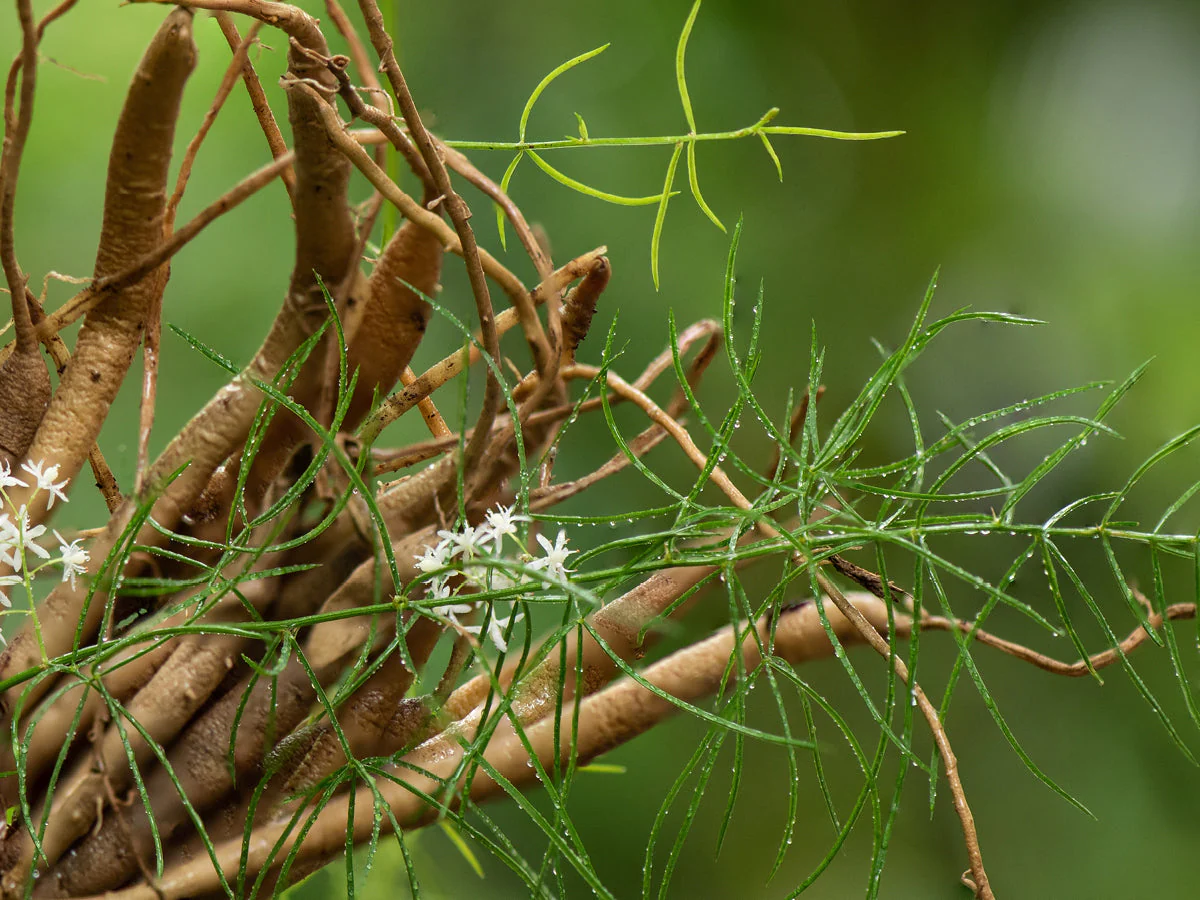
Shatavari (Asparagus racemosus Willd) is a perennial climbing herb belonging to the Asparagaceae family, widely used in Ayurveda as a Rasayana and reproductive tonic.1 The root is the primary medicinal part and is traditionally indicated for female reproductive health, particularly for postpartum recovery and lactation support. Due to its phytoestrogenic, galactagogue, immunomodulatory, and adaptogenic properties, Shatavari root extract has gained scientific interest as a natural agent for enhancing breast milk production and improving maternal health after childbirth.
Phytochemical composition relevant to lactation
Major bioactive constituents:
- Steroidal saponins (shatavarins I–IV): Associated with lactogenic and hormonal modulation effects
- Isoflavonoids: Exhibit phytoestrogen-like activity supporting prolactin regulation
- Alkaloids: Contribute to neuroendocrine modulation
- Polysaccharides: Immunomodulatory and nutritive effects
- Flavonoids and antioxidants: Reduce oxidative stress in postpartum physiology
Biological relevance:
These constituents act synergistically to modulate hormonal balance, support mammary gland development, and enhance milk secretion through neuroendocrine and metabolic pathways.
Mechanisms of action in lactation enhancement
Prolactin modulation:
Shatavari root extract is suggested to stimulate prolactin secretion, a key hormone responsible for milk synthesis in mammary alveolar cells, thereby supporting lactogenesis and galactopoiesis.2
Estrogenic and phytohormonal effects:
Steroidal saponins exert mild phytoestrogenic activity, which may enhance mammary ductal growth and sensitivity of breast tissue to lactogenic hormones.
Neuroendocrine regulation:
The extract influences hypothalamic–pituitary axis function, supporting hormonal balance during the postpartum period and reducing stress-induced lactation suppression.
Antioxidant and cytoprotective action:
Flavonoids and saponins reduce oxidative stress in mammary tissue, improving cellular function and supporting sustained milk production.
Role in postpartum maternal health
Lactation support:
- Enhances breast milk volume and quality
- Supports early initiation and maintenance of lactation
- Improves breastfeeding success rates in lactating mothers
Uterine and reproductive recovery:
- Promotes uterine involution
- Supports restoration of hormonal balance after delivery
- Reduces postpartum fatigue and weakness
Immunomodulatory effects:
- Enhances maternal immune response
- Provides protection against postpartum infections
- Supports neonatal immunity indirectly through improved breast milk composition
Nutritional and metabolic benefits
Energy restoration:
Shatavari provides nutritive support through polysaccharides and bioactive compounds that improve postpartum energy levels and reduce exhaustion.
Hydration and tissue nourishment:
Mucilaginous and nutritive components help restore tissue hydration and improve overall maternal physiological recovery.
Clinical and experimental evidence
Preclinical studies suggest that Asparagus racemosus root extract increases milk production by enhancing prolactin levels and mammary gland activity. Experimental models demonstrate improved lactogenic response and hormonal stabilization in lactating subjects. Limited clinical observations indicate improved milk output and maternal well-being; however, large-scale randomized controlled trials remain limited.
Methods of administration
Oral supplementation:
- Shatavari root powder or standardized extract in capsule or syrup form
- Commonly administered with milk to enhance absorption and lactogenic effect
Ayurvedic formulations:
- Included in classical preparations such as Shatavari ghrita and lactation tonics
- Combined with other galactagogues for synergistic effects
Dietary integration:
- Used as functional food ingredient in postpartum diets
- Often consumed with warm milk or herbal decoctions
Safety profile and tolerability
Shatavari root extract is generally considered safe when used at recommended doses. However:
- Mild gastrointestinal discomfort may occur in sensitive individuals
- Caution is advised in estrogen-sensitive conditions due to phytoestrogenic activity
- Use should be guided during thyroid disorders due to potential hormonal interactions
Conclusion
Shatavari (Asparagus racemosus Willd) root extract demonstrates significant potential as a natural galactagogue in postpartum lactation management. Its pharmacological actions are mediated through prolactin modulation, phytoestrogenic activity, antioxidant protection, and neuroendocrine regulation. Evidence supports its traditional use for enhancing breast milk production, improving maternal recovery, and supporting postpartum health. Nevertheless, well-designed clinical trials are required to establish standardized dosing, long-term safety, and definitive efficacy in diverse populations.
References:
-
- Alok S, Jain SK, Verma A, Kumar M, Mahor A, Sabharwal M. Plant profile, phytochemistry and pharmacology of Asparagus racemosus (Shatavari): A review. Asian Pac J Trop Dis. 2013;3(3):242-251. doi:10.1016/S2222-1808(13)60049-3. https://pmc.ncbi.nlm.nih.gov/articles/PMC4027291/
- Mote DB, Mali S, Maurya M, Bhandari S. Galactagogue Potential of Shatavari (Asparagus racemosus) Extract: A Single Arm Pre–Post Trial in Early Postpartum Mothers. Journal of Ayurveda and Integrated Medical Sciences. VOL. 11 NO. 1 (2026): JANUARY. DOI: 10.21760/jaims.11.1.8. https://jaims.in/jaims/article/view/5874