
Introduction
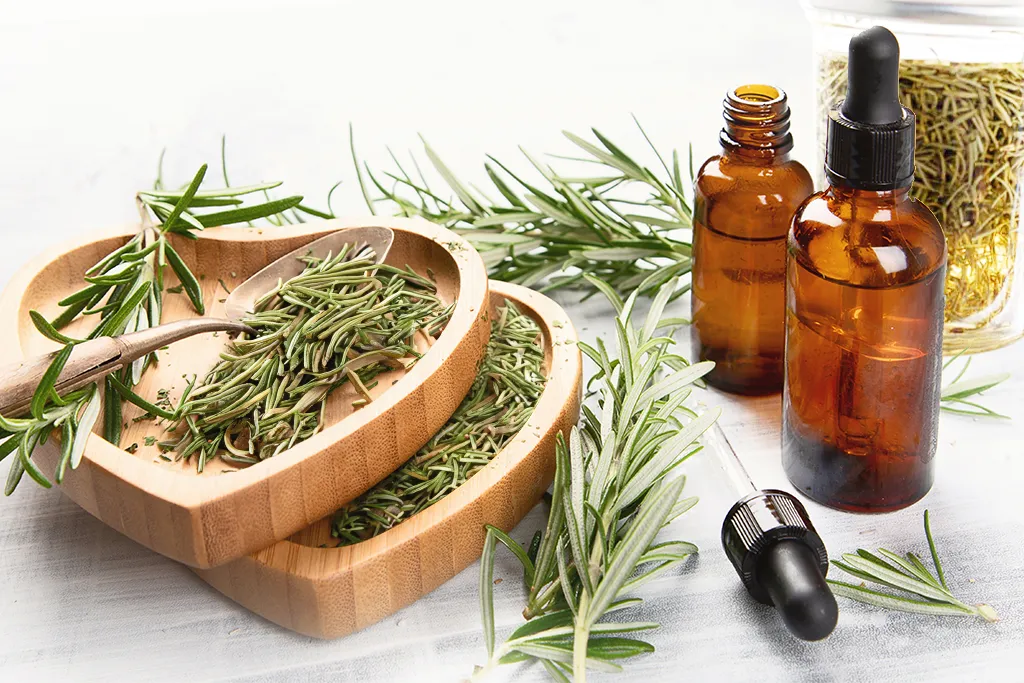
Rosemary essential oil, derived from Salvia rosmarinus (formerly Rosmarinus officinalis), is widely recognized for its traditional and emerging role in hair and scalp health.1 It contains bioactive constituents such as 1,8-cineole, α-pinene, camphor, and rosmarinic acid, which exhibit antioxidant, anti-inflammatory, antimicrobial, and microcirculation-enhancing properties. These mechanisms contribute to its potential therapeutic role in hair growth promotion and alopecia management.
Phytochemical composition relevant to hair growth
Major active constituents:
- 1,8-cineole: Improves scalp microcirculation and follicular oxygenation
- α-pinene: Anti-inflammatory and antimicrobial effects on scalp microbiota
- Camphor: Enhances local blood flow and follicular stimulation
- Rosmarinic acid: Antioxidant protection against follicular oxidative stress
Biological relevance:
These compounds act synergistically on hair follicles by improving vascular supply, reducing inflammatory damage, and protecting dermal papilla cells from oxidative injury.
Mechanisms of action in hair growth
Improvement of scalp microcirculation:
Rosemary essential oil promotes vasodilation, enhancing blood flow to hair follicles. This improves nutrient and oxygen delivery, which is essential for anagen phase maintenance.
Inhibition of 5-alpha reductase activity:
Experimental evidence suggests potential modulation of dihydrotestosterone (DHT) formation, a key hormone involved in androgenetic alopecia progression.
Antioxidant protection of hair follicles:
The oil reduces reactive oxygen species and lipid peroxidation, protecting dermal papilla cells and prolonging follicular survival.
Anti-inflammatory effects on scalp:
It downregulates inflammatory mediators such as TNF-α and IL-6, reducing follicular inflammation associated with hair thinning conditions.
Antimicrobial activity:
Rosemary oil helps control scalp microbial imbalance, including dandruff-associated organisms, thereby improving follicular health.
Role in hair and scalp disorders
Androgenetic alopecia:
- May support hair regrowth by improving follicular blood flow
- Potential DHT-modulating activity
- Helps prolong anagen (growth) phase
Telogen effluvium:
- Reduces stress-induced oxidative damage to follicles
- Supports recovery of normal hair growth cycle
Alopecia areata (adjunct role):
- Anti-inflammatory effects may help reduce immune-mediated follicular damage
- Supports scalp environment restoration
Dandruff and seborrheic dermatitis:
- Antimicrobial and antifungal properties help control scalp flaking
- Reduces itching and inflammation
Clinical and experimental evidence
Preclinical studies demonstrate increased hair follicle proliferation, improved dermal papilla cell activity, and enhanced hair shaft elongation following rosemary oil exposure. Some comparative clinical studies suggest that rosemary essential oil may show similar efficacy to Minoxidil in androgenetic alopecia over extended use, with fewer reports of scalp irritation.2 However, large-scale randomized controlled trials remain limited. Moreover, study has also shown that rosemary-lavender and rosemary-castor oils significantly provide beneficial effects in hair growth parameters.2
Methods of application
Topical scalp application:
- Diluted rosemary essential oil in carrier oils (e.g., coconut, jojoba, or olive oil)
- Applied with gentle scalp massage to enhance absorption and circulation3
Aromatherapeutic adjunct use:
- Inhalation may reduce stress-related hair shedding via neuroendocrine modulation
Shampoo and hair formulations:
- Incorporated into shampoos, conditioners, and scalp serums for routine use
Safety profile and tolerability
Rosemary essential oil is generally safe when properly diluted; however:
- Undiluted use may cause scalp irritation or contact dermatitis
- High concentrations may lead to neurotoxic effects due to camphor content
- Caution is advised in pregnant individuals and those with seizure disorders
Conclusion
Rosemary essential oil demonstrates promising therapeutic potential in hair growth promotion and alopecia management through its vasodilatory, anti-inflammatory, antioxidant, and possible anti-androgenic mechanisms. Emerging evidence supports its role as a complementary treatment in androgenetic alopecia and other hair loss disorders. However, further well-designed clinical trials are required to establish standardized dosing, long-term safety, and definitive efficacy compared with conventional therapies.
References:
-
- Li Pomi F, Papa V, Borgia F, et al. Rosmarinus officinalis and Skin: Antioxidant Activity and Possible Therapeutical Role in Cutaneous Diseases. Antioxidants (Basel). 2023;12(3):680. Published 2023 Mar 9. doi:10.3390/antiox12030680. https://pmc.ncbi.nlm.nih.gov/articles/PMC10045493/
- Patel MN, Tuli N, Patel N, Merja A. Rosmagain™ as a Natural Therapeutic for Hair Regrowth and Scalp Health: A Double-Blind, Randomized, Three-Armed, Placebo-Controlled Clinical Trial. Cureus. 2025;17(6):e85906. Published 2025 Jun 13. doi:10.7759/cureus.85906. https://pmc.ncbi.nlm.nih.gov/articles/PMC12256010/
- Sadati MS, Alesana F, Hekmat M, Parvizi MM. Efficacy of Topical Rosemary Extract Lotion versus Topical 2% Ketoconazole Lotion in the Treatment of Seborrheic Dermatitis: A Double-Blind Randomized Controlled Clinical Trial. Dermatol Pract Concept. 2024;14(4):e2024242. Published 2024 Oct 30. doi:10.5826/dpc.1404a242. https://pmc.ncbi.nlm.nih.gov/articles/PMC11619942/