
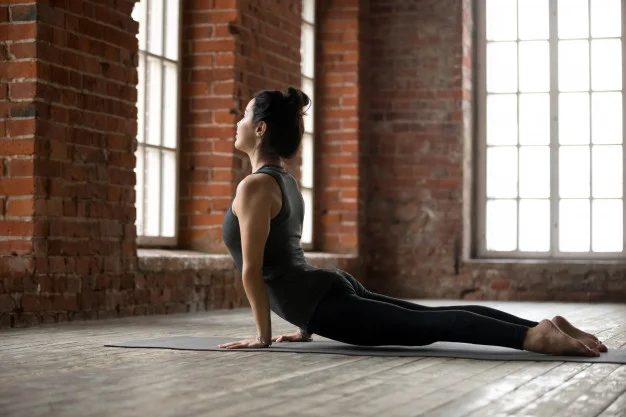
Introduction
Surya namaskar is a structured sequence of dynamic postures integrated with breath regulation, recognized within traditional Yoga systems for supporting physical conditioning and movement efficiency. Within Ayurvedic movement-based care frameworks, it functions as a coordinated practice that promotes joint mobility, muscular engagement, and systemic functional balance through sequential postural transitions.
Therapeutic relevance in joint mobility
Joint mobility depends on coordinated muscle activation, flexibility, and maintained range of motion across major articulations. Surya namaskar supports these functions through continuous, structured movement involving multiple joints.
Key relevance includes:
- Sequential engagement of multiple joints supporting integrated movement patterns
- Alternating flexion and extension improving functional range of motion
- Spinal, shoulder, hip, and knee activation supporting global mobility
- Breath-linked movement enhancing neuromuscular coordination and movement flow.1
Physiological basis
The physiological effects of Surya namaskar are associated with integrated musculoskeletal and neurofunctional responses.
Key physiological actions include:
- Coordinated activation of major muscle groups across postures
- Dynamic stretching improving soft tissue and joint extensibility
- Proprioceptive stimulation supporting joint awareness
- Circulatory improvement supporting tissue oxygenation
- Rhythmic movement assisting regulation of muscular tone
Mechanistic considerations
Musculoskeletal activation:
- Balanced use of flexor and extensor chains supporting joint stability
- Repeated movement cycles improving functional conditioning
Flexibility and range improvement:
- Gradual elongation of muscle-tendon structures
- Reduction in stiffness through repeated controlled motion
Neuromotor coordination:
- Breath–movement synchronization improving motor efficiency
- Smoother transitions between postures
Functional endurance:
- Continuous flow improving muscular endurance
- Support for sustained daily physical activity
Clinical applications in Ayurveda
Surya namaskar is commonly integrated in Ayurvedic movement-based care for:
- Joint stiffness with reduced mobility
- Muscular tightness affecting movement efficiency
- Postural imbalance due to sedentary lifestyle
- General musculoskeletal conditioning
- Maintenance of mobility in wellness routines
Conclusion
Surya namaskar provides a structured movement-based approach that supports joint mobility through coordinated musculoskeletal engagement, breath integration, and neuromotor synchronization. Its sequential design contributes to improved flexibility, range of motion, and functional movement efficiency, making it relevant in Ayurvedic musculoskeletal care practices.2
References
- Tran MD, Holly RG, Lashbrook J, Amsterdam EA. Effects of Hatha Yoga Practice on the Health-Related Aspects of Physical Fitness. Prev Cardiol. 2001 Autumn;4(4):165-170. doi: 10.1111/j.1520-037x.2001.00542.x. PMID: 11832673. https://onlinelibrary.wiley.com/doi/10.1111/j.1520-037X.2001.00542.x
- Balaji PA, Varne SR, Ali SS. Physiological effects of yogic practices and transcendental meditation in health and disease. N Am J Med Sci. 2012;4(10):442-448. doi:10.4103/1947-2714.101980. https://pmc.ncbi.nlm.nih.gov/articles/PMC3482773/