
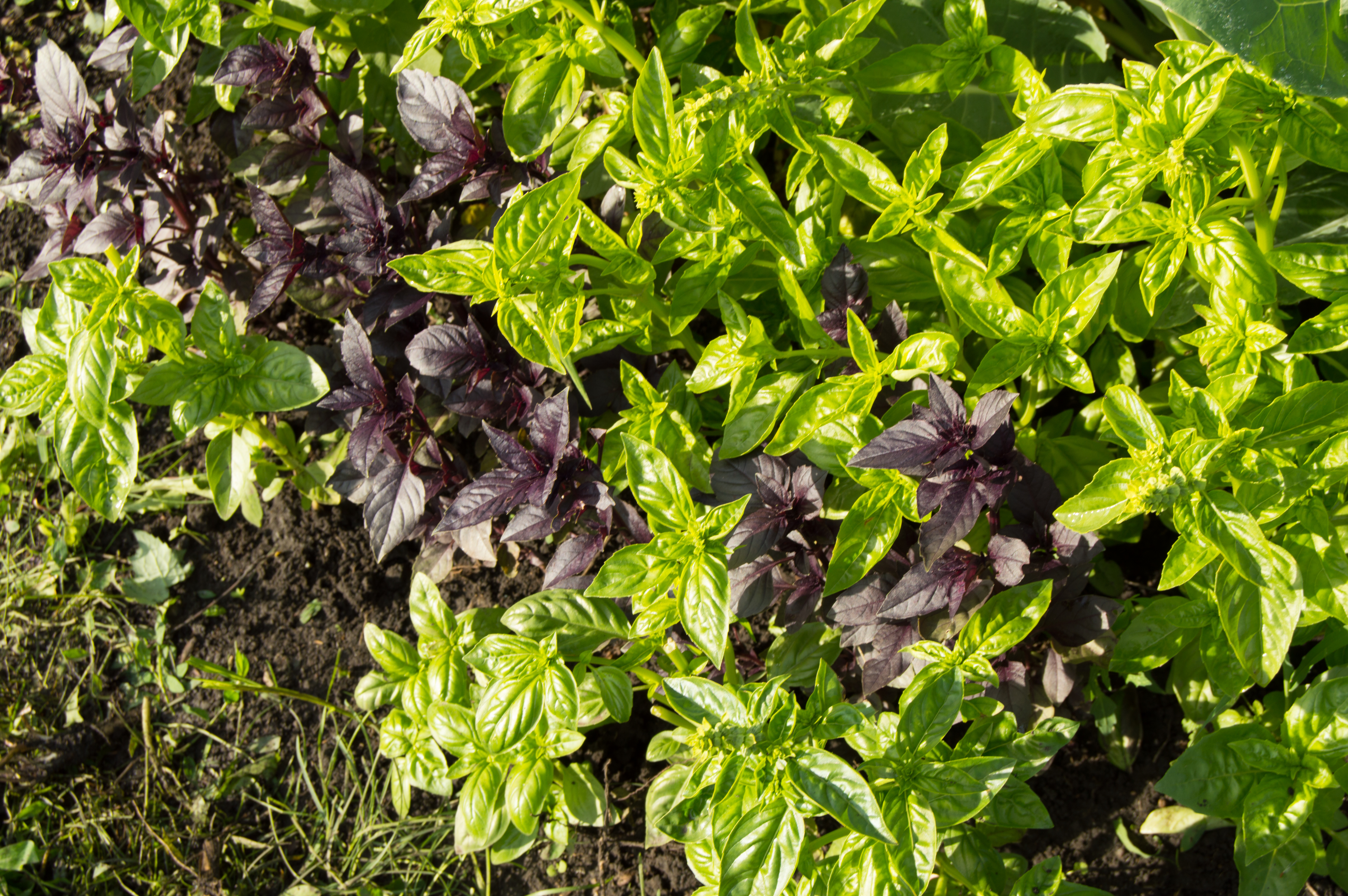
Medicinal plants have contributed significantly to traditional healthcare and the discovery of pharmacologically active compounds for modern drug development. Ocimum basilicum (sweet basil), a member of the Lamiaceae family, is an aromatic herb widely cultivated in tropical and subtropical regions of Africa, Asia, and South America. Traditionally, it has been used in Indian and other Asian medicinal systems for its purported anti-inflammatory, analgesic, diuretic, antimicrobial, and other therapeutic properties. In addition to its culinary applications, sweet basil is used in the food, cosmetic, perfumery, and pharmaceutical industries.
The therapeutic potential of O. basilicum has been attributed to its diverse phytochemical composition, particularly polyphenols, flavonoids, phenolic acids, and volatile essential oil constituents. Experimental studies have investigated its antioxidant, anti-inflammatory, and immunomodulatory activities, suggesting potential applications in inflammatory and oxidative stress-associated disorders. However, most findings remain preclinical, and further clinical research is required to establish its efficacy and safety in humans.
Phytochemical composition
The biological activities of O. basilicum are associated with its complex mixture of polyphenolic and aromatic compounds. Its essential oil composition varies considerably according to the cultivar, geographical location, climate, agricultural conditions, and growing season.
|
Phytochemical group |
Representative constituents |
Potential biological activities |
|
Phenolic acids |
Rosmarinic, caffeic, chicoric, ferulic, and p-coumaric acids |
Antioxidant and anti-inflammatory effects |
|
Flavonoids and anthocyanins |
Various flavonoids and anthocyanin pigments |
Free-radical scavenging and modulation of inflammatory pathways |
|
Phenylpropanoids |
Eugenol, methyl eugenol, methyl chavicol (estragole), and methyl cinnamate |
Potential antioxidant and anti-inflammatory activities |
|
Monoterpenoids |
Linalool, 1,8-cineole, citral, camphor, thymol, and geraniol |
Investigated for anti-inflammatory and other pharmacological effects |
|
Sesquiterpenoids |
β-caryophyllene, β-elemene, and α-bisabolene |
Potential anti-inflammatory and antioxidant activities |
|
Other constituents |
Saponins, tannins, minerals, and seed polysaccharides |
Additional biological and nutritional properties |
Polyphenols may occur as free aglycones, glycosides, or esters, while aqueous extracts have also been reported to contain calcium, potassium, sodium, and magnesium. The relative abundance of individual constituents differs between plant parts and preparations, making standardisation important when investigating their pharmacological effects.
Anti-inflammatory properties:
Inflammation is a protective response to tissue injury and infection; however, persistent inflammatory signalling can contribute to chronic inflammatory and immune-mediated disorders. The anti-inflammatory potential of O. basilicum has been investigated in cellular models, with effects reported on inflammatory mediators, leukocyte recruitment, and cytokine expression.
- Modulation of inflammatory mediators: Basil extracts have been reported to suppress the expression of pro-inflammatory cytokines, including interleukin (IL)-1β, IL-6, and tumour necrosis factor-α (TNF-α), alongside CCL2 and nuclear factor kappa B (NF-κB)-associated signalling.
- Reduction of inflammatory responses: In carrageenan-induced paw oedema and other experimental models, essential oil formulations have reduced inflammatory responses and leukocyte recruitment. These findings suggest potential activity against acute and chronic inflammation.
- Inhibition of lipoxygenase activity: Phenolic compounds and anthocyanins have demonstrated inhibitory effects on lipoxygenase, an enzyme involved in the formation of pro-inflammatory lipid mediators. Increased phenolic content following treatment with elicitors such as jasmonic acid has also been associated with enhanced anti-inflammatory activity.
- Potential gastrointestinal protection: Basil mucilage and essential oil have demonstrated protective effects in experimental colitis, with reductions in inflammatory damage and myeloperoxidase activity. These effects have been attributed, in part, to the modulation of inflammatory signalling pathways.
Eugenol, linalool, and other volatile constituents have also been investigated for analgesic activity in experimental inflammatory pain models. Nevertheless, these findings do not establish efficacy for treating inflammatory diseases in humans.
Antioxidant properties
- Oxidative stress develops when reactive oxygen species (ROS) production exceeds the capacity of endogenous antioxidant defences, potentially damaging cellular lipids, proteins, and nucleic acids. The antioxidant activity of O. basilicum has been associated primarily with its phenolic acids, flavonoids, and essential oil constituents.
- The proposed mechanisms include free-radical scavenging, hydrogen or electron donation, and inhibition of lipid peroxidation. Rosmarinic acid, caffeic acid, chicoric acid, and ferulic acid have been investigated for their antioxidant potential.
- Experimental findings include reduced malondialdehyde concentrations and increased catalase activity following basil extract administration in selected animal models. Protective effects against oxidative injury have also been reported in models of Acetaminophen-induced hepatic and renal toxicity. Furthermore, ethanolic extracts have demonstrated potential to limit low-density lipoprotein oxidation and foam-cell formation in experimental settings.
- Antioxidant activity varies with the extract, cultivar, and chemical composition. Consequently, findings from chemical assays and animal experiments cannot independently establish clinical benefits.
Immunomodulatory properties
- The immunomodulatory effects of O. basilicum have been investigated in allergic inflammation, asthma models, and experimental studies involving immune cells. Rather than producing a single uniform immune response, its extracts may influence several cytokine pathways.
- In ovalbumin-induced asthma models, basil extracts have been associated with reduced immunoglobulin E (IgE), IL-4, phospholipase A2, and inflammatory-cell counts, alongside an increased interferon-γ-to-IL-4 ratio. These changes suggest possible modulation of T-helper 1/T-helper 2 (Th1/Th2) immune balance.
- Rosmarinic acid and flavonoids have been investigated for their immunoregulatory activities, while some experimental studies have reported enhanced antibody responses and phagocytic activity following basil extract administration. These findings indicate that immunomodulation may involve both suppression of excessive inflammatory signalling and enhancement of selected immune functions.
Conclusion
Ocimum basilicum contains diverse bioactive compounds with promising antioxidant, anti-inflammatory, and immunomodulatory properties. Experimental evidence suggests that these effects may involve free-radical scavenging, modulation of cytokines, inhibition of inflammatory enzymes, and regulation of immune responses. However, differences in phytochemical composition, extract standardisation, and study design limit direct comparisons across investigations. Well-designed human clinical trials, pharmacokinetic assessments, and systematic safety evaluations are needed before basil extracts or isolated constituents can be recommended as therapeutic interventions.1
References:
- Kamelnia E, Mohebbati R, Kamelnia R, et al. Anti-inflammatory, immunomodulatory and anti-oxidant effects of Ocimum basilicum L. and its main constituents: A review. Iran J Basic Med Sci. 2023;26(6):617-627. doi:10.22038/IJBMS.2023.67466.14783 https://pmc.ncbi.nlm.nih.gov/articles/PMC10237160/#sec1