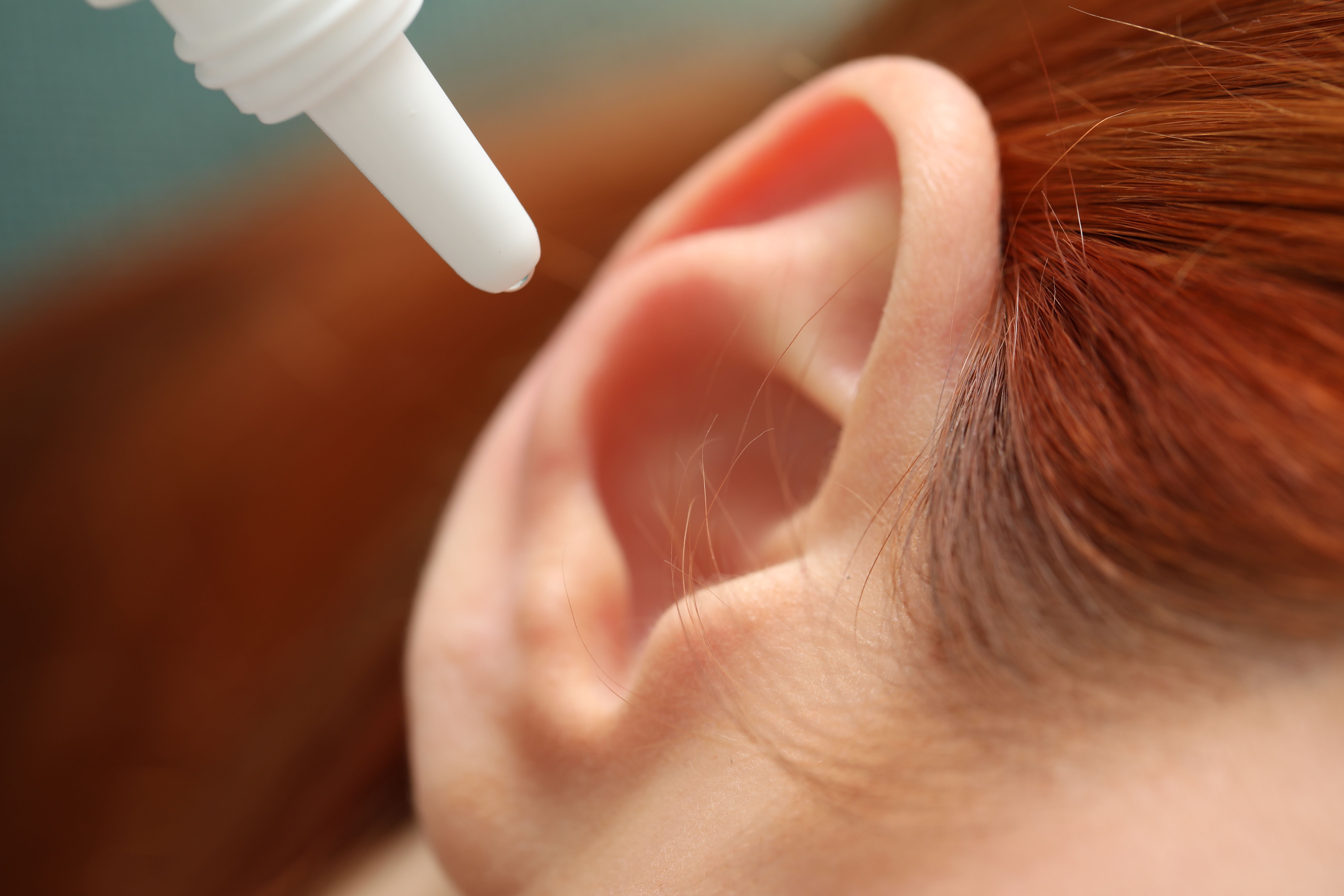
Karna Srava refers to discharge from the ear in Ayurvedic descriptions. Clinically, otorrhoea may occur in otitis externa, acute otitis media with tympanic membrane perforation or chronic suppurative otitis media (CSOM). Identifying the underlying cause is important because treatment depends on the site and nature of the disease.
Traditional rationale and proposed role
Ayurvedic management of Karna Roga considers the involved Dosha, discharge characteristics and associated symptoms. Haridra and Triphala have distinct traditional applications:
- Haridra Taila: Haridra (Curcuma longa) is traditionally recognised for its Kandughna and Krimighna properties. Its incorporation into an oil preparation provides a traditional rationale for external therapeutic use. Experimental findings on curcumin have demonstrated effects on inflammation-associated mucin production in middle-ear epithelial cells, although these findings do not establish the clinical efficacy of Haridra Taila.1
- Triphala Kwatha: Comprising Haritaki, Bibhitaki and Amalaki, Triphala is traditionally used in cleansing and local care practices. Its Shodhana application provides a traditional rationale for external hygiene. However, clinical findings involving other herbal formulations for otitis media with effusion cannot establish the efficacy of Triphala Kwatha.2
Clinical considerations and relevant clinical applications
- Diagnostic assessment: Otoscopy helps identify the source of discharge and assess tympanic membrane integrity. Persistent discharge may indicate CSOM or another condition requiring ENT evaluation.
- Preparation and route: Evidence concerning curcumin cannot be directly applied to Haridra Taila. Similarly, Triphala Kwatha should not be assumed suitable for ear irrigation or instillation, particularly when tympanic membrane perforation is present.
- Conventional management: CSOM management may include aural toilet, dry-ear precautions and appropriate topical antimicrobial treatment, selected according to clinical findings and tympanic membrane status.
- Referral: Persistent or foul-smelling discharge, hearing impairment, vertigo, severe pain or postauricular swelling warrants prompt ENT assessment.
Conclusion
Haridra and Triphala have traditional relevance in Ayurvedic approaches to Karna Roga. Their specific preparations and routes of use in Karna Srava require careful consideration, with diagnosis and tympanic membrane safety guiding clinical management.1,2
References:
- Konduru AS, Matsuyama S, Lee BC, Komatsu K, Li JD. Curcumin Inhibits NTHi-Induced MUC5AC Mucin Overproduction in Otitis Media via Upregulation of MAPK Phosphatase MKP-1. Int J Inflam. 2017;2017:4525309. doi:10.1155/2017/4525309. https://pmc.ncbi.nlm.nih.gov/articles/PMC5405397/
- Son MJ, Choi S, Kim YE, Kim YH. Herbal medicines for the treatment of otitis media with effusion: a systematic review of randomised controlled trials. BMJ Open. 2016;6(11):e011250. Published 2016 Nov 24. doi:10.1136/bmjopen-2016-011250. https://pmc.ncbi.nlm.nih.gov/articles/PMC5168523/