
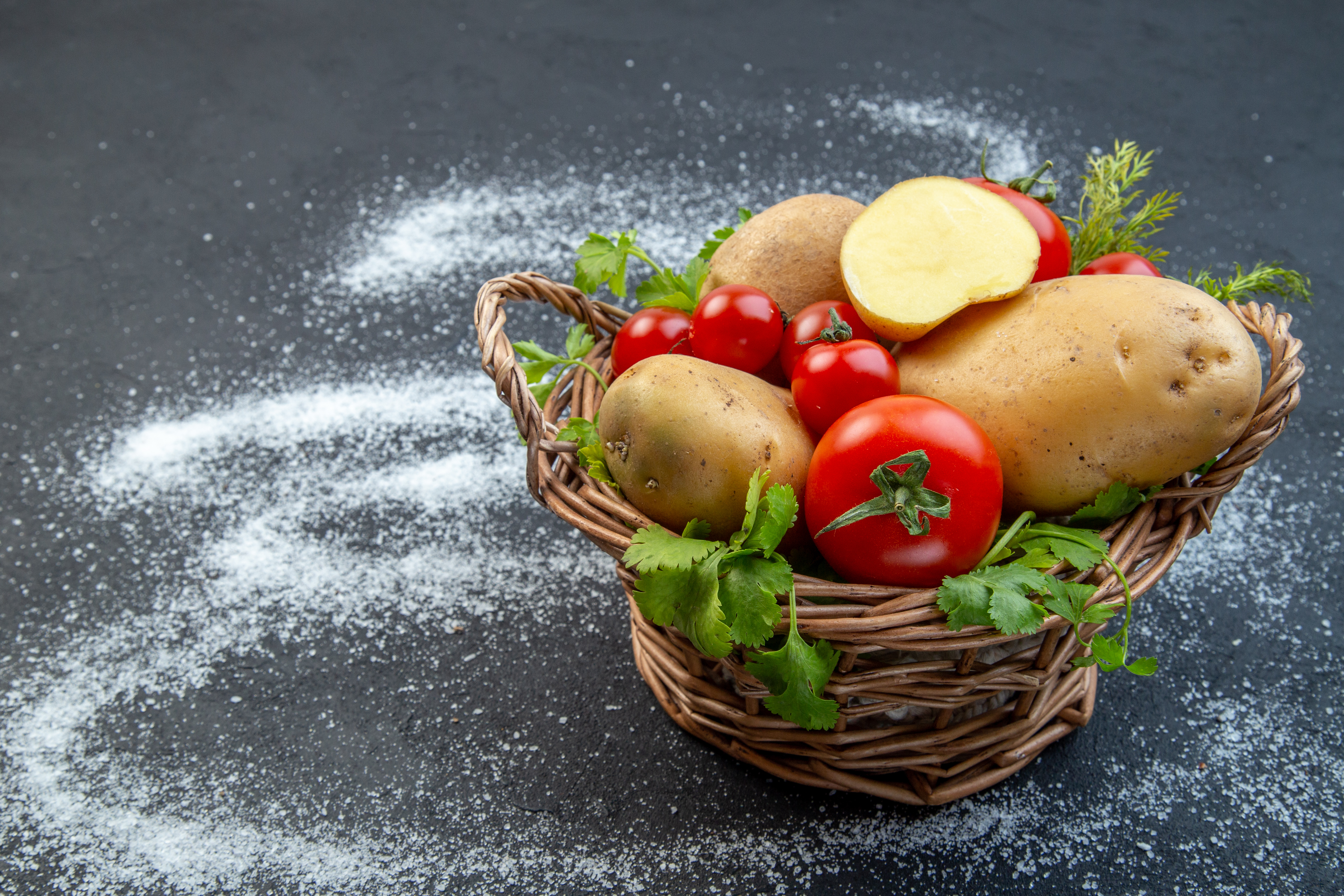
Amavata is an Ayurvedic condition characterised by joint pain, stiffness, swelling and functional impairment. Its pathogenesis is traditionally associated with the interaction of Ama (incompletely processed metabolic products) and aggravated Vata. Dietary management forms an important part of its approach, with emphasis on Pathya (wholesome dietary practices) and Apathya (foods considered unsuitable). Potato, brinjal and tomato belong to the Solanaceae family, commonly known as nightshades. Their role in the Amavata diet requires consideration of traditional dietary principles and contemporary research on food-related symptoms in inflammatory arthritis.
Traditional rationale and proposed dietary role
Ayurvedic dietary management of Amavata generally focuses on supporting Agni (digestive capacity) and avoiding dietary patterns considered to promote Ama. Food selection is therefore guided by individual digestion, preparation methods and symptom response.
- Potato (Solanum tuberosum): Its suitability may be considered according to preparation, digestibility and individual tolerance rather than botanical classification alone.
- Brinjal (Solanum melongena): Its inclusion in the diet may similarly be assessed within the broader Pathya-Apathya framework.
- Tomato (Solanum lycopersicum): Although commonly discussed among foods that some individuals associate with joint symptoms, its exclusion is not established as a universal Ayurvedic requirement for all patients with Amavata.
Clinical considerations and contemporary applications
Nightshade vegetables contain naturally occurring glycoalkaloids, including solanine in potatoes and tomatine in tomatoes. However, their presence does not establish that ordinary dietary consumption aggravates inflammatory arthritis.
- Individual symptom response: Some patients report changes in joint symptoms after consuming particular vegetables. Such responses should be assessed individually rather than generalised to all patients.
- Dietary restriction: A review of dietary perceptions and beliefs in rheumatoid arthritis highlights the variability of patient-reported food triggers and the limited consistency of dietary evidence.¹
- Nutritional balance: Potatoes, brinjal and tomatoes provide nutrients and phytochemicals. Their unnecessary exclusion may reduce dietary variety.
Evidence and research priorities
Evidence directly linking potato, brinjal or tomato consumption with Amavata disease activity remains limited. The available rheumatoid arthritis literature is not sufficient to establish a causal relationship between nightshade consumption and joint inflammation. Studies specifically evaluating individual vegetables, dietary patterns and Ayurvedic Pathya-Apathya recommendations would help clarify their clinical relevance.
Conclusion
Potato, brinjal and tomato should not automatically be considered inflammatory foods solely because they belong to the nightshade family. Their role in the Amavata diet can be assessed through Ayurvedic dietary principles, individual tolerance and nutritional adequacy. A balanced dietary approach is preferable to unnecessary food-group restriction.1,2
References
- Termine M, Davidson Z, Choi T, Leech M. What do we know about dietary perceptions and beliefs of patients with rheumatoid arthritis? A scoping review. Rheumatol Int. 2024;44(10):1861-1874. doi:10.1007/s00296-024-05691-5. https://pmc.ncbi.nlm.nih.gov/articles/PMC11392979/
- Golmohammadi A, Hosseinikia M, Sadeghi MK, Golampur D, Hosseinzadeh Z, Panahande SB. The evaluation of nightshade elimination diet (NED) on inflammatory and rheumatologic markers of rheumatoid arthritis patients: study protocol for a randomized controlled trial. Trials. 2024;25(1):531. Published 2024 Aug 10. doi:10.1186/s13063-024-08372-7. https://pmc.ncbi.nlm.nih.gov/articles/PMC11316282/