
Introduction
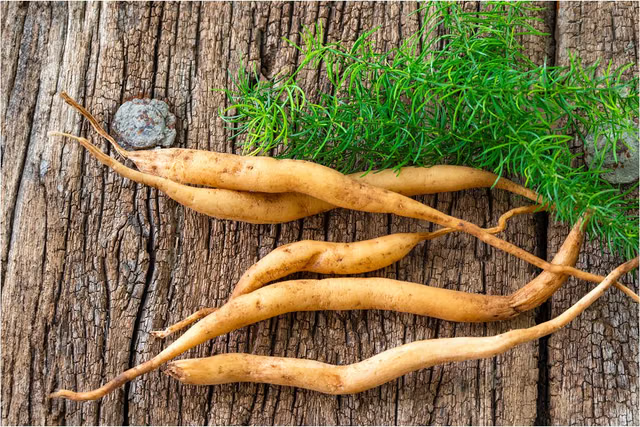
Female infertility is a complex reproductive disorder defined by the inability to conceive after 12 months of regular, unprotected intercourse. It may result from ovulatory dysfunction, tubal obstruction, endometriosis, uterine factors, or unexplained causes. Among these, hormonal imbalance and anovulation-commonly seen in conditions such as polycystic ovary syndrome (PCOS)-represent major contributors. While assisted reproductive technologies and pharmacological ovulation induction remain standard treatments, there is growing interest in complementary approaches that support endocrine balance and reproductive wellness. Shatavari (Asparagus racemosus), a key herb in Ayurvedic medicine, is widely recognized for its rejuvenative and fertility-enhancing properties.
Ayurvedic perspective of Shatavari
In Ayurveda, infertility is described under Vandhyatva, often resulting from imbalances in Vata and Pitta doshas along with depletion of Shukra and Artava dhatus.
- Shatavari is classified as a Rasayana (rejuvenative) herb and is considered particularly beneficial for female reproductive health. It is described as Stanyajanana (galactagogue), Shukra-shodhana (purifying reproductive tissue), and Yoni vyapad hara (alleviating gynecological disorders).
- Its cooling, nourishing, and hormone-modulating properties make it a cornerstone herb in the management of female infertility.
Phytochemical composition and bioactive properties
Shatavari contains a rich spectrum of bioactive compounds, including steroidal saponins (shatavarins I–IV), alkaloids, flavonoids, and polyphenols. These constituents exhibit phytoestrogenic, antioxidant, immunomodulatory, and adaptogenic properties. The phytoestrogens structurally resemble endogenous estrogens and may interact with estrogen receptors, thereby influencing the hypothalamic-pituitary-ovarian axis. This hormonal modulation is crucial in restoring ovulatory cycles and improving endometrial receptivity.
Mechanisms of action in female infertility
The therapeutic effects of Shatavari in infertility are mediated through multiple physiological pathways. Its phytoestrogenic activity helps regulate gonadotropin release, thereby promoting follicular development and ovulation. In cases of luteal phase defects, it may support progesterone balance and improve implantation potential. Additionally, its antioxidant properties reduce oxidative stress in ovarian tissues, thereby protecting oocytes from damage and improving overall reproductive potential.
Shatavari also exhibits adaptogenic effects, reducing stress-induced hyperactivation of the hypothalamic-pituitary-adrenal (HPA) axis. Chronic stress is known to disrupt menstrual cyclicity and ovulation; thus, stress modulation plays a significant role in fertility restoration. Furthermore, its anti-inflammatory properties may be beneficial in conditions such as endometriosis and pelvic inflammatory disease, where chronic inflammation contributes to infertility.
Clinical applications and evidence
- Preclinical studies have demonstrated that Shatavari extracts enhance ovarian folliculogenesis and improve reproductive hormone profiles. Animal studies suggest increased follicular count, improved corpus luteum function, and enhanced fertility indices following administration.
- In clinical practice, Shatavari is often used in powdered form (churna), decoctions, or as part of polyherbal formulations such as Shatavari Kalpa and Chyawanprasha-based preparations.
- Although limited randomized controlled trials exist, observational studies and traditional clinical experience indicate improved menstrual regularity, reduced anovulatory cycles, and better conception rates when Shatavari is used as an adjunct therapy. However, variability in formulation and dosage remains a challenge in establishing standardized clinical protocols.
Holistic role in reproductive health
Beyond fertility enhancement, Shatavari contributes to overall reproductive wellness by improving vaginal lubrication, supporting lactation, and maintaining hormonal equilibrium. Its nutritive and rejuvenative properties make it suitable for long-term use in women with chronic reproductive health issues. In integrative medicine, it is often combined with lifestyle modifications, dietary regulation, and stress management techniques to optimize outcomes.
Conclusion
Shatavari represents a valuable Ayurvedic herb with significant potential in the holistic management of female infertility. Through its phytoestrogenic, antioxidant, adaptogenic, and anti-inflammatory actions, it addresses multiple underlying factors contributing to infertility. While traditional use and preliminary evidence support its efficacy, well-designed clinical trials are essential to validate its therapeutic role and establish standardized treatment protocols. Integration of Shatavari into evidence-based reproductive medicine may offer a safe, natural, and holistic adjunct in the management of female infertility.1
References:
- Nahid T, Eqbal K, Rahman MN, Rahman MM. Holistic approaches to managing female infertility: A comprehensive review. J Drug Deliv Ther. 2025;15(3):180-189. doi:10.22270/jddt.v15i3.7032 https://jddtonline.info/index.php/jddt/article/view/7032/6660