
Introduction
Psoriasis is a chronic immune-mediated inflammatory skin disorder affecting approximately 2%–3% of the global population and is recognized by the World Health Organization as a significant public health concern. Beyond cutaneous involvement, its visible manifestations impose a substantial psychological burden, adversely affecting mental health and overall quality of life. Epidemiological data indicate considerable geographic variability in prevalence, ranging from 0.51% to 11.43% across different populations.
Psoriasis is a systemic inflammatory condition that extends beyond the skin and nails and is increasingly associated with multiple comorbid non-communicable diseases, including metabolic syndrome, cardiovascular disease, and diabetes mellitus. Disease exacerbation is commonly influenced by environmental and lifestyle-related triggers such as psychological stress, physical trauma, infections, and certain pharmacological agents.
Clinically, psoriasis often manifests in early adulthood and presents in diverse morphological forms, including plaque, guttate, flexural, pustular, and erythrodermic variants. Pathologically, it is characterized by epidermal hyperproliferation and chronic inflammation driven by dysregulated immune responses. The immunopathogenesis involves a complex cytokine network with activation and interaction of dendritic cells, T lymphocytes (particularly Th1 and Th17 subsets), neutrophils, and macrophages, leading to a sustained imbalance between pro-inflammatory and anti-inflammatory signaling pathways.
From an Ayurvedic perspective, correlating psoriasis directly with a single subtype of Kushtha Vikaras may oversimplify its multifactorial and systemic nature. Psoriasis arises from a complex interplay of genetic susceptibility, immune dysregulation, and environmental triggers, which may not be fully explained by classical categorical classifications alone. Therefore, its management requires a comprehensive and integrative therapeutic approach that addresses both systemic immunoinflammatory mechanisms and individual constitutional imbalances, rather than relying solely on the principles associated with any single type of Kushtha.1
Ethnopharmacological significance of Psoralea corylifolia
Indigenous medicinal plants have long been utilized in traditional and ethnomedical systems for the management of a wide range of diseases. In recent decades, natural products have gained considerable scientific attention due to their extensive structural diversity and pharmacological potential, leading to a marked increase in the global demand for herbal therapeutics. These agents are generally perceived as safer, cost-effective, and widely accessible, and have served as important lead compounds in drug discovery and development of novel pharmacologically active molecules.
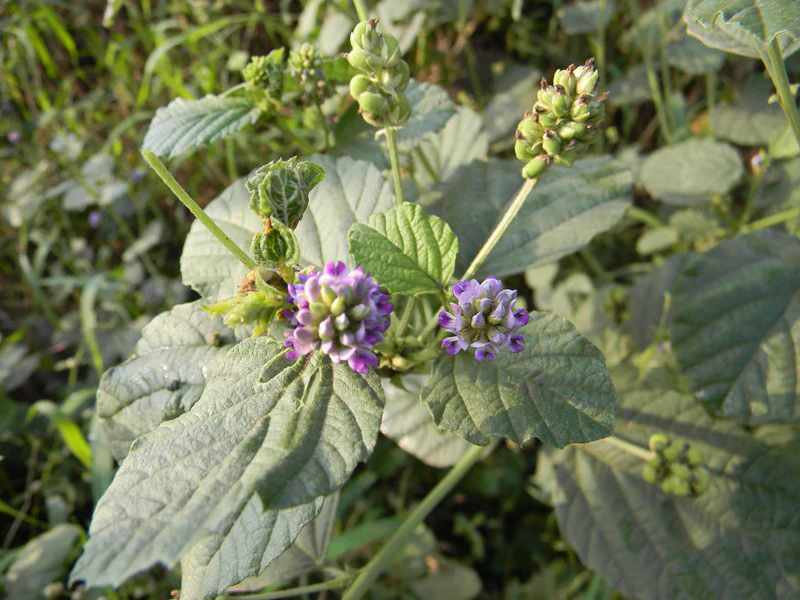
The dried fruit of the leguminous plant Psoralea corylifolia Linn. (syn. Cullen corylifolium Linn.) is a well-documented medicinal herb extensively used in Traditional Chinese Medicine and is officially included in the Chinese Pharmacopoeia. P. corylifolia is an annual herb distributed across the plains of India and other Asian regions. It holds significant ethnopharmacological importance and has been traditionally employed for the management of various dermatological disorders, including psoriasis, vitiligo (leukoderma), and leprosy, owing to its reported anti-inflammatory, immunomodulatory, and photoreactive properties.
Uses of Psoralea corylifolia (Bakuchi)2
Dermatological applications:
Psoralea corylifolia is a widely utilized medicinal plant in traditional and ethnomedicinal systems, with nearly all its parts (roots, stems, leaves, seeds, and flowers) being therapeutically valuable. It is extensively used in the management of chronic dermatological disorders such as vitiligo (leukoderma), psoriasis, eczema, scabies, skin rashes, infections, and inflammatory dermatoses. In Ayurvedic literature, it is referred to as “Kushtanashini”, indicating its potent anti-dermatological properties.
The plant has been traditionally employed in both internal and external formulations. Seed powder is used internally for chronic skin diseases, while topical preparations such as pastes and ointments are applied for localized lesions. Its furanocoumarin constituents, particularly psoralens, are known to enhance melanogenesis and skin repigmentation, making it valuable in vitiligo management.
Antimicrobial and anti-inflammatory effects:
Bakuchi oil and extracts demonstrate significant activity against Streptococcus species and other pathogenic microorganisms, supporting its use in infectious and inflammatory skin conditions. It is also used in dermatitis, eczema, boils, and vesicular eruptions due to its anti-inflammatory and skin-protective properties.
Systemic therapeutic applications:
Beyond dermatology, P. corylifolia is used in a wide range of systemic disorders including asthma, cough, nephritis, gastrointestinal disturbances, anemia, and febrile conditions. Seeds are traditionally considered stimulant, aphrodisiac, diuretic, anthelminthic, laxative, and stomachic, reflecting its broad pharmacological spectrum.
Reproductive and genitourinary effects:
The plant is used in the management of menstrual disorders, uterine bleeding, spermatorrhea, premature ejaculation, and reproductive debility. It is also employed in conditions such as enuresis, frequent urination, and kidney weakness, indicating its role in genitourinary regulation.
Musculoskeletal and neurological benefits:
Bakuchi is traditionally used in lumbago, osteoporosis, bone fractures, and muscular weakness, owing to its potential role in promoting bone mineralization. It is also recognized as a nervine tonic in Vata disorders, improving neuromuscular function and vitality.
Metabolic and general health applications:
The plant exhibits blood purifying, immunomodulatory, and vitality-enhancing properties. It is used to improve complexion, hair growth, and nail health, and is considered beneficial in systemic debility and metabolic imbalance.
Toxicological and adjunct uses:
Seeds are also used in scorpion sting and snake bite management in traditional practice. Additionally, seed cake is utilized as animal feed and organic manure, highlighting its agricultural utility.
Pharmacological and biological activities of Psoralea corylifolia
Antimicrobial and antifungal activity:
Essential oils and extracts exhibit broad-spectrum antimicrobial activity against Gram-positive and Gram-negative bacteria, including antibiotic-resistant strains. Psoralen and bakuchiol demonstrate antifungal effects against dermatophytes and Candida species.
Anti-inflammatory and analgesic effects:
Bavachinin A shows significant anti-inflammatory, antipyretic, and mild analgesic activity, with efficacy comparable to standard drugs in experimental models. It reduces carrageenan-induced edema, indicating prostaglandin-mediated inflammatory inhibition.
Anticancer and cytotoxic activity:
Bakuchiol, psoralen, and coumestan derivatives exhibit cytotoxic effects against multiple cancer cell lines, including lung, gastric, and melanoma cells. These compounds also demonstrate inhibition of tumor growth and induction of apoptosis in experimental models.
Antioxidant and hepatoprotective effects:
Flavonoids and bakuchiol exhibit strong free radical scavenging activity, preventing lipid peroxidation in mitochondrial and microsomal systems. Hepatoprotective effects have been demonstrated against chemically induced hepatic toxicity.
Immunomodulatory and antitumor effects:
Seed extracts enhance natural killer cell activity, antibody-mediated cytotoxicity, and tumor suppression, indicating significant immunostimulatory potential.
Neurological and psychopharmacological effects:
Isopsoralen and total furanocoumarins demonstrate antidepressant, anticonvulsant, sedative, and muscle relaxant properties, mediated through monoamine oxidase inhibition and HPA axis modulation.
Cardiovascular and smooth muscle effects:
Essential oils and extracts produce vascular smooth muscle contraction or relaxation depending on dose, and influence blood pressure and coronary circulation. Some constituents exhibit coronary vasodilatory effects.
Dermatological and photobiological activity:
Psoralen exhibits photoreactive properties, enhancing melanin synthesis upon UV exposure, forming the basis for its use in vitiligo and psoriasis phototherapy. It also inhibits papilloma formation and epidermal hyperproliferation.
Antifertility and reproductive effects:
Isopsoralen and related compounds exhibit anti-implantation and immunomodulatory reproductive effects, influencing uterine environment and early pregnancy outcomes in experimental studies.
Metabolic and enzymatic effects:
Certain constituents inhibit alcohol metabolism enzymes (alcohol dehydrogenase), leading to altered acetaldehyde metabolism and aversive effects toward alcohol consumption.
Clinical studies on Psoralea corylifolia
Psoriasis management
Combination therapy involving psoralen derivatives and phototherapy has demonstrated superior clinical outcomes in psoriasis patients, supporting its role in photoactivated immunomodulation.
Conclusion
Bakuchi (Psoralea corylifolia) plays a significant role in psoriasis management3 through its multifaceted pharmacological actions, including immunomodulation, photochemotherapy, antioxidant protection, and regulation of keratinocyte proliferation. Its traditional use in Kustha, combined with emerging scientific evidence, supports its potential as an effective herbal agent in integrative psoriasis therapy.
References:
- Nille GC, Bhuyan M, Gupta LN, Chaudhary AK. Safe and effective management of psoriasis through Ayurveda: A case report. J Ayurveda Integr Med. 2025;16(2):101091. doi:10.1016/j.jaim.2024.101091. https://pmc.ncbi.nlm.nih.gov/articles/PMC11994298/
- Khushboo PS, Jadhav VM, Kadam VJ, Sathe NS. Psoralea corylifolia Linn.-"Kushtana. shini". Pharmacogn Rev. 2010;4(7):69-76. doi:10.4103/0973-7847.65331. https://pmc.ncbi.nlm.nih.gov/articles/PMC3249905/
- Greenzaid J, Friedman A, Sodha P. The Use of Bakuchiol in Dermatology: A Review of In Vitro and In Vivo Evidence. J Drugs Dermatol. 2022;21(6):624-629. doi:10.36849/JDD.6740. https://jddonline.com/articles/the-use-of-bakuchiol-in-dermatology-a-review-of-in-vitro-and-in-vivo-evidence-S1545961622P0624X/