
Introduction
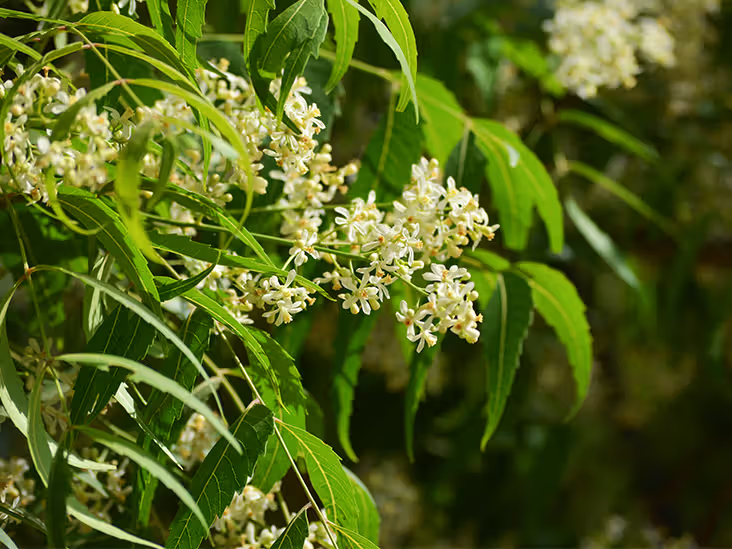
Nimba (Azadirachta indica), commonly known as Neem, is one of the most extensively documented medicinal plants in Ayurveda, widely used for its Krimighna (antimicrobial), Shothahara (anti-inflammatory), and Vrana Ropana (wound healing) properties. In classical Ayurvedic texts, Nimba is considered a “Sarva Roga Nivarini” (remedy for multiple diseases), particularly valued in skin disorders and chronic wound management. In modern pharmacology, neem has gained significant attention due to its broad-spectrum antimicrobial, antioxidant, anti-inflammatory, and immunomodulatory activities, making it highly relevant in wound cleansing and healing applications.1
Role of nimba in wound cleansing (Vrana shodhana)
Potent antimicrobial action:
Nimba exhibits strong antibacterial, antifungal, and antiviral activity against a wide range of pathogens. These properties help in reducing microbial load in contaminated wounds and preventing secondary infection. Studies show neem extracts are effective even against drug-resistant organisms and biofilm-forming bacteria, supporting its role as a natural antiseptic agent.2
Biofilm disruption in chronic wounds:
Chronic wounds often fail to heal due to bacterial biofilm formation. Neem phytochemicals interfere with microbial adhesion and disrupt biofilm structures, thereby enhancing wound cleansing and improving the effectiveness of host immune response.
Debridement support (Mild chemical cleansing):
Neem-based formulations gently assist in removal of necrotic tissue and slough. Though not a strong caustic agent like Kshara, neem supports biological debridement by reducing infection, promoting autolytic cleansing, and improving wound bed preparation.
Anti-inflammatory effect in wound bed:
Inflammation delays wound healing by prolonging tissue damage. Neem reduces pro-inflammatory cytokines and oxidative stress, thereby decreasing edema, redness, and pain in the wound area. This creates a favorable environment for cleansing and regeneration.
Role of nimba in wound healing (Vrana ropana)
Promotion of granulation tissue:
Neem enhances fibroblast proliferation and collagen synthesis, which are essential for granulation tissue formation. This accelerates wound contraction and closure.
Angiogenesis and tissue repair:
Experimental studies indicate that neem supports new blood vessel formation, improving oxygen and nutrient supply to healing tissues. This directly contributes to faster epithelialization and tissue regeneration.
Antioxidant protection:
Oxidative stress is a major barrier to wound healing. Neem contains strong antioxidants such as flavonoids and polyphenols that neutralize free radicals and protect regenerating cells from oxidative damage.
Improved epithelialization:
Neem-based topical applications have been shown to enhance epithelial cell migration and wound resurfacing, resulting in faster restoration of skin integrity.
Clinical applications in ayurvedic practice
Wound washing (Vrana Prakshalana)
Neem leaf decoction is traditionally used for cleaning wounds to remove pus, debris, and microbial contamination.3
Topical paste application:
Fresh neem leaf paste is applied over infected or inflamed wounds to reduce discharge, pain, and swelling while promoting healing.
Medicated oils (Neem taila):
Neem-infused oils are used in chronic ulcers, diabetic wounds, and non-healing lesions for prolonged antimicrobial and regenerative effects.
Adjunct in surgical wound care:
In modern integrative practice, neem is used as an adjunct to conventional wound care for infection control and improved healing outcomes.
Conclusion
Nimba (Azadirachta indica) is a highly effective medicinal plant for wound cleansing and healing, integrating both traditional Ayurvedic principles and modern pharmacological validation. Its strong antimicrobial, anti-inflammatory, antioxidant, and tissue-regenerative properties make it a valuable agent in Vrana Shodhana (wound cleansing) and Vrana Ropana (wound healing). By reducing microbial burden, controlling inflammation, and promoting tissue regeneration, neem plays a crucial role in the management of both acute and chronic wounds, particularly in integrative and Ayurvedic surgical practice.
Reference:
- Nasrine A, Narayana S, Gulzar Ahmed M, et al. Neem (Azadirachta Indica) and silk fibroin associated hydrogel: Boon for wound healing treatment regimen. Saudi Pharm J. 2023;31(10):101749. doi:10.1016/j.jsps.2023.101749 https://pmc.ncbi.nlm.nih.gov/articles/PMC10470283/
- Wylie MR, Merrell DS. The Antimicrobial Potential of the Neem Tree Azadirachta indica. Front Pharmacol. 2022;13:891535. Published 2022 May 30. doi:10.3389/fphar.2022.891535 https://pmc.ncbi.nlm.nih.gov/articles/PMC9195866/
- Singh A, Singh AK, Narayan G, Singh TB, Shukla VK. Effect of Neem oil and Haridra on non-healing wounds. Ayu. 2014;35(4):398-403. doi:10.4103/0974-8520.158998 https://pmc.ncbi.nlm.nih.gov/articles/PMC4492024/