
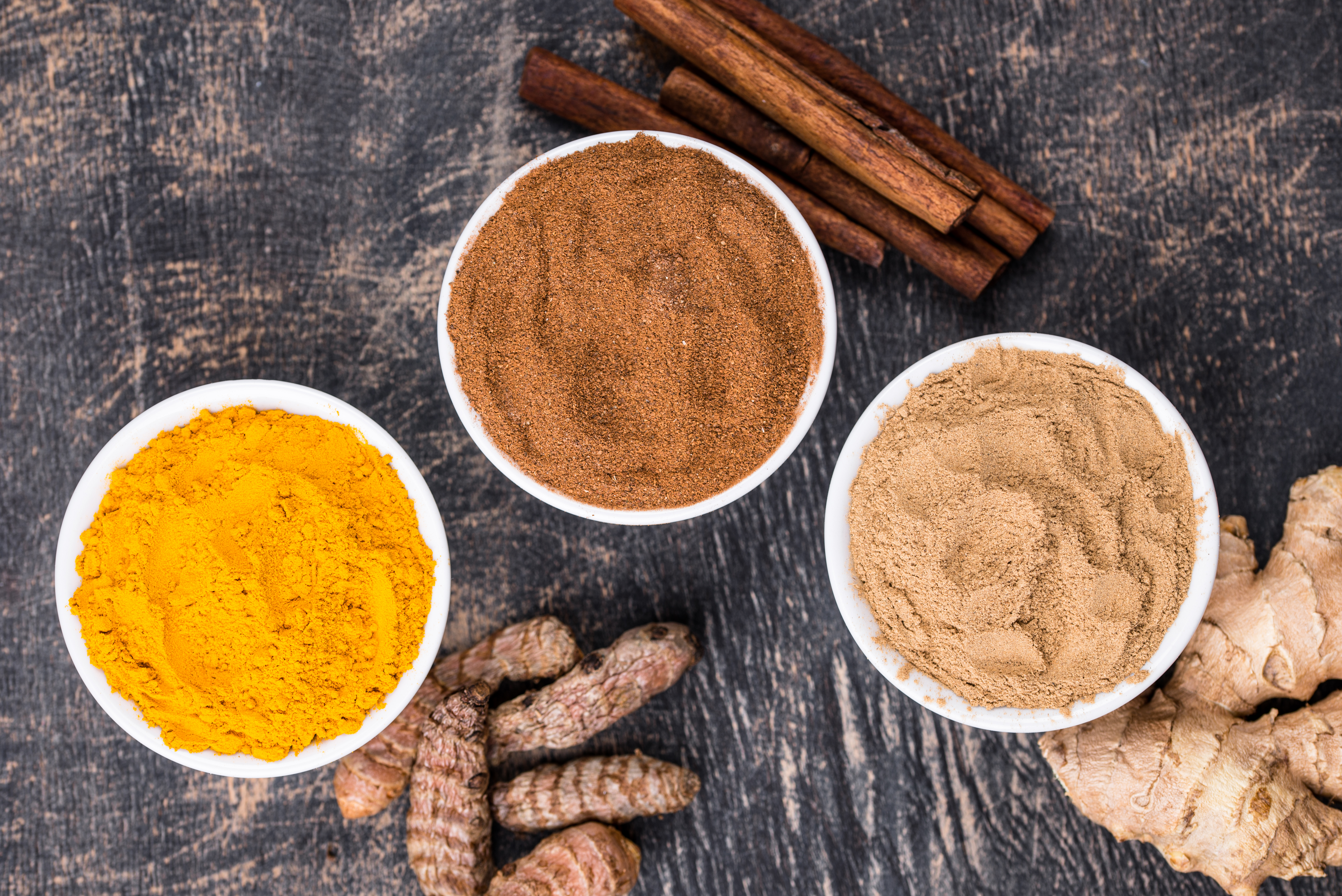
Dadru (ringworm) is a common skin condition characterised by circular, often spreading lesions, itching (Kandu), redness (Raga) and raised eruptions. Ayurveda describes topical applications (Lepa) as part of its management. Haridra (Curcuma longa), Karanja (Pongamia pinnata) and Chakramarda (Senna tora, syn. Cassia tora) are traditionally used in external preparations for skin disorders, including Dadru.
Traditional rationale and proposed role
These three herbs have traditionally recognised roles in topical skin care, particularly for itching and fungal skin manifestations.
- Haridra: Traditionally valued for its Kushthaghna and Kandughna properties. Turmeric oil has demonstrated antifungal activity against dermatophytes in laboratory studies, providing experimental support for its traditional topical use.1
- Karanja: Traditionally used externally in skin disorders. Extracts of Pongamia pinnata have demonstrated antidermatophytic activity in vitro, although this finding does not establish the effectiveness of every Karanja-based preparation.2
- Chakramarda: Traditionally used in Dadru-related formulations. Chrysophanic acid-9-anthrone, isolated from Cassia tora seeds, has demonstrated antifungal activity against dermatophytes in laboratory investigations.3
The combination as Lepa reflects the traditional use of these herbs for local application to affected skin. Preparation method, ingredient quality and concentration influence the characteristics of the formulation.
Clinical considerations and relevant applications
- Application rationale: The Lepa is traditionally intended for local management of itching, redness and characteristic ring-shaped lesions.
- Skin tolerance: Plant-based preparations may cause irritation or contact dermatitis. Their use should take account of the condition of the affected skin and the quality of the preparation.
- Clinical management: Ringworm is a dermatophyte infection. Localised disease is generally treated with topical antifungals such as Terbinafine or Clotrimazole. Extensive, recurrent or treatment-resistant infection requires clinical assessment and may need systemic treatment.
Conclusion
Haridra, Karanja and Chakramarda have traditional relevance in the topical management of Dadru (ringworm). Experimental findings support antifungal potential for selected extracts and constituents, but do not establish the clinical efficacy of the combined Lepa. Their traditional application can be discussed alongside established antifungal management.
References:
- ApisariyakulA,VanittanakomN,BuddhasukhD.AntifungalactivityofturmericoilextractedfromCurcumalonga(Zingiberaceae).JEthnopharmacol.1995;49(3):163-169.doi:10.1016/0378-8741(95)01320-2.https://www.sciencedirect.com/science/article/abs/pii/0378874195013202?via%3Dihub
- SharmaKK,KotokyJ,KalitaJC,BarthakurR.EvaluationofantidermatophyticactivityofRanunculussceleratusandPongamiapinnataavailableinNorthEasternRegionofIndia.AsianPacJTropBiomed.2012;2(2Suppl):S808-S811.doi:10.1016/S2221-1691(12)60317-7.https://www.sciencedirect.com/science/article/abs/pii/S2221169112603177?via%3Dihub
- AcharyaTK,ChatterjeeIB.Isolationofchrysophanicacid-9-anthrone,themajorantifungalprincipleofCassiatora.Lloydia.1975;38(3):218-220.https://pubmed.ncbi.nlm.nih.gov/1143018/