
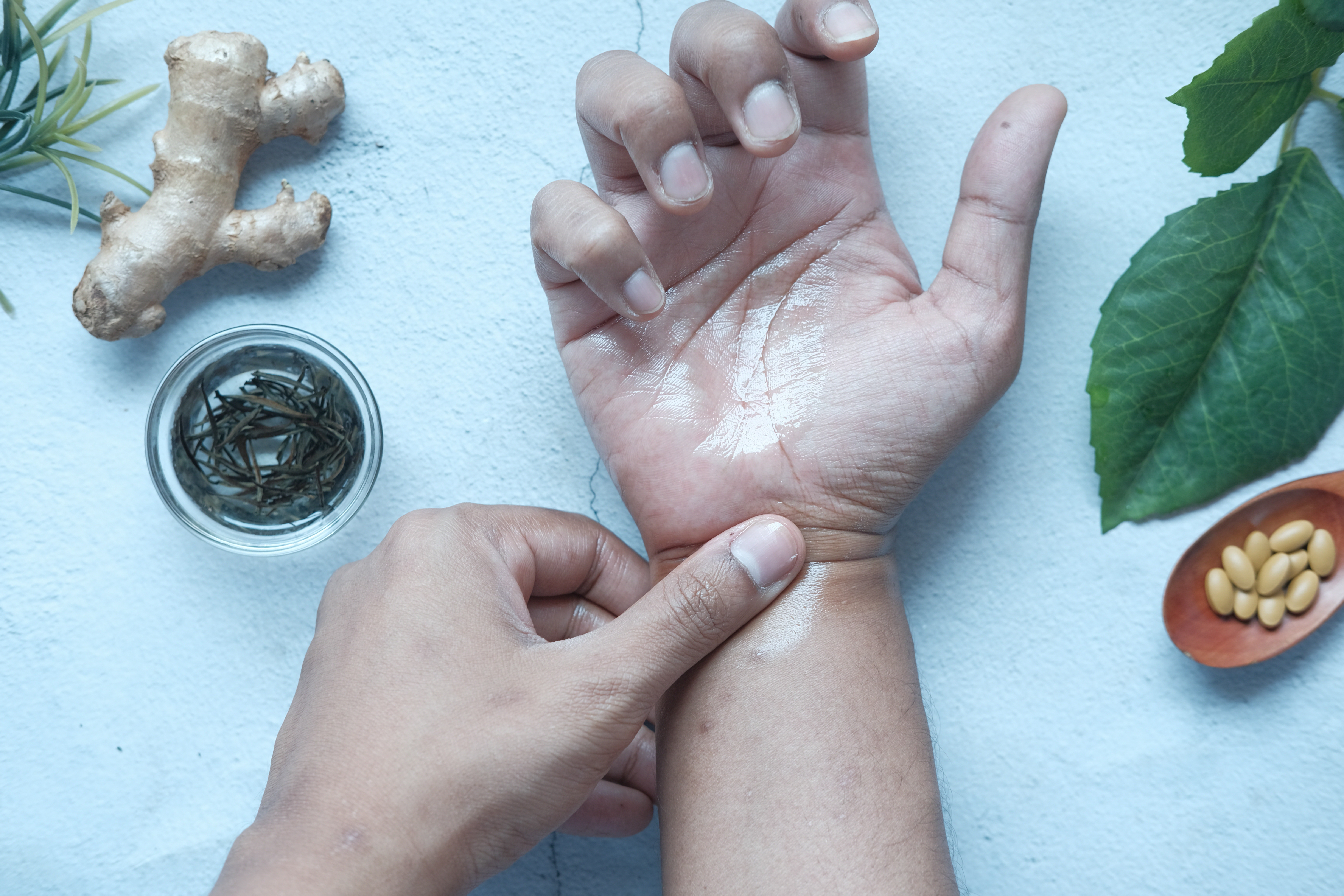
Atopic dermatitis, commonly referred to as eczema, is an inflammatory skin condition characterised by a range of clinical and histological features, including papules, erythematous macules and vesicles. It may significantly affect an individual's cosmetic appearance and cause considerable psychological distress due to visible skin changes and disfigurement. In Ayurveda, Vicharchika, classified under Kshudra Kushtha, is considered comparable to atopic dermatitis based on similarities in their clinical signs and symptoms.1
Principles of management of dermatitis (Vicharchika): Highlights from the Indian Ayurvedic Guidelines, 20262
The management of dermatitis (Vicharchika) involves a comprehensive approach that integrates preventive measures, therapeutic interventions, dietary modifications and lifestyle management. Treatment should be individualised based on the presenting signs and symptoms, disease severity, associated comorbidities and the underlying pathophysiological factors.
General principles of management:
- Initial assessment: Evaluate the patient's clinical signs, symptoms, disease severity and associated comorbidities before initiating treatment.
- Conventional medical management: Associated comorbidities and complications should be managed through appropriate conventional medical care.
- Integrated treatment approach: Patients already receiving standard treatment should continue their prescribed regimen. Ayurvedic interventions may be considered as add-on therapies under the supervision of qualified healthcare professionals.
- Follow-up and treatment modification: Assess the patient's response during follow-up visits. Any tapering or discontinuation of conventional treatment should be undertaken only in consultation with the treating conventional physician.
- Individualised treatment: Selection of medicines, procedures and treatment duration should be based on the patient's clinical presentation and the Doshas and Dushyas involved.
Ayurvedic understanding of Kushtha:
- Kushtha is an umbrella term in Ayurveda encompassing various skin disorders.
- Improper dietary habits and lifestyle practices are considered important causative factors that may affect both physiological and psychological well-being.
- The pathogenesis may involve Ama Visha, Krimi, Rakta and Manas, along with the involvement of Tridoshas.
- Kushtha is traditionally considered a Tridoshaja disorder and generally follows a chronic course.
- Variations in the causative factors (Nidana) determine the specific Doshas and Dhatus involved, contributing to different clinical manifestations.
Ayurvedic treatment principles:
Management may incorporate the following approaches:
- Nidana Parivarjana: Avoidance of disease-causing factors.
- Samprapti Vighatana: Interruption of the disease pathogenesis to facilitate recovery and minimise recurrence.
- Condition-specific Chikitsa: Incorporation of relevant principles of Krimi, Visha, Visarpa and Jwara Chikitsa, depending on the clinical presentation.
- Assessment of Dosha and Dushya: Identification of the involved Doshas, Dushyas and extent of tissue involvement to guide treatment selection and duration.
Samprapti Ghatakas:
The important Samprapti Ghatakas described in Kushtha include:
|
Parameters |
Ayurvedic description |
|
Dosha |
Tridosha |
|
Dushya |
Twak, Rakta, Mamsa, Lasika (Ambu) |
|
Srotas |
Rasavaha, Raktavaha, Mamsavaha and Udakavaha Srotas |
|
Agni |
Jatharagni Mandya and Dhatvagni Mandya |
|
Srotodushti |
Sanga and Vimargagamana |
|
Sanchara |
Tiryak Sira |
|
Adhishthana |
Twak |
|
Rogamarga |
Bahya |
|
Swabhava |
Chirakari |
Clinical significance:
- Kushtha has a Sarvadehagata nature, indicating its potential to involve multiple body tissues.
- Delayed or inadequate management may lead to the involvement of deeper Dhatus.
- The pathogenesis involves aggravated Tridoshas moving through the Tiryakagata Sira and being directed outwards from the Koshta by Vata.
- Although the disease may originate in the Koshta, its primary classification is under the Bahya Rogamarga.
Red flag signs requiring medical assessment
The following features should be evaluated before initiating treatment, as they may necessitate conventional medical intervention or specialist consultation:
- Secondary bacterial or viral infection: Presence of pus, fever or other signs of infection.
- Generalised erythroderma: Extensive redness and inflammation involving large areas of the skin.
- Growth delay in children: Impaired growth or developmental concerns in paediatric patients with atopic dermatitis.
- Severe psychological distress: Significant emotional or psychological disturbances associated with the condition.
Preventive management:
Preventive management of dermatitis (Vicharchika) emphasises dietary regulation, lifestyle modifications and psychological well-being. The primary Ayurvedic principle is Nidana Parivarjana, which involves avoiding factors that contribute to disease onset or aggravation.
- Dietary management (Ahara):
- Satmya Ahara: Prefer foods that are habitually suitable and agreeable to the individual.
- Food preparation: Consume freshly prepared, warm meals while avoiding excessively dry or heavy food preparations.
- Mindful eating: Encourage proper chewing, attentive eating and consumption at a moderate pace.
- Avoidance of Viruddhahara: Identify and avoid incompatible food combinations that are traditionally considered contributory factors in skin disorders.
- Lifestyle management (Vihara):
- Follow Dinacharya (daily regimen) and Ritucharya (seasonal regimen) as described in classical Ayurvedic literature.
- Maintain appropriate personal hygiene and healthy daily routines.
- Avoid known environmental and lifestyle triggers that may aggravate dermatitis.
- Incorporate suitable practices that support physical and psychological well-being.
- Yoga and stress management:
Dermatitis is a multifactorial inflammatory condition influenced by immune dysregulation and psychosocial stress. Stress may aggravate inflammation, increase pro-inflammatory cytokines such as IL-6 and TNF-α, and delay skin healing.
Yoga may support stress reduction, autonomic regulation and psychological well-being through the following practices:
- Meditative practices: Dhyana and Yoga Nidra may help reduce stress and regulate neuroendocrine responses, including cortisol secretion.
- Pranayama: Nadi Shodhana and Bhramari may support autonomic balance and stress regulation.
- Asanas: Tadasana, Trikonasana, Padahastasana, Ardha Chakrasana, Bhujangasana and Setu Bandhasana may be incorporated into an appropriate yoga routine.
- Overall benefits: Regular, appropriately guided yoga practice may contribute to improved psychological well-being and quality of life, with potential anti-inflammatory and immunomodulatory effects.
Yoga practices should be undertaken under the guidance of a qualified yoga professional, particularly in individuals with active skin disorders.
Curative management
Treatment may be initiated during the Purvarupa (prodromal) stage, wherever clinically appropriate. Formulations possessing Kushthahara properties may be considered based on the patient's Dosha predominance, disease severity and associated manifestations.
Stages of Ayurvedic treatment:
- Ama Pachana and Kleda elimination:
- Aim: Facilitate the digestion and elimination of Ama and excess Kleda through appropriate therapeutic measures.
- Procedures: Pachana, Anulomana and Sramsana.
- Examples:
- Patolamooladi Kashaya
- Phalatrikadi Kashaya
- Chitrakadi Gutika
- Agni Deepana:
- Aim: Stimulate and support digestive and metabolic functions by improving Agni.
- Examples:
- Agnitundi Vati
- Ajamodadi Churna
- Shaddharana Churna
- Srotovishodhana:
- Aim: Address channel obstruction and support the normal functioning of the body's channels (Srotas).
- Example:
- Trivruta Churna
- Vyadhiviparita Chikitsa:
- Aim: Address the disease-specific manifestations through formulations traditionally indicated in Kushtha.
- Examples:
- Manjisthadi Kashaya
- Mahamanjisthadi Kashaya
- Panchatikta Guggulu Ghrita
- Khadirarishta
- Sarivadyasava
- Rasayana Chikitsa:
- Aim: Support tissue nourishment, rejuvenation and overall physiological well-being.
- Examples:
- Mahatikta Ghrita
- Madhusnuhi Rasayana
- Bhallataka Rasayana
- Gandhaka Rasayana
- Khadirarishta
Management based on associated conditions
Depending on the clinical presentation, principles of Krimi, Visha, Visarpa and Jwara Chikitsa may be considered.
Examples of traditionally used formulations include:
- Nirgundyadi Kashaya
- Vidanga Churna
- Vilwadi Gulika
- Dushivishari Agada
- Dasanga Lepa
- Visha Taila
Nidana Parivarjana and Pathya Sevana:
- Avoidance of known causative and aggravating factors is essential.
- Appropriate dietary and lifestyle practices (Pathya) should be maintained during and after treatment to support long-term disease management.
Specific line of treatment for Vicharchika
The Ayurvedic management of Vicharchika is broadly classified into two approaches:
- Shodhana Chikitsa (purificatory therapy):
Shodhana Chikitsa involves therapeutic purification procedures selected according to Dosha predominance and the patient's clinical condition.
- Vata predominance: Sarpipana (administration of medicated ghee).
- Pitta predominance: Raktamokshana or Virechana Karma.
- Kapha predominance: Vamana Karma.
Classical descriptions of Kushtha Chikitsa mention the following intervals for specific Shodhana procedures:
|
Procedure |
Traditionally described interval |
|
Nasya |
Every 3 days |
|
Vamana |
Every 15 days |
|
Virechana |
Every month |
|
Raktamokshana |
Every 6 months |
These intervals represent classical descriptions and should not be interpreted as routine treatment schedules. The feasibility and appropriateness of any purification procedure require individual clinical assessment and consideration of safety, particularly in children.
- Shamana Chikitsa (palliative therapy):
Shamana Chikitsa aims to alleviate disease manifestations and restore Dosha balance without employing intensive purification procedures.
It may be considered in the following situations:
- Patients who are unable to undergo Shodhana Chikitsa.
- Individuals with contraindications to specific Shodhana procedures.
- Management of residual Dosha imbalance following Shodhana Karma.
- External medicinal applications (Bahi Parimarjana):
External therapies may be incorporated to address local skin manifestations and provide symptomatic relief. Common approaches include:
- Lepa: Application of medicinal pastes over affected skin areas.
- Parisheka: Pouring or sprinkling medicated liquids over the affected region.
- Avachurnana: Application of medicinal powders over the skin.
- Other topical preparations: Medicated oils, ghee-based preparations and decoctions may be considered according to the clinical presentation.
Stage-wise Ayurvedic management of atopic dermatitis
Atopic dermatitis is a chronic inflammatory skin disorder affecting both children and adults. Its characteristic features include persistent pruritus, eczematous lesions and age-dependent patterns of distribution.
Clinical characteristics:
- Pruritus: Persistent itching is a hallmark feature and may significantly affect sleep and quality of life.
- Infants and young children: Lesions commonly involve the face and extensor surfaces of the extremities.
- Older children and adults: Lesions are more frequently observed over the flexural surfaces.
- Chronicity: The disease often follows a relapsing and remitting course.
- Secondary skin changes: Persistent scratching and inflammation may lead to lichenification.
- Associated comorbidities: These may include allergic rhinitis, asthma, skin infections, cardiovascular conditions and neuropsychiatric disorders.
Stage 1: Initial management (14–30 days)
The initial stage primarily focuses on addressing Ama, Kleda and associated digestive disturbances.
- Ama Pachana and Sramsana: Patolamooladi Kashaya may be considered.
- Agnideepana and Prana Anulomana: These may be incorporated when respiratory symptoms are also present.
- Sitopaladi Churna
- Amrutotharam Kashaya
- Water boiled with dried ginger, cumin (Jeera) or ajwain may be considered as a dietary preparation.
- Kledahara Chikitsa: Particularly relevant in presentations involving weeping eczema.
- Punarnavadi Kashaya
- Gokshuradi Guggulu
- Punarnavasava
- Additional formulation: Dushivishari Agada may be considered as part of the proposed Ayurvedic approach.
Stage 2: Intermediate management (1–2 months)
This stage focuses on supporting Agni, addressing Rasa and Rakta Dhatu involvement, and incorporating external therapies.
- Agnideepana:
- Hinguvashtaka Churna
- Agnitundi Vati
- Rasa-Rakta Dhatu Prasadana and Srotoshodhana:
- Avipattikara Churna
- Mahamanjisthadi Kashaya
- External therapy (Bahi Parimarjana):
- Following Ama Pachana, Kashaya Dhara may be considered using Punarnavadi Kashaya, Guduchyadi Kashaya or Manjisthadi Kashaya.
- The procedure has been described for 15–30 minutes, followed by the application of coconut oil.
- Management of sleep disturbances:
- In patients experiencing sleep disruption due to itching, Sirolepa and Takradhara may be considered after the initial treatment stage.
- Selection should take into account the season and individual clinical condition.
Stage 3: Maintenance and rejuvenation (2–3 months)
The final stage focuses on continued management and supportive care through selected internal and external formulations.
- Internal formulations:
- Manibhadra Gulam
- Madhusnuhi Rasayana
- External applications:
- Nalpamaradi Taila
- Eladi Kera.
Conclusion
Ayurvedic management of atopic dermatitis (Vicharchika) emphasises an integrated approach involving Nidana Parivarjana, dietary and lifestyle modifications, and individualised Shodhana and Shamana therapies. Traditional formulations, external applications and yoga-based practices may offer supportive approaches to symptom management and overall well-being. However, further clinical research is needed to establish their efficacy and safety, particularly in children. Ayurvedic interventions should complement, not replace, standard dermatological care.
References:
- Mutalikdesai V, Anukeerth M, Rakshith KR, Deepthi R, Sajitha K. An Ayurvedic approach to atopic dermatitis: a case report. J Ayurveda Integr Med Sci. 2024;9(4):330-335. doi:10.21760/jaims.9.4.55. https://jaims.in/jaims/article/view/3108
- Central Council for Research in Ayurvedic Sciences. Standard Treatment Guidelines on Dermatological Disorders. Ministry of Ayush, Government of India; October 1, 2026. Accessed November 3, 2026. https://ccras.nic.in/wp-content/uploads/2026/10/01102026-STG-Dermatological-Disorders-Ayurveda.pdf