
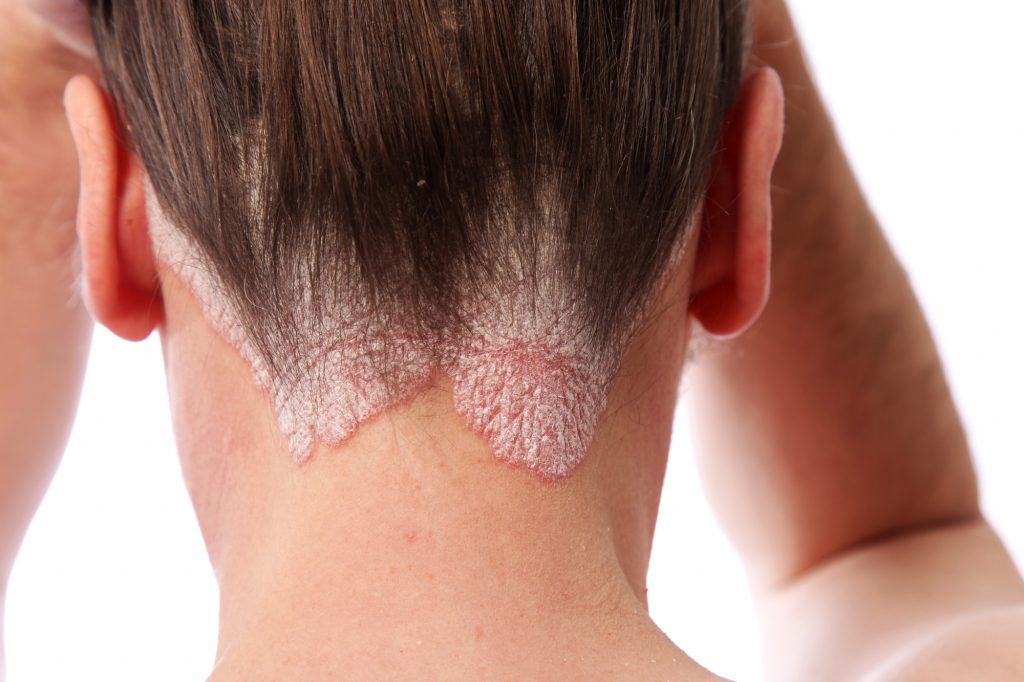
Introduction
Psoriasis as an immune-mediated inflammatory disorder:
Psoriasis is a chronic systemic inflammatory skin disease characterized by keratinocyte hyperproliferation, epidermal hyperplasia, and dysregulated immune responses involving Th1 and Th17 pathways. Key inflammatory mediators such as TNF-α, IL-17, and IL-23 play a central role in disease initiation and progression. The condition is further associated with oxidative stress, altered skin barrier function, and significant psychosocial burden.
Rationale for herbal intervention:
Recent research has highlighted the role of plant-derived bioactive compounds as adjuncts in psoriasis management due to their multitargeted actions, favorable safety profiles, and immunomodulatory potential. Among these, Yashtimadhu (Glycyrrhiza glabra) has gained scientific attention for its anti-inflammatory, antioxidant, and skin-protective properties.1
Therapeutic role of Yashtimadhu in psoriasis
Anti-inflammatory activity:
Glycyrrhizin and glabridin, key constituents of Glycyrrhiza glabra, exhibit strong anti-inflammatory effects by inhibiting pro-inflammatory mediators such as TNF-α, IL-1β, and IL-6, thereby reducing erythema, scaling, and plaque severity.2
Immunomodulatory effects:
Yashtimadhu modulates immune responses by regulating T-cell activation and Th1/Th17 cytokine balance, contributing to restoration of immune homeostasis in psoriatic lesions.
Antioxidant and cytoprotective action:
The flavonoid-rich profile of Yashtimadhu scavenges reactive oxygen species (ROS), thereby reducing oxidative stress–induced keratinocyte damage and improving skin integrity.
Skin barrier repair and soothing effect:
It enhances epidermal hydration, reduces transepidermal water loss, and exerts a demulcent and emollient effect, improving dryness and scaling commonly seen in psoriasis.
Antimicrobial protection:
Yashtimadhu demonstrates mild antibacterial and antifungal activity, helping to prevent secondary infections in chronic psoriatic plaques.
Mechanism of action in psoriasis
Inhibition of inflammatory signaling pathways:
Glycyrrhizin suppresses activation of NF-κB and MAPK pathways, leading to reduced transcription of pro-inflammatory cytokines involved in psoriatic inflammation.
Regulation of cytokine network:
It downregulates TNF-α, IL-17, and IL-23 expression, thereby attenuating Th17-driven immune responses central to psoriasis pathogenesis.
Modulation of keratinocyte proliferation:
Glabridin influences cellular signaling pathways that regulate keratinocyte differentiation and proliferation, helping normalize epidermal turnover.
Antioxidant enzyme activation:
Yashtimadhu enhances endogenous antioxidant defense systems, including superoxide dismutase (SOD) and catalase, thereby reducing oxidative tissue injury.
Cortisol-like anti-inflammatory activity:
Glycyrrhizin inhibits 11β-hydroxysteroid dehydrogenase, leading to prolonged endogenous cortisol activity, which contributes to its anti-inflammatory effects.
Therapeutic advantages of Yashtimadhu in psoriasis
Multi-target pharmacological profile:
Yashtimadhu acts on inflammation, oxidative stress, immune dysregulation, and barrier dysfunction simultaneously, making it a multi-target therapeutic agent.
Safer alternative for long-term use:
Compared to conventional systemic immunosuppressants, it offers lower toxicity and better tolerability when used appropriately.
Effective in chronic plaque psoriasis:
Its anti-inflammatory and skin-soothing properties make it particularly useful in chronic plaque-type psoriasis, reducing scaling and erythema.
Adjunct to conventional and Ayurvedic therapy:
Yashtimadhu can be effectively integrated with topical or systemic therapies, potentially enhancing clinical outcomes and reducing relapse frequency.
Support for skin healing and cosmetic improvement:
It improves skin texture, hydration, and pigmentation balance, contributing to overall dermatological restoration.
Conclusion
Yashtimadhu (Glycyrrhiza glabra) demonstrates significant therapeutic potential in psoriasis3 through its anti-inflammatory, immunomodulatory, antioxidant, and skin-protective actions. By targeting key molecular pathways such as NF-κB signaling and Th17-mediated cytokine activity, it helps regulate immune imbalance and keratinocyte hyperproliferation. Its favorable safety profile and multi-targeted mechanism support its role as a promising adjunct in integrative psoriasis management, although further large-scale clinical trials are required to establish standardized dosing and long-term efficacy.
References:
- Wahab S, Annadurai S, Abullais SS, et al. Glycyrrhiza glabra (Licorice): A Comprehensive Review on Its Phytochemistry, Biological Activities, Clinical Evidence and Toxicology. Plants (Basel). 2021;10(12):2751. Published 2021 Dec 14. doi:10.3390/plants10122751. https://pmc.ncbi.nlm.nih.gov/articles/PMC8703329/
- Shinde AN, Deshpande PP. HEALING FROM THE GROUND UP: AYURVEDIC CASE STUDY ON VIPADIKA. An International Journal of Research in AYUSH and Allied Systems. 2025;12(4):129-135. https://ayushdhara.in/index.php/ayushdhara/article/download/2248/2390/5543
- Menon S, Lavagale P, Maru S, Bari K, Dasmohapatra A. An Ayurvedic Drug Review of Yashtimadhu (Glycyrrhiza glabra L.). Journal of Neonatal Surgery. 2025;14(18s):742. https://www.researchgate.net/profile/Sudeep-Menon/publication/391562555_An_Ayurvedic_Drug_Review_of_Yashtimadhu_Glycyrrhiza_glabra_L/links/6826ed1fd1054b0207ef3889/An-Ayurvedic-Drug-Review-of-Yashtimadhu-Glycyrrhiza-glabra-L.pdf