
Persistent or recurrent cold-like symptoms—including nasal congestion, rhinorrhoea, throat irritation, postnasal drip and cough—may arise from allergic rhinitis, recurrent viral infections, chronic rhinosinusitis or other upper respiratory conditions. Although these disorders share overlapping symptoms, their underlying mechanisms differ. Allergic rhinitis involves IgE-mediated inflammation, mast-cell activation and the release of histamine and other inflammatory mediators, whereas infections may involve pathogen-driven inflammation and mucosal irritation. Therefore, understanding the cause of persistent symptoms is essential before selecting treatment.
Sitopaladi churna, a classical Ayurvedic polyherbal formulation traditionally used for Pratishyaya (rhinitis) and Kasa (cough), has attracted pharmacological interest because of its potential effects on allergic and inflammatory pathways.1 However, its clinical efficacy in chronic cold syndromes remains insufficiently established.
Composition and traditional therapeutic rationale
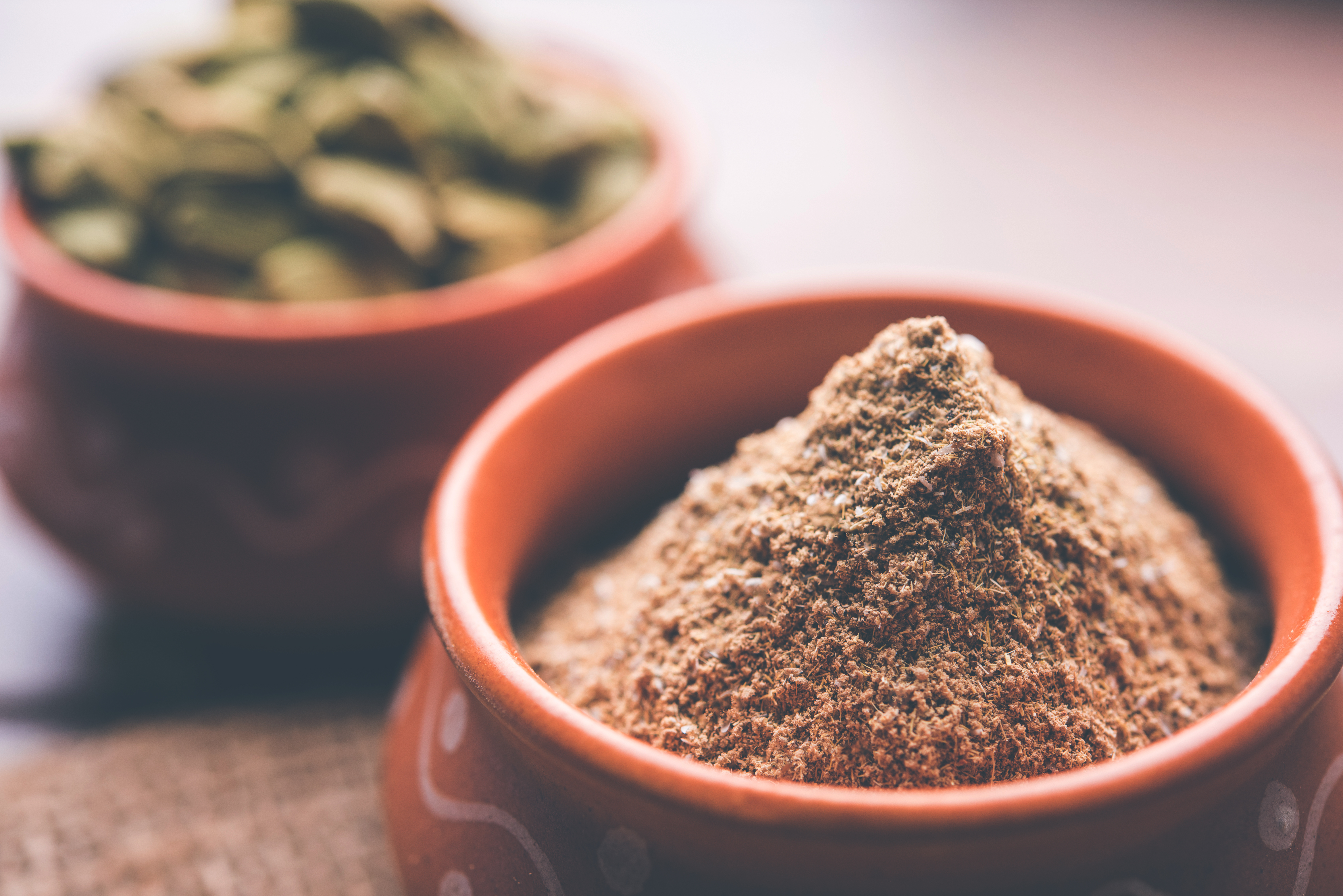
Sitopaladi churna generally contains five ingredients: Sitopala (sugar candy), Vanshlochan (siliceous material derived from bamboo), Pippali (Piper longum), Ela (cardamom; Elettaria cardamomum) and Tvak (cinnamon bark; Cinnamomum verum, also reported under the synonym Cinnamomum zeylanicum). In the classical Ayurvedic framework, the formulation is used to manage cough, respiratory discomfort and associated symptoms. Its ingredients are traditionally considered to support the management of Kapha-related manifestations, including mucus accumulation and congestion. From a contemporary pharmacological perspective, the formulation is of interest because its botanical components contain compounds with reported antioxidant, anti-inflammatory and other biological activities.
Sitopaladi churna is a supportive agent for allergy and in the treatment of cold, cough associated with bronchitis, pneumonia, and tuberculosis.2 Nevertheless, traditional indications and ingredient-level findings should not be interpreted as proof of therapeutic effectiveness in chronic rhinitis.
Anti-inflammatory and antioxidant potential
Inflammatory signalling and oxidative stress can contribute to mucosal irritation in respiratory disorders. Several phytochemicals found in the ingredients of Sitopaladi churna have been investigated for biological activities relevant to these pathways. Pippali contains piperine, while cinnamon and cardamom contain aromatic compounds and other phytochemicals studied for antioxidant or anti-inflammatory effects. Such compounds may influence inflammatory mediator production or oxidative processes in experimental systems. Nevertheless, evidence obtained from isolated compounds or individual herbs cannot automatically be extrapolated to the complete formulation. The concentration of active constituents, preparation method, dose and bioavailability can all influence biological activity. Consequently, the proposed anti-inflammatory and antioxidant actions of Sitopaladi churna should be regarded as mechanistic hypotheses requiring confirmation through formulation-specific studies in humans.
Cough modulation and respiratory symptom relief
Cough may persist after a respiratory infection because of residual airway inflammation, postnasal drainage or heightened cough-reflex sensitivity. A 2019 publication by Negi and colleagues reviewed the antitussive potential of Sitopaladi churna and described an experimental study using acetic-acid-induced cough models in guinea pigs. The investigators reported inhibition of cough bouts with an in-house formulation.3 This provides preliminary support for investigating cough-modulating activity, but animal experiments cannot establish the magnitude of symptom relief in humans. Moreover, reducing cough does not necessarily resolve the underlying cause of chronic nasal symptoms. Persistent cough may require assessment for asthma, upper airway cough syndrome, gastro-oesophageal reflux, medication-related effects or other respiratory conditions.
Ingredient synergy and formulation considerations
The potential effects of Sitopaladi churna may reflect interactions among its ingredients rather than a single active constituent. Pippali, cinnamon and cardamom contribute phytochemicals with distinct pharmacological profiles, while sugar candy forms a substantial part of the traditional formulation and may improve palatability. However, claims of synergistic action require direct experimental evidence; the presence of several biologically active ingredients alone does not demonstrate synergy. Product identity, ingredient ratios, raw-material quality, contamination control and consistency between batches are also important. Differences in extraction methods and laboratory preparations can produce results that are not directly comparable with those obtained from commercially available oral powders. Standardisation is therefore necessary before proposed mechanisms can be translated reliably into clinical practice.
What does recent research indicate?
A 2025 critical review examined Sitopaladi churna in the context of respiratory tract infections, bringing together its traditional applications and proposed pharmacological effects. Although the review supports further investigation of the formulation, its conclusions must be interpreted alongside the quality of the underlying studies. The mast-cell experiment and the 2019 antitussive publication provide preliminary mechanistic evidence, but neither establishes efficacy for chronic cold syndromes through robust, placebo-controlled clinical trials. In particular, evidence for allergic rhinitis, recurrent colds and chronic rhinosinusitis should not be treated as interchangeable. Well-designed human studies using standardised formulations, defined diagnoses, validated symptom scores and adequate follow-up are needed to determine clinical benefit.
Safety and clinical considerations
Sitopaladi churna should not be considered a substitute for diagnosis or evidence-based treatment. Because the formulation contains sugar candy, its carbohydrate content is relevant for people with diabetes or those monitoring their sugar intake. Pippali contains piperine, which may affect the metabolism or transport of certain medicines; patients taking regular medication should seek advice from a qualified healthcare professional before use. Product quality, dosage and duration also warrant consideration, particularly when evidence on long-term safety is limited. Persistent symptoms, high fever, breathing difficulty, facial swelling or worsening illness require medical assessment rather than self-treatment. The formulation’s suitability should be evaluated individually, taking account of the underlying condition, concurrent medicines and product quality.
Conclusion
Sitopaladi churna presents a plausible area for research in chronic cold syndromes, particularly because experimental findings suggest mast-cell-stabilising activity and possible cough-modulating effects. Its proposed anti-inflammatory and antioxidant actions provide additional avenues for investigation. However, these mechanisms remain preliminary, and current evidence is insufficient to confirm that the formulation effectively treats chronic rhinitis or recurrent cold symptoms in humans. Standardised products, rigorous clinical trials and systematic safety evaluation are essential to establish its role in respiratory care.
References:
- Kushwaha AK, Kumari S, Singh MP, Ranjan R. A critical review of Sitopaladi Churna in the management of respiratory tract infections: an Ayurvedic and pharmacological perspective. J Neonatal Surg. 2025;14(5S):983-988. https://jneonatalsurg.com/index.php/jns/article/view/8796
- Makhija IK, Shreedhara CS, Ram HN. Mast cell stabilization potential of Sitopaladi churna: An ayurvedic formulation. Pharmacognosy Res. 2013;5(4):306-308. doi:10.4103/0974-8490.118824. https://pmc.ncbi.nlm.nih.gov/articles/PMC3807997/
- Negi J, Prashar B, Gupta J. Sitopaladi churna as anti-tussive: a review. Int J Health Clin Res. 2019;2(6):1-5. https://www.ijhcr.com/index.php/ijhcr/article/view/43