
Introduction
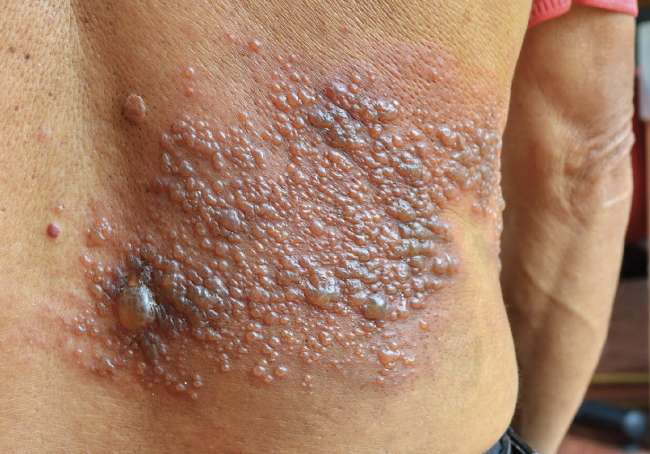
Herpes simplex virus (HSV) infection is a common recurrent viral dermatosis caused primarily by HSV-1 and HSV-2. It is characterized by grouped vesicular eruptions on an erythematous base, burning pain, itching, and ulceration, most commonly affecting orolabial and genital regions. After primary infection, the virus establishes latency in sensory ganglia and reactivates under triggers such as stress, fever, immunosuppression, and ultraviolet exposure.
Conventional therapy includes nucleoside analogues such as acyclovir, valacyclovir, and famciclovir, which reduce viral replication but do not eradicate latent infection, leading to frequent recurrences. This has increased interest in complementary systems such as Ayurveda, where HSV-like conditions are correlated with Visarpa and Pittaja–Rakta dominant skin disorders.
Ayurvedic correlation of herpes simplex infection
In Ayurvedic dermatology, HSV-associated lesions are primarily correlated with:
- Visarpa (rapidly spreading inflammatory skin condition)
- Pittaja skin disorders (burning, erythema, vesicular eruptions)
- Rakta dushti (vitiation of blood tissue)
- Tridosha involvement with Pitta predominance
Clinical features such as burning sensation, vesicular eruptions, ulceration, and recurrence closely resemble HSV reactivation patterns.
Pathophysiology: modern and Ayurvedic correlation
Modern biomedical perspective:
- Viral replication in epithelial cells
- Latent infection in dorsal root and trigeminal ganglia
- Immune evasion via suppression of host antiviral response
- Cytokine-mediated inflammatory response during reactivation
- Local epithelial destruction and vesicle formation
Ayurvedic pathogenesis:
- Pitta aggravation → heat, burning, inflammation
- Rakta vitiation → vesicles, erythema, ulceration
- Vata involvement → pain and neural sensitivity
- Srotodushti → impaired tissue immunity and spread of lesions
Therapeutic principles in Ayurvedic management
Ayurvedic management focuses on a multi-target approach:
- Shodhana (detoxification and purification therapies)
- Shamana (palliative herbal antiviral therapy)
- Rasayana (immune enhancement and recurrence prevention)
- Bahya chikitsa (topical dermatological applications)
- Agni and Rakta normalization (metabolic and blood purification)
The goal is not only lesion healing but also reducing recurrence and enhancing host immunity.
Shodhana therapy in herpes simplex management
Virechana karma (therapeutic purgation):
- Primary therapy for Pitta–Rakta disorders
- Helps eliminate systemic inflammatory mediators
- Reduces recurrence tendency by correcting metabolic imbalance
Raktamokshana (bloodletting therapy):
- Used in severe inflammatory or recurrent Visarpa-like conditions
- Reduces localized viral-induced inflammatory load
- Improves microcirculation and immune clearance
Shamana therapy (herbal antiviral and immunomodulatory agents)
Neem (Azadirachta indica):
- Strong antiviral and antimicrobial activity
- Inhibits viral replication in experimental models
- Reduces inflammation and secondary bacterial infection1
Guduchi (Tinospora cordifolia):
- Potent immunomodulator enhancing macrophage activity
- Balances Th1/Th2 immune response
- Reduces frequency of viral reactivation
Haridra (Curcuma longa):
- Curcumin inhibits NF-κB and inflammatory cytokines
- Demonstrates antiviral and wound-healing properties
- Reduces burning and erythema
Tulsi (Ocimum sanctum):
- Exhibits antiviral, antioxidant, and anti-inflammatory effects
- Supports host immune defense mechanisms
- Reduces oxidative stress during viral reactivation
Manjistha (Rubia cordifolia):
- Blood purifier (Rakta shodhana)
- Reduces inflammatory skin lesions
- Supports tissue regeneration
External therapies (Bahya chikitsa)
Herbal lepa (topical applications):
- Neem, turmeric, sandalwood-based pastes
- Reduces vesicular inflammation and pain
- Promotes lesion drying and healing
Taila application (medicated oils)2:
- Provides barrier protection and anti-inflammatory effects
- Supports epithelial regeneration
Washes and decoctions:
- Antiseptic herbal washes reduce secondary infection risk
- Promote faster resolution of lesions
Rasayana therapy (immune restoration and recurrence prevention)
Rasayana therapy is essential in recurrent HSV due to latent viral persistence.
Key effects include:
- Enhancement of cellular immunity
- Reduction in oxidative stress
- Improved tissue repair and resistance
- Decreased recurrence frequency
Common Rasayana herbs: Guduchi, Amalaki, Ashwagandha
Therapeutic role in herpes simplex lesions:
Ayurvedic phytotherapeutic interventions contribute to:
- Reduction of vesicular eruption severity
- Decrease in burning sensation and pain
- Faster lesion healing and re-epithelialization
- Reduced secondary bacterial infection
- Improved immune response against viral reactivation
- Lower recurrence frequency in chronic cases
Advantages of Ayurvedic phytotherapy
- Multitarget antiviral, anti-inflammatory, and immunomodulatory action
- Potential reduction in recurrence rates through immune modulation
- Promotion of natural wound healing and skin regeneration
- Lower risk of systemic adverse effects compared to long-term antivirals
- Holistic correction of dosha imbalance and metabolic dysfunction
- Suitable for integrative and adjunctive use with conventional therapy
Conclusion
Phytotherapeutic approaches in Ayurveda for herpes simplex virus–associated dermatological lesions provide a comprehensive strategy integrating antiviral herbal agents, detoxification therapies, and immune-enhancing Rasayana formulations. Herbs such as Neem, Guduchi, Haridra, Tulsi, and Manjistha demonstrate scientifically plausible antiviral, anti-inflammatory, and immunomodulatory effects that align with the pathophysiology of HSV infection.
Current evidence supports their role as adjunctive therapies that may reduce symptom severity, accelerate healing, and potentially decrease recurrence. However, further standardized clinical trials are required to validate efficacy, optimize dosing, and integrate these therapies into evidence-based dermatological practice.
References:
- Wylie MR, Merrell DS. The Antimicrobial Potential of the Neem Tree Azadirachta indica. Front Pharmacol. 2022;13:891535. Published 2022 May 30. doi:10.3389/fphar.2022.891535. https://pmc.ncbi.nlm.nih.gov/articles/PMC9195866/
- Minami M, Kita M, Nakaya T, Yamamoto T, Kuriyama H, Imanishi J. The inhibitory effect of essential oils on herpes simplex virus type-1 replication in vitro. Microbiol Immunol. 2003;47(9):681-684. doi:10.1111/j.1348-0421.2003.tb03431.x. https://pubmed.ncbi.nlm.nih.gov/14584615/