
Introduction
Male reproductive function is governed by a complex interplay of hormonal regulation, spermatogenesis, oxidative balance, and neuroendocrine signaling. Disturbances in these processes can result in reduced sperm count, impaired motility, diminished libido, and infertility. Contemporary research highlights oxidative stress as a major contributor to male reproductive dysfunction.
Ayurveda emphasizes the importance of Shukra Dhatu as the essence of all bodily tissues and the foundation of fertility. Herbs possessing Rasayana and Vrishya (fertility-enhancing) properties are employed to strengthen reproductive capacity. Among these, Shatavari occupies a prominent place due to its rejuvenating and nourishing actions.
Ayurvedic perspective
Shatavari is described as:
- Madhura and Tikta Rasa (sweet and bitter taste)
- Guru and Snigdha Guna (heavy and unctuous qualities)
- Sheeta Virya (cool potency)
- Madhura Vipaka
- Rasayana (rejuvenative)
- Balya (strength-promoting)
- Vrishya (fertility-enhancing)
- Shukrala (supports reproductive tissue)
These attributes help nourish Shukra Dhatu, improve vitality, and support reproductive balance.
Phytochemical constituents
The major bioactive compounds include:
- Shatavarins (steroidal saponins)
- Asparagamine A
- Isoflavones
- Flavonoids
- Alkaloids
- Polyphenols
These constituents contribute to antioxidant, adaptogenic, and endocrine-regulatory activities.
Mechanisms supporting male fertility
Antioxidant protection:
Oxidative stress damages sperm membranes, mitochondrial function, and DNA integrity. Shatavari contains potent antioxidant compounds that neutralize reactive oxygen species and protect reproductive tissues from oxidative injury.1
Adaptogenic and anti-stress effects:
Psychological stress negatively influences testosterone production and spermatogenesis. Experimental studies suggest that Shatavari exhibits adaptogenic activity, helping regulate stress responses and maintain reproductive function.2
Hormonal regulation:
Steroidal saponins present in Shatavari may influence endocrine balance and reproductive hormone regulation. While direct testosterone-enhancing effects require further clinical investigation, studies suggest supportive effects on overall reproductive physiology.
Improvement of spermatogenesis:
Animal studies have reported enhanced testicular function, improved sperm production, and increased reproductive tissue health following Shatavari administration.
Immunomodulatory activity:
Inflammation and immune dysregulation can adversely affect fertility. Shatavari’s immunomodulatory properties may help maintain a favorable environment for normal spermatogenesis.
Clinical applications
Shatavari may be useful in:
- Male infertility
- Reduced sperm quality
- Stress-related reproductive dysfunction
- General reproductive debility
- Age-related decline in vitality
- Adjunctive fertility support
It is often incorporated into Ayurvedic Rasayana and Vajikarana formulations designed to improve reproductive health.
Safety profile
Shatavari has a long history of traditional use and is generally well tolerated. Adverse effects are uncommon and usually mild, consisting mainly of occasional gastrointestinal discomfort in sensitive individuals.
Conclusion
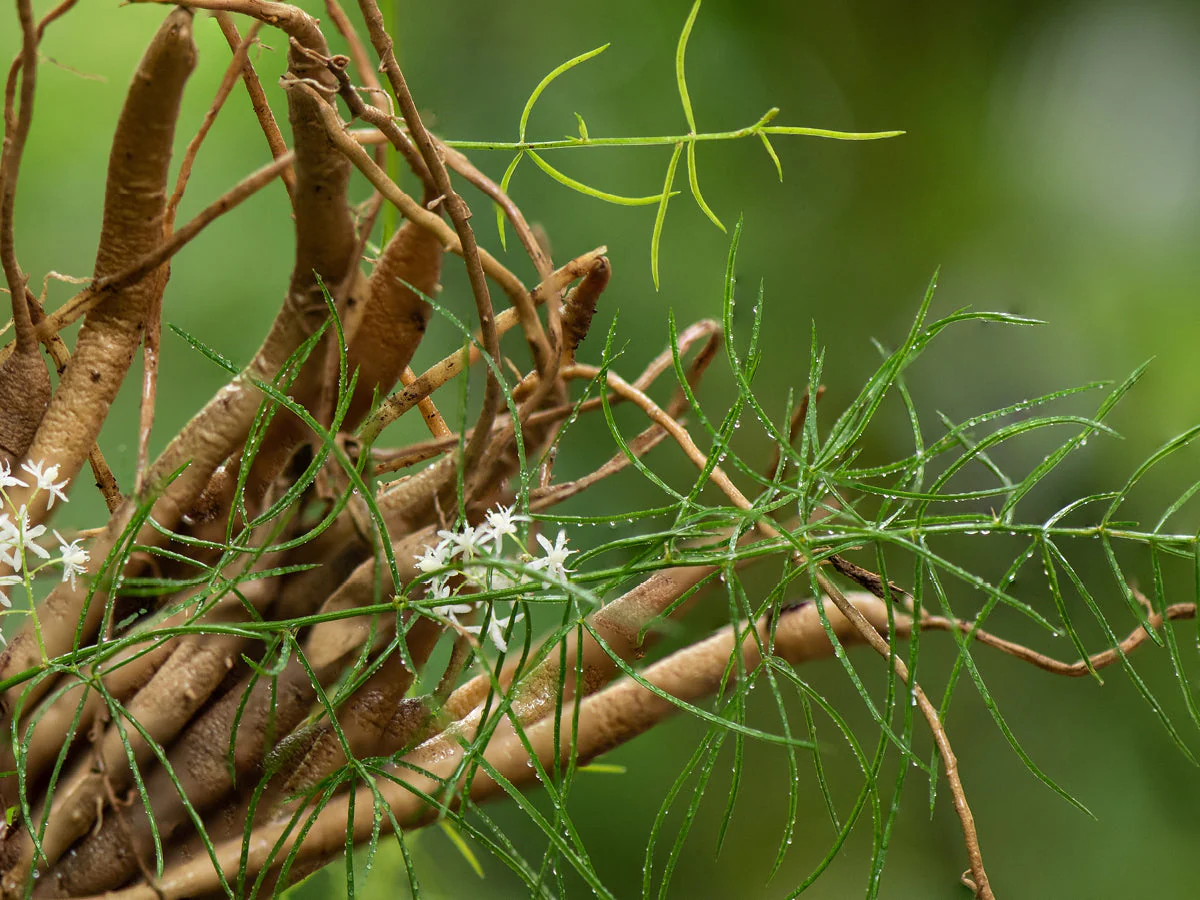
Shatavari (Asparagus racemosus) is a valuable Ayurvedic Rasayana with emerging relevance in male reproductive health. Through its antioxidant, adaptogenic, immunomodulatory, and tissue-nourishing actions, it may help support spermatogenesis, reproductive balance, and fertility potential. Although further clinical studies in men are needed, current experimental and traditional evidence supports its role as a complementary herb in the integrative management of male infertility and reproductive dysfunction.3
Reference:
- Negi JS, Singh P, Joshi GP, Rawat MS, Bisht VK. Chemical constituents of Asparagus. Pharmacogn Rev. 2010;4(8):215-220. doi:10.4103/0973-7847.70921 https://pmc.ncbi.nlm.nih.gov/articles/PMC3249924/
- Alok S, Jain SK, Verma A, Kumar M, Mahor A, Sabharwal M. Plant profile, phytochemistry and pharmacology of Asparagus racemosus (Shatavari): A review. Asian Pac J Trop Dis. 2013;3(3):242-251. doi:10.1016/S2222-1808(13)60049-3 https://pmc.ncbi.nlm.nih.gov/articles/PMC4027291/
- Oyovwi MO, Chijiokwu EA, Ben-Azu B, Ugwuishi EW, Jeroh E. Shatavari (Asparagus racemosus): A Promising Ally for Fertility. Curr Nutr Rep. 2025 Sep 20;14(1):108. doi: 10.1007/s13668-025-00694-5. PMID: 40974515. https://pubmed.ncbi.nlm.nih.gov/40974515/