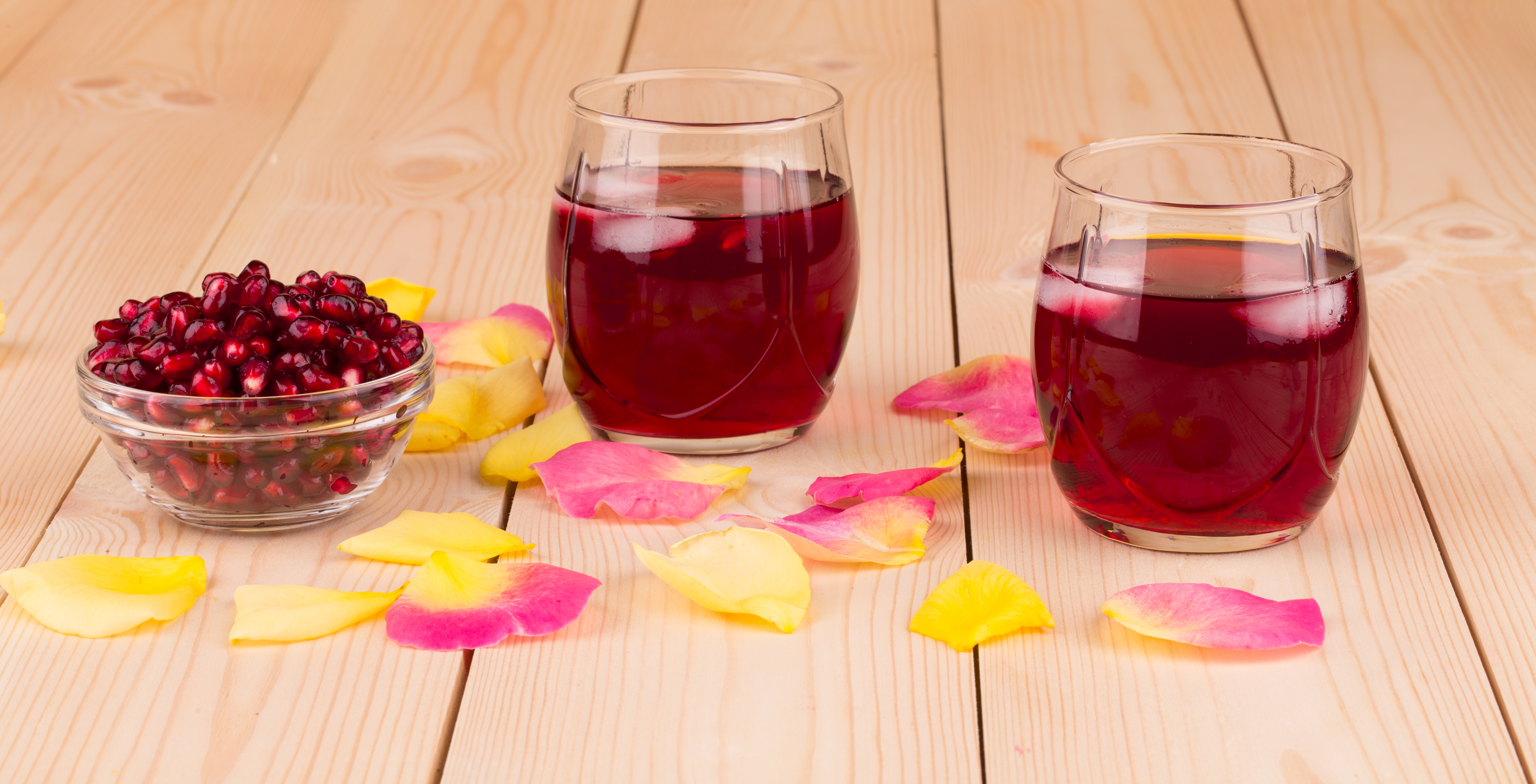
Heavy menstrual bleeding (HMB), traditionally described in terms of excessive menstrual flow, can affect daily activities, quality of life and iron status. In Ayurveda, abnormal or excessive uterine bleeding is discussed under conditions such as Asrigdara or Raktapradara. Dadima (Punica granatum), commonly known as pomegranate, is recognised in Ayurvedic practice for its varied properties. Different parts of the plant, including the fruit, rind, flower and seeds, have distinct compositions and traditional applications. Pomegranate flower preparations have also been investigated for their potential role in reducing menstrual blood loss.1
Traditional rationale and proposed role
Dadima is described in Ayurvedic materia medica in relation to digestive and other therapeutic properties. Pomegranate contains polyphenols, tannins, flavonoids and anthocyanins, with the distribution of these constituents varying across plant parts.
- Astringent properties: Pomegranate flower and rind contain tannins, which have traditionally been associated with astringent activity.
- Antioxidant activity: Polyphenolic constituents have demonstrated antioxidant activity in experimental investigations.
- Haemostatic potential: Pomegranate flower has been traditionally used in Persian medicine for bleeding conditions, including excessive menstrual bleeding. This use should not automatically be attributed to classical Ayurvedic practice.1
Clinical considerations and applications
Clinical investigations have primarily examined dried pomegranate flower preparations rather than the whole fruit.
- Menstrual blood loss: A randomised clinical trial reported reduced menstrual blood loss following pomegranate flower treatment, with findings compared against tranexamic acid.1
- Quality of life: Improvements in menstrual bleeding-related quality-of-life measures were also reported.
- Placebo-controlled findings: A subsequent clinical trial evaluated Golnar preparations against placebo and reported improvements in menstrual blood loss.2
These findings relate specifically to pomegranate flower preparations and cannot be generalised to pomegranate juice, fruit, rind or other Ayurvedic formulations.
Safety and clinical considerations
Heavy menstrual bleeding requires assessment for underlying causes, including uterine fibroids, adenomyosis, ovulatory disorders and bleeding disorders. Pomegranate preparations should not delay gynaecological evaluation or established treatment. The available clinical findings are preparation-specific, and the safety of prolonged use and interactions with conventional medicines require consideration.
Conclusion
Dadima has a recognised place in traditional medicine, while pomegranate flower preparations have shown potential in clinical investigations of excessive menstrual bleeding. However, the distinction between plant parts and traditional systems is important when interpreting these findings. Pomegranate may offer a complementary area of investigation, but its role should be considered alongside appropriate diagnosis and established management of HMB.3
References:
- Goshtasebi A, Mazari Z, Behboudi Gandevani S, Naseri M. Anti-hemorrhagic activity of Punica granatum L. flower (Persian Golnar) against heavy menstrual bleeding of endometrial origin: a double-blind, randomized controlled trial. Med J Islam Repub Iran. 2015;29:199. Published 2015 Apr 18. https://pmc.ncbi.nlm.nih.gov/articles/PMC4476216/
- Yousefi F, Kashanian M, Nazem I, et al. Comparison between Golnar product and placebo in heavy menstrual bleeding: A double-blind randomized clinical trial. Avicenna J Phytomed. 2020;10(5):523-532. https://pmc.ncbi.nlm.nih.gov/articles/PMC7508321/
- Javan R, Yousefi M, Nazari SM, et al. Herbal Medicines in Idiopathic Heavy Menstrual Bleeding: A Systematic Review. Phytother Res. 2016;30(10):1584-1591. doi:10.1002/ptr.5675. https://pubmed.ncbi.nlm.nih.gov/27397554/