
Introduction
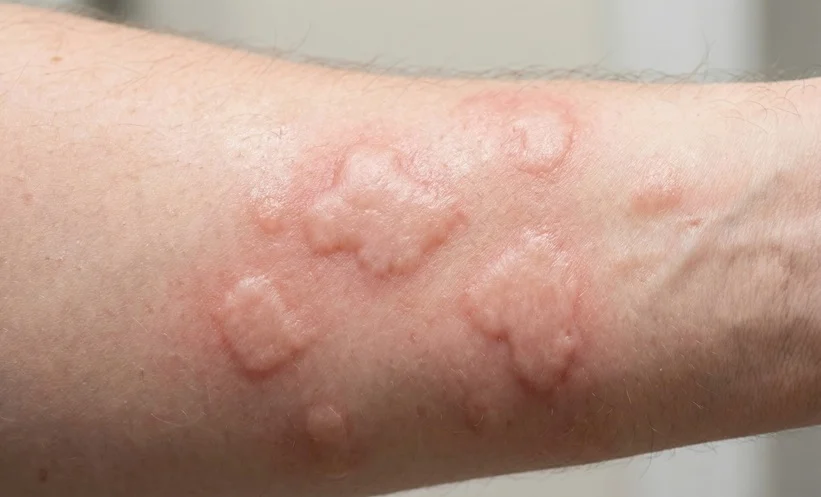
Chronic spontaneous urticaria (CSU) is a mast cell–mediated skin disorder characterized by the recurrent appearance of wheals (hives), angioedema, or both for a duration exceeding 6 weeks, with symptoms occurring on most days of the week. CSU is distinguished from chronic inducible urticaria (CIndU) in that it occurs in the absence of identifiable external physical triggers, although exacerbating factors may still be present. The pathogenesis is considered largely autoimmune and idiopathic, involving mast cell activation and histamine release without a consistent exogenous stimulus, making etiological identification challenging and often unrewarding in clinical practice.
Patients with CSU frequently present with associated angioedema involving deeper dermal and submucosal tissues, contributing to functional impairment and reduced quality of life. From a modern immunopathological perspective, CSU is associated with dysregulation of immune tolerance, autoantibody-mediated mast cell degranulation, and enhanced basophil reactivity.
In Ayurvedic literature, CSU closely correlates with Sheetapitta, a disorder characterized by erythematous wheals, pruritus, and recurrent cutaneous eruptions. Classical texts describe Sheetapitta as a result of vitiation of Vata and Kapha doshas, often triggered by exposure to cold foods, cold environments, or other aggravating factors, leading to dermal and epidermal involvement with itching and swelling.
Globally, CSU remains a therapeutic challenge, with many patients showing suboptimal response or recurrence despite antihistamines and immunomodulatory agents. This has prompted growing interest in complementary therapeutic approaches, including Ayurveda.
Classical Ayurvedic texts such as Yogaratnakara describe a structured management approach for Sheetapitta, comprising Shodhana (bio-purification therapies) and Shamana (palliative pharmacotherapy). Based on this framework, therapeutic protocols such as Virechana Karma (therapeutic purgation), along with herbo-mineral formulations including Panchanimbadi Churna, Gandhaka Rasayana, Patolakaturohinyadi Kashayam, and Sarivadyasava, have been explored for their potential role in modulating chronic urticarial pathology through detoxification, anti-inflammatory, and immunomodulatory mechanisms.
Conventional and Ayurvedic therapeutic approach in chronic urticaria
Conventional management perspective:
Current conventional management of chronic urticaria, including both chronic spontaneous urticaria (CSU) and acute urticaria, is primarily symptomatic and control-oriented rather than curative. Standard pharmacological strategies aim to reduce disease activity, prevent wheal formation, and control pruritus using antihistamines, leukotriene receptor antagonists, and immunomodulatory agents in refractory cases. However, recurrence after discontinuation of therapy remains a significant clinical challenge.
Ayurvedic management perspective:
In contrast, Ayurvedic therapeutics describe a potentially curative approach based on Shodhana (bio-purification) followed by Shamana (palliative therapy), aiming to correct underlying doshic imbalance, eliminate pathogenic factors, and restore systemic homeostasis.
Pathogenesis (Samprapti) of sheetapitta
Etiological factors:
Exposure to cold environmental conditions and intake of cold, incompatible, or aggravating dietary substances are considered primary triggering factors.
Dosha involvement:
These factors lead to vitiation of Kapha and Vata doshas, with secondary involvement of Pitta in inflammatory presentations.
Disease development sequence:
- Vitiated Kapha–Vata localizes in Twak (skin) and Rakta dhatu (blood tissue)
- Leads to hypersensitivity reactions in dermal and epidermal layers
- Results in formation of erythematous wheals with intense pruritus
- Clinically manifests as Sheetapitta (urticaria)
Therapeutic rationale of Shodhana (bio-purification)1
Mechanistic basis:
Virechana karma (therapeutic purgation) is considered the primary Shodhana therapy in Sheetapitta. It is proposed to act on systemic metabolic and humoral imbalances by facilitating elimination of vitiated doshas through gastrointestinal purification pathways.
From an integrative physiological perspective, it is postulated to:
- Promote systemic detoxification by enhancing elimination of inflammatory mediators and metabolic waste products
- Improve gastrointestinal metabolic function (Agni dīpana)
- Restore immunological and biochemical equilibrium
- Support normalization of neuroimmune signaling and inflammatory mediators
Pre-purification procedures (Purva karma)
Deepana and pachana:
Herbal digestive stimulants such as Nagarmotha churna and Panchanimbadi churna are administered to enhance digestive fire (Agni) and correct metabolic dysfunction.
Snehapana:
Internal oleation using Aragwadhmahatiktaka ghrita is performed to mobilize vitiated doshas from peripheral tissues toward the gastrointestinal tract, facilitating subsequent elimination.
Main purification therapy (Pradhana karma)
Virechana karma protocol:
Therapeutic purgation is induced using formulations such as:
- Trivrit avaleha (Virechana kalpa)
- Nimbamritadi eranda taila
- Triphala kwatha
These are traditionally indicated in dermatological and pitta-dominant disorders and are used to eliminate vitiated dosha accumulation and restore systemic balance.
Post-purification regimen (Paschat karma)
Samsarjana krama:
A graduated dietary regimen (Peyadi krama) is followed to gradually restore digestive strength (Agni) and re-establish doshic equilibrium, thereby stabilizing physiological and metabolic homeostasis.
Shamana therapy (Palliative management)
Gandhaka rasayana:
Following purification, Gandhaka Rasayana is administered for its multidimensional pharmacological properties, including:
- Antimicrobial and antipruritic activity
- Anti-inflammatory and immunomodulatory effects
- Rasayana (rejuvenative) action supporting tissue repair
It is traditionally indicated in chronic inflammatory, dermatological, and hypersensitivity disorders.
Panchanimbadi churna:
This formulation possesses:
- Tikta rasa (bitter taste)
- Laghu and ruksha gunas (light and dry properties)
- Kapha–Pitta pacifying action
It is traditionally used as a blood-purifying and anti-inflammatory agent in chronic skin disorders.
Clinical outcome perspective
Therapeutic implication:
The combined approach of Shodhana followed by Shamana therapy is proposed to:
- Reduce recurrence of urticarial episodes
- Improve symptom control (itching and wheal formation)
- Restore immunological and metabolic balance
- Enhance long-term disease stability
Conclusion
This therapeutic framework suggests that chronic spontaneous urticaria (Sheetapitta) may be managed through a structured Ayurvedic approach involving Shodhana (Virechana karma) followed by Shamana herbo-mineral therapy. This integrative strategy is proposed to address both symptom control and underlying pathophysiological imbalance. However, further well-designed clinical and mechanistic studies are required to validate its efficacy, safety, and applicability in larger patient populations.
References:
- Yadav U. Ayurvedic Management of Chronic Spontaneous Urticaria (Sheetapitta) with Therapeutic Purgation and Palliative Herbo Mineral Medicine: A case report. Annals of Ayurvedic Medicine. 2026 Feb 24;15(1):295-. https://www.aamjournal.in/fulltext/70-1636632809.pdf?1781940604