
Skin is the largest and most diverse organ of the human body, and its condition is important not only for aesthetic reasons but also for overall health. The visible manifestations of dermatitis can adversely affect a patient’s psychological well-being, while psychological factors may also influence the development and management of chronic skin diseases. Atopic dermatitis (atopic eczema) is a chronic inflammatory skin condition associated with a genetic predisposition to heightened responses to environmental triggers. Its common clinical manifestations include excessive skin dryness, itching, scaling, redness, irritation, exudation, swelling, erythematous patches, rashes, and fluid-filled blisters. In addition, Staphylococcus aureus commonly colonises the skin of individuals with atopic dermatitis and may contribute to disease severity and inflammation.
Calendula officinalis: Traditional uses and therapeutic potential1
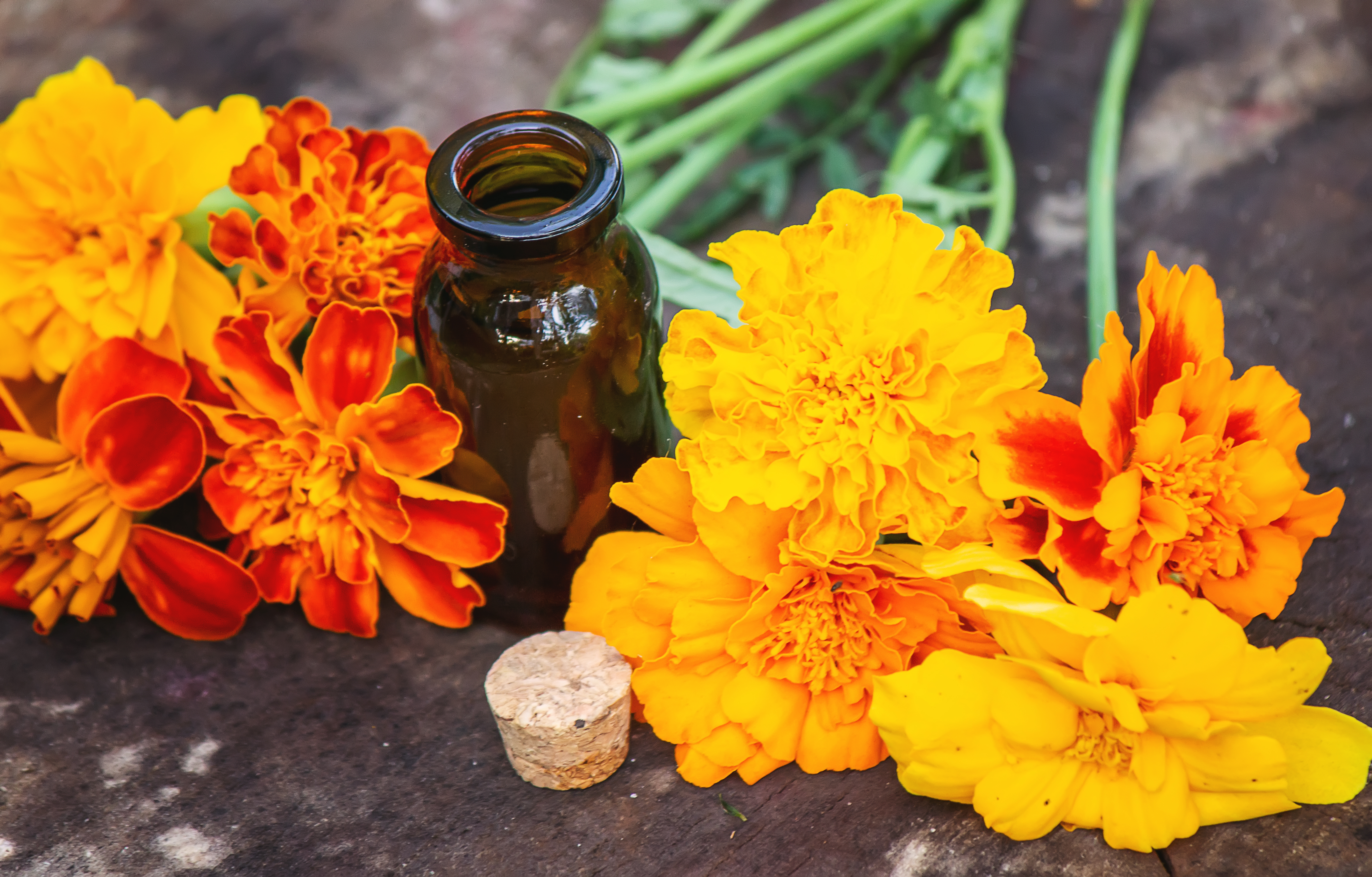
- Calendula officinalis L., commonly known as pot marigold, is an annual or short-lived perennial herbaceous plant predominantly distributed across the Mediterranean region. It has diverse applications as an ornamental plant, a medicinal herb, an ingredient in cosmetic formulations, and an edible garnish in culinary practices.
- Pot marigold possesses a broad spectrum of medicinal properties. Traditionally, its leaves have been used as diaphoretic and expectorant agents, while its flowers are known for their antispasmodic properties and use in promoting menstrual flow. In Serbian traditional medicine, the flowers are commonly incorporated into creams and other topical preparations for managing skin infections, wounds, burns, and rashes.
- Pot marigold suspensions and tinctures are also used topically to manage acne, reduce inflammation, control bleeding, and soothe irritated tissues. Extracts of the plant have demonstrated anti-inflammatory, antioedematous, antioxidant, antibacterial, antifungal, antiviral, wound-healing, and immunostimulant activities. In traditional French medicine, the flowers are prepared as herbal infusions to alleviate fever and promote perspiration.
- Ethnobotanical studies from eastern Serbia indicate that the flowers are the most commonly used plant part in traditional medicine. In other regions of Serbia, the flowers are used as a spice in soups, broths, and other dishes, while the leaves are incorporated into salads. Additionally, pot marigold flowers are valued as edible flowers because of their antioxidant potential.
Calendula officinalis in atopic eczema: Clinical evidence
|
Clinical condition |
Outcomes |
|
Diaper dermatitis (Panahi et al.) |
The Study suggests that topical use of Calendula officinalis could be used effectively for the treatment of diaper dermatitis in infants. |
|
Acute dermatitis (Pommier et al.) |
Topical use of Calendula officinalis prevented acute dermatitis grade 2 or higher in breast cancer patients given radiation therapy.2 |
Considering its anti-inflammatory and analgesic it was able to minimize dermatitis in newborns caused by diaper friction when compared to Aloe vera. However, application in children under 6 years of age is not recommended.3
Moreover, three herbal formulations were evaluated for their effects on radiation-induced dermatitis in 59 patients. These included a radiation dermatitis cream primarily containing Aloe vera gel combined with Calendula officinalis and Hypericum perforatum oil extracts; a formulation containing beeswax, olive oil, C. officinalis and H. perforatum oils, and aloe gel; and a shower gel with a composition similar to that of the cream.
Participants were instructed to apply the formulations regularly each day throughout radiotherapy and for two weeks after treatment completion. The findings showed that most patients initially experienced grade I toxicity during the first weeks of radiotherapy, which progressed to grade II before subsequently regressing to grade I by the end of the study. No adverse events were reported during the study. Furthermore, 94.9% of patients achieved Dermatology Life Quality Index (DLQI) scores of up to 1, with 66.1% maintaining scores within this range.4
Conclusion:
Calendula officinalis demonstrates promising anti-inflammatory, antioxidant, antimicrobial, and wound-healing properties, supporting its potential as a complementary topical approach for managing dermatitis. Preliminary clinical findings suggest benefits in diaper and radiation-induced dermatitis, with favourable tolerability reported in some studies. However, further well-designed clinical trials are needed to establish its efficacy, safety, and role in atopic eczema management.
References:
- Milenković L, Ilić ZS, Stanojević L, et al. Phytochemical Composition and Antioxidant Activity of Pot Marigold (Calendula officinalis): The Impact of Light Modification. Plants (Basel). 2025;14(22):3512. Published 2025 Nov 18. doi:10.3390/plants14223512. https://pmc.ncbi.nlm.nih.gov/articles/PMC12656487/
- Shahane K, Kshirsagar M, Tambe S, et al. An Updated Review on the Multifaceted Therapeutic Potential of Calendula officinalis L. Pharmaceuticals (Basel). 2023;16(4):611. Published 2023 Apr 18. doi:10.3390/ph16040611. https://pmc.ncbi.nlm.nih.gov/articles/PMC10142266/
- Dawid-Pać R. Medicinal plants used in treatment of inflammatory skin diseases. Postepy Dermatol Alergol. 2013;30(3):170-177. doi:10.5114/pdia.2013.35620. https://pmc.ncbi.nlm.nih.gov/articles/PMC3834722/
- Deligiannidou GE, Papadimitriou K, Poulios E, Kontogiorgis C, Papadopoulou SK, Giaginis C. An Update of Phytotherapeutic Advances of Marigold (Calendula officinalis L.) in Wound Healing. Plants (Basel). 2025;14(22):3497. Published 2025 Nov 16. doi:10.3390/plants14223497. https://pmc.ncbi.nlm.nih.gov/articles/PMC12656484/