
Introduction
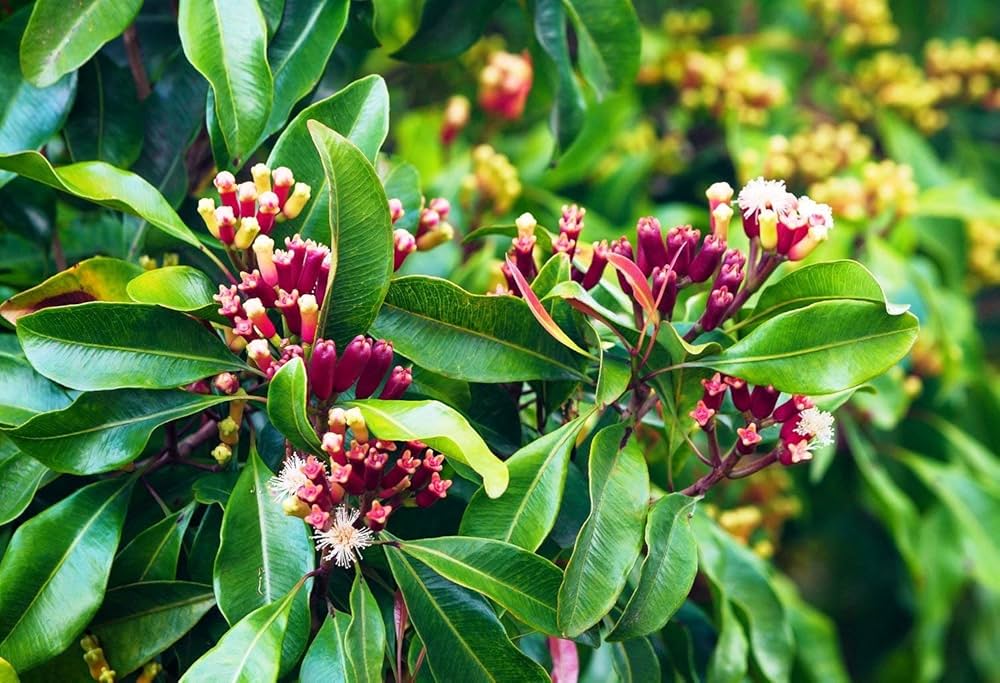
Syzygium aromaticum, commonly known as clove, is a medicinal plant belonging to the Myrtaceae family. Its flower buds, which represent the primary commercial and medicinal part, are harvested during the maturation stage prior to blooming. Clove essential oil (CEO) is widely utilized across culinary, pharmaceutical, cosmetic, and biomedical domains due to its strong bioactive profile and multifunctional properties. 1
Ayurvedic therapeutic relevance and traditional applications
In traditional usage systems, clove has been valued as a flavoring agent and medicinal ingredient, particularly in formulations related to oral and dental care. Its application extends to food preservation and hygiene-related practices due to its antimicrobial characteristics. The plant demonstrates broad utility across preventive and supportive health contexts, aligning with its long-standing use as a natural therapeutic agent.
Phytochemical composition and bioactive profile
The pharmacological efficacy of clove is strongly associated with its rich phytochemical composition. Clove essential oil contains a high concentration of eugenol and its derivatives, along with phenylpropanoids such as cinnamaldehyde, carvacrol, and thymol. Additional constituents include hydroxy eugenol, hydroxycinnamic acids, hydroxyphenylpropens flavonoids, and hydroxybenzoic acids. Minor components such as humulene and caryophyllene are also present in negligible amounts.
These compounds collectively contribute to a broad spectrum of biological activities:
- Antioxidant activity, supporting cellular protection against oxidative stress
- Antibacterial and antifungal effects, contributing to microbial control
- Insecticidal and pesticidal properties, supporting agricultural applications
- Anticarcinogenic potential, linked to bioactive phenolic compounds
- Analgesic and antiseptic actions, relevant to topical applications
Clinical and industrial applications
Clove essential oil demonstrates wide applicability across multiple sectors due to its physiological and functional properties. In pharmaceutical and biomedical contexts, it is utilized for its antimicrobial and antioxidant potential. In food systems, it serves as a spice, preservative, and natural colorant, contributing to shelf-life extension and microbial safety. Its role in active packaging and edible coatings further highlights its relevance in modern food technology.
Emerging research perspectives
Current developments highlight growing interest in improving the functional application of clove essential oil through advanced delivery systems. Encapsulation approaches are being explored to enhance stability, solubility, and bioavailability while preserving sensory attributes such as flavor, color, and texture. Integration of nanotechnology in edible coatings and films represents a developing area aimed at optimizing controlled release and protection against thermal and photo-induced degradation.
Further exploration is required to understand the interactions between active components and coating systems, particularly regarding organoleptic quality, mechanical stability, and long-term preservation efficacy.
Conclusion
Syzygium aromaticum represents a multifunctional medicinal plant with strong antioxidant, antimicrobial, and therapeutic potential. Its phytochemical richness supports diverse applications across healthcare, food preservation, and industrial domains, while emerging technological advancements continue to expand its functional utility. 2
References:
- Cortés-Rojas DF, de Souza CR, Oliveira WP. Clove (Syzygium aromaticum): a precious spice. Asian Pac J Trop Biomed. 2014;4(2):90-96. doi:10.1016/S2221-1691(14)60215-X. https://pmc.ncbi.nlm.nih.gov/articles/PMC3819475/
- Pandey VK, Srivastava S, Ashish, et al. Bioactive properties of clove (Syzygium aromaticum) essential oil nanoemulsion: A comprehensive review. Heliyon. 2023;10(1):e22437. Published 2023 Nov 30. doi:10.1016/j.heliyon.2023.e22437. https://pmc.ncbi.nlm.nih.gov/articles/PMC10755278/#sec7