
Introduction
Wound healing is a multifaceted biological process involving inflammation, tissue proliferation, angiogenesis, and remodeling. Microbial infection and excessive inflammation are major factors that delay healing and increase the risk of chronic wounds. The growing challenge of antimicrobial resistance has intensified interest in plant-derived therapeutics that can simultaneously promote tissue repair and prevent infection.
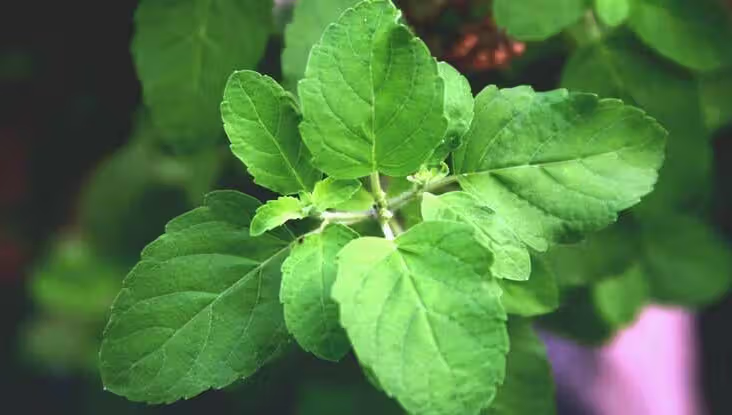
In Ayurveda, Tulsi is regarded as a sacred medicinal herb with broad therapeutic applications. Classical texts recommend its use in skin diseases, ulcers, infected wounds, and inflammatory conditions. Recent scientific investigations have validated many of these traditional uses, highlighting Tulsi as a promising bioactive herb for wound management.1
Bioactive constituents and mechanisms of action
The therapeutic effects of Tulsi are primarily attributed to its diverse phytochemical profile, which includes eugenol, ursolic acid, rosmarinic acid, carvacrol, linalool, orientin, vicenin, and various flavonoids. These compounds exert multiple biological actions relevant to wound healing and infection control.
Eugenol, one of the principal constituents of Tulsi, possesses potent antimicrobial and anti-inflammatory properties. It inhibits the growth of common wound pathogens, including Staphylococcus aureus, Pseudomonas aeruginosa, and Escherichia coli, thereby reducing microbial burden and preventing wound infection. Tulsi extracts have also demonstrated antifungal activity against several clinically relevant fungal species.
Anti-inflammatory and antioxidant activities
Inflammation is an essential component of wound healing; however, excessive or prolonged inflammation can impair tissue repair. Tulsi modulates inflammatory responses by suppressing pro-inflammatory cytokines such as TNF-α, IL-1β, and IL-6. Eugenol and ursolic acid inhibit cyclooxygenase (COX) and lipoxygenase pathways, reducing edema, pain, and tissue damage.2
Oxidative stress generated during wound healing can damage cellular structures and delay regeneration. Tulsi contains abundant phenolic compounds and flavonoids that scavenge reactive oxygen species and enhance endogenous antioxidant defenses. This antioxidant activity protects fibroblasts and keratinocytes, facilitating effective tissue repair.3
Role in wound repair
Experimental studies have demonstrated that Tulsi accelerates wound healing by promoting fibroblast proliferation, collagen synthesis, and granulation tissue formation. Increased collagen deposition improves wound tensile strength and supports organized tissue remodeling. Tulsi has also been reported to enhance angiogenesis, ensuring adequate oxygen and nutrient supply to healing tissues.
Furthermore, the herb facilitates re-epithelialization and wound contraction, leading to faster closure of damaged tissues. These regenerative effects contribute to improved healing outcomes in both acute and chronic wounds.
Infection prevention and clinical relevance
The antimicrobial properties of Tulsi play a crucial role in preventing wound infection and reducing microbial colonization. Its broad-spectrum activity against bacteria and fungi makes it particularly relevant in managing contaminated wounds and preventing secondary infections. Unlike conventional antimicrobials, Tulsi provides additional antioxidant and anti-inflammatory benefits that support the overall healing process.
Preclinical studies have shown promising results in burn wounds, excision wounds, incision wounds, and infected ulcers. Recent pharmaceutical developments include Tulsi-based hydrogels, herbal ointments, nanofiber dressings, and bioactive wound-care formulations designed to enhance local delivery of its active compounds.
Conclusion
Tulsi (Ocimum sanctum) is a multifunctional Ayurvedic medicinal herb with significant potential in wound repair and infection prevention. Its rich phytochemical composition provides antimicrobial, anti-inflammatory, antioxidant, and tissue-regenerative activities that collectively support wound healing. By promoting collagen synthesis, enhancing fibroblast activity, reducing oxidative stress, and preventing microbial colonization, Tulsi addresses multiple aspects of wound management. Continued research and clinical validation may further establish its role as an evidence-based natural therapeutic agent in modern wound care.
Reference:
- Jamshidi N, Cohen MM. The Clinical Efficacy and Safety of Tulsi in Humans: A Systematic Review of the Literature. Evid Based Complement Alternat Med. 2017;2017:9217567. doi:10.1155/2017/9217567 https://pmc.ncbi.nlm.nih.gov/articles/PMC5376420/
- Cohen MM. Tulsi - Ocimum sanctum: A herb for all reasons. J Ayurveda Integr Med. 2014;5(4):251-259. doi:10.4103/0975-9476.146554 https://pmc.ncbi.nlm.nih.gov/articles/PMC4296439/
- Pattanayak P, Behera P, Das D, Panda SK. Ocimum sanctum Linn. A reservoir plant for therapeutic applications: An overview. Pharmacogn Rev. 2010;4(7):95-105. doi:10.4103/0973-7847.65323 https://pmc.ncbi.nlm.nih.gov/articles/PMC3249909/