
Introduction
Dysmenorrhea, or painful menstruation, is one of the most prevalent gynecological complaints among adolescent and reproductive-age women. It is broadly classified into primary dysmenorrhea, which occurs without underlying pelvic pathology, and secondary dysmenorrhea, which is associated with conditions such as endometriosis or uterine fibroids. Primary dysmenorrhea is commonly linked to increased prostaglandin production, leading to uterine hypercontractility, ischemia, and pain. Although nonsteroidal anti-inflammatory drugs (NSAIDs) and hormonal therapies remain standard treatments, their side effects and contraindications have encouraged interest in safer, plant-based alternatives. Among these, fennel (Foeniculum vulgare) has gained attention for its potential role in alleviating menstrual pain.
Botanical and phytochemical profile of fennel
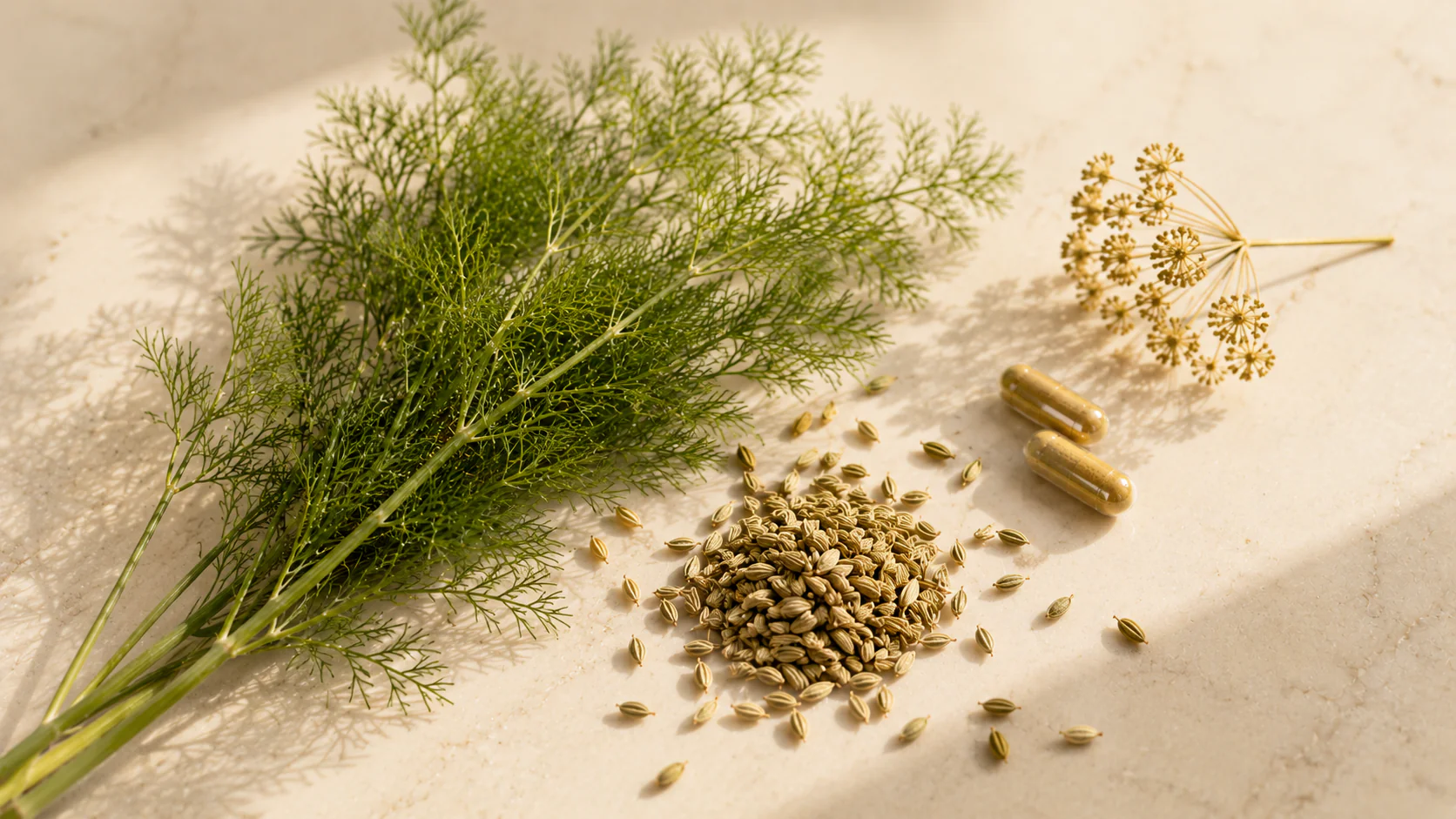
Fennel is an aromatic medicinal plant belonging to the Apiaceae family, widely used in traditional systems of medicine including Ayurveda, Unani, and Mediterranean herbal practices. The seeds are the most commonly used part and contain a rich profile of bioactive compounds such as anethole, fenchone, estragole, flavonoids, and volatile oils. These constituents are responsible for its characteristic aroma as well as its pharmacological properties, including antispasmodic, anti-inflammatory, antioxidant, and mild estrogenic effects.
Mechanisms of action in dysmenorrhea
- The therapeutic potential of fennel in dysmenorrhea is primarily attributed to its ability to modulate uterine smooth muscle activity and inflammatory mediators. One of the key mechanisms involves inhibition of prostaglandin synthesis, particularly prostaglandin F2α, which is known to induce uterine contractions and pain during menstruation. By reducing prostaglandin levels, fennel helps decrease uterine hypercontractility and improves uterine blood flow, thereby reducing ischemic pain.
- In addition, fennel exhibits antispasmodic properties that relax uterine smooth muscles, further contributing to pain relief. The presence of anethole, a major active constituent, is believed to play a central role in calcium channel modulation, which reduces the frequency and intensity of uterine contractions. Its mild estrogenic activity may also help regulate hormonal fluctuations, which can contribute to menstrual irregularities and associated discomfort in some women.
- Furthermore, fennel’s anti-inflammatory and antioxidant properties help mitigate oxidative stress and inflammatory responses that are often elevated during dysmenorrhea. These combined effects make fennel a multi-targeted therapeutic agent in menstrual pain management.
Clinical evidence supporting fennel use
Several clinical studies have evaluated the efficacy of fennel in reducing dysmenorrheic pain.
- Randomized controlled trials have reported that fennel seed extract significantly reduces pain intensity scores compared to placebo and, in some cases, shows comparable efficacy to NSAIDs such as Mefenamic acid. These studies also indicate improvements in associated symptoms such as fatigue, irritability, and gastrointestinal discomfort during menstruation.
- In adolescent populations, fennel has demonstrated particular benefit due to its favorable safety profile and ease of administration. Most studies report minimal adverse effects, with occasional mild gastrointestinal symptoms, making it suitable for short- and medium-term use in managing primary dysmenorrhea.
Safety profile and considerations
Fennel is generally considered safe when used in therapeutic doses. However, due to its phytoestrogenic activity, caution may be advised in individuals with hormone-sensitive conditions. Long-term safety data remain limited, and standardized dosing guidelines are still evolving. Despite these considerations, fennel remains one of the most widely accepted herbal remedies for menstrual pain.
Conclusion
Fennel (Foeniculum vulgare) represents a promising natural intervention for the management of primary dysmenorrhea. Its multifaceted pharmacological actions—including antispasmodic, anti-inflammatory, and prostaglandin-inhibiting effects—contribute to its analgesic benefits. Clinical evidence supports its efficacy in reducing menstrual pain intensity with a favorable safety profile. While further large-scale studies are needed to standardize its use, fennel offers a valuable complementary approach to conventional therapies in the holistic management of dysmenorrhea.1
References:
- Omidvar S, Esmailzadeh S, Baradaran M, Basirat Z. Effect of fennel on pain intensity in dysmenorrhoea: A placebo-controlled trial. Ayu. 2012;33(2):311-313. doi:10.4103/0974-8520.105259 https://pmc.ncbi.nlm.nih.gov/articles/PMC3611645/