
Introduction
Female infertility is a multifactorial reproductive disorder affecting a significant proportion of women of reproductive age. It is characterized by failure to conceive after 12 months of regular, unprotected intercourse and may result from ovulatory dysfunction, polycystic ovary syndrome (PCOS), tubal blockage, endometriosis, or unexplained causes. Among these, endocrine imbalance and chronic low-grade inflammation play central roles, particularly in anovulatory infertility. In recent years, herbal medicines have gained increasing attention as adjuncts in reproductive medicine. Kalonji (Nigella sativa), commonly known as black seed, is one such medicinal plant with potential fertility-enhancing properties due to its antioxidant, anti-inflammatory, and endocrine-modulating effects.
Botanical and phytochemical profile
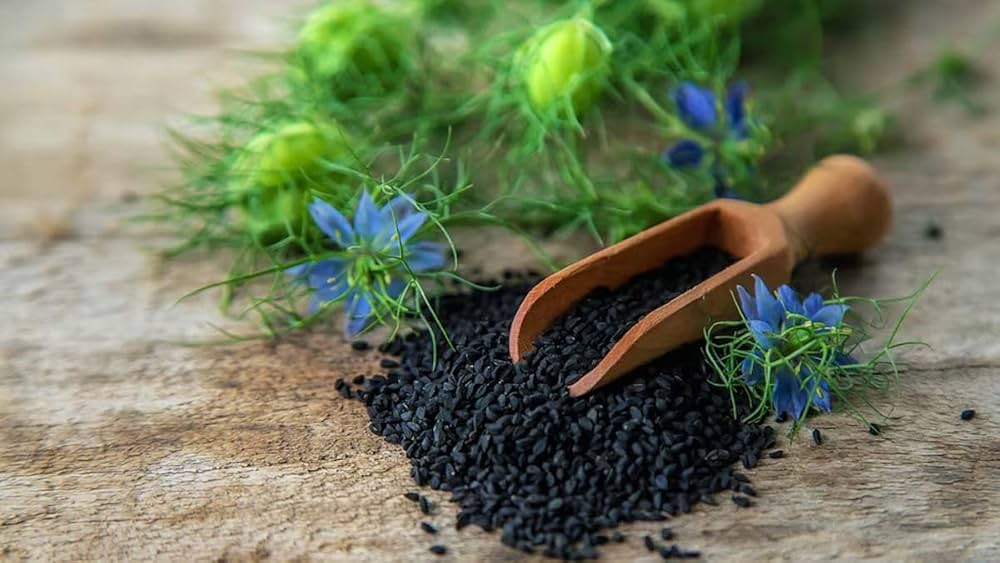
Kalonji is a widely used medicinal plant in traditional systems such as Unani, Ayurveda, and Middle Eastern medicine. Its seeds contain a rich array of bioactive compounds including thymoquinone, thymohydroquinone, nigellone, volatile oils, alkaloids, and saponins. Among these, thymoquinone is considered the primary pharmacologically active constituent responsible for most of its therapeutic effects. These compounds exhibit strong antioxidant, anti-inflammatory, immunomodulatory, and metabolic regulatory properties, making Nigella sativa relevant in reproductive disorders.
Mechanisms of action in female infertility
The potential efficacy of Kalonji in female infertility is attributed to its multi-targeted biological actions.
- One of the key mechanisms is its antioxidant activity, which reduces oxidative stress in ovarian follicles. Oxidative stress is known to impair oocyte quality, disrupt folliculogenesis, and contribute to poor reproductive outcomes. By scavenging free radicals and enhancing endogenous antioxidant enzymes such as superoxide dismutase and glutathione peroxidase, Kalonji helps preserve ovarian function.
- In addition, Kalonji exhibits anti-inflammatory effects by inhibiting pro-inflammatory cytokines such as tumor necrosis factor-alpha (TNF-α) and interleukins. Chronic inflammation is implicated in conditions like endometriosis and pelvic inflammatory disease, both of which contribute to infertility. By modulating inflammatory pathways, Kalonji may improve the reproductive microenvironment and enhance implantation potential.
- Kalonji also demonstrates endocrine-modulating properties. Experimental studies suggest that Nigella sativa may influence the hypothalamic-pituitary-ovarian (HPO) axis, leading to improved regulation of gonadotropins such as follicle-stimulating hormone (FSH) and luteinizing hormone (LH). This hormonal balance is particularly beneficial in conditions like PCOS, where LH/FSH imbalance leads to anovulation and irregular menstrual cycles. Furthermore, Kalonji may improve insulin sensitivity, thereby reducing hyperinsulinemia-associated hyperandrogenism, a key pathological feature of PCOS-related infertility.
Clinical evidence and research findings
Preclinical studies in animal models have demonstrated that Kalonji supplementation improves ovarian follicle development, increases corpus luteum formation, and enhances fertility indices. It has also been shown to improve uterine histoarchitecture and normalize reproductive hormone levels. In clinical settings, limited small-scale studies suggest that Nigella sativa supplementation may improve ovulation rates, menstrual regularity, and metabolic parameters in women with PCOS.
Some observational evidence indicates improved conception rates when Kalonji is used as an adjunct to lifestyle modification and conventional ovulation induction therapies. However, most studies are limited by small sample sizes, short duration, and heterogeneity in dosing regimens, highlighting the need for large-scale randomized controlled trials.
Safety and tolerability
Kalonji is generally considered safe when used in moderate therapeutic doses. Mild gastrointestinal discomfort has been reported in rare cases. However, its use during pregnancy should be monitored due to limited safety data in early gestation. Standardization of extracts and dosing remains essential to ensure consistent therapeutic outcomes.
Conclusion
Kalonji (Nigella sativa) demonstrates promising potential in the management of female infertility through its antioxidant, anti-inflammatory, endocrine-regulating, and metabolic effects. It is particularly relevant in conditions such as PCOS-associated infertility and inflammatory reproductive disorders. While preliminary evidence supports its beneficial role, robust clinical trials are necessary to establish standardized therapeutic protocols. Integration of Kalonji into evidence-based reproductive healthcare may offer a safe and complementary approach to improving fertility outcomes in affected women.1
References:
- Nahid T, Eqbal K, Rahman MN, Rahman MM. Holistic approaches to managing female infertility: A comprehensive review. J Drug Deliv Ther. 2025;15(3):180-189. doi:10.22270/jddt.v15i3.7032 https://jddtonline.info/index.php/jddt/article/view/7032/6660