
Introduction
Allergic asthma is one of the most common non-infectious respiratory disorders affecting breathing. It is a chronic inflammatory disease of the airways characterized by bronchial obstruction, airway inflammation, and airway hyper-reactivity to various stimuli, including allergens, histamine, and methacholine. Bronchoconstriction is a key component of the early asthmatic response following allergen exposure. 1
Understanding airway dysfunction in asthma
- Airway obstruction and bronchial hypersensitivity in asthma are associated with impaired airway balance.
- Nitric oxide (NO) plays an important role in maintaining normal airway function because of its relaxant effects on airway smooth muscle.
- NO is produced by nitric oxide synthase (NOS) enzymes that utilize the amino acid L-arginine.
- Adequate NO production contributes to airway relaxation and supports respiratory homeostasis. 2
Need for alternative therapeutic approaches
Current asthma management commonly includes bronchodilators such as β2-agonists and muscarinic receptor antagonists. While these therapies are used for symptomatic relief, their use may be limited by adverse effects. This has increased interest in identifying therapeutic options that provide respiratory support with improved safety and tolerability.
Since several anti-asthmatic agents have originated from medicinal plants, herbal medicine continues to be explored as a valuable source of respiratory therapeutics. Traditional medicinal plants remain relevant because of their diverse pharmacological properties and longstanding use in respiratory disorders.
Traditional significance of Nyctanthes arbor-tristis
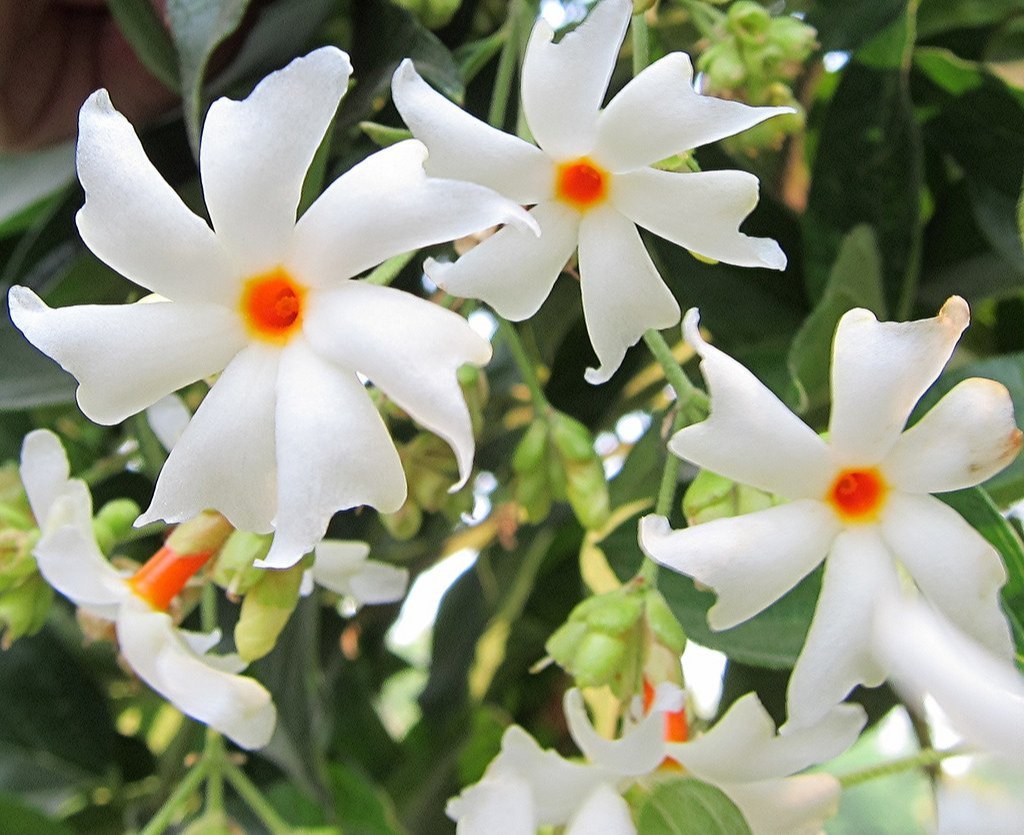
- Nyctanthes arbor-tristis (Night jasmine), a member of the Oleaceae family, is widely distributed in tropical and subtropical regions. It is a large shrub that can grow up to 10 meters in height and is characterized by opposite, simple leaves with an entire margin.
- Phytochemicals such as alkaloids, steroids, tannins, flavonoids, reducing sugars, saponins, and terpenoids are present.
- Traditionally, Nyctanthes arbor-tristis has been used in conditions such as asthma, cough, rheumatism, and high blood pressure. Its respiratory applications are supported by pharmacological properties associated with the leaves, including anti-asthmatic, anti-allergic, and antispasmodic activities. The presence of β-sitosterol has been linked with some of these effects. The leaves are also recognized for their ability to promote airway relaxation through enhancement of nitric oxide production, supporting their relevance in respiratory health. 3
Conclusion
Allergic asthma is characterized by chronic airway inflammation, bronchial obstruction, and airway hyper-responsiveness. Nyctanthes arbor-tristis (Night jasmine) holds an important place in traditional respiratory care due to its anti-asthmatic, anti-allergic, antispasmodic, and airway-relaxant properties. Its association with nitric oxide-mediated airway support highlights its continued relevance in discussions on herbal approaches to respiratory health.
References:
1. Bousquet J, Jeffery PK, Busse WW, Johnson M, Vignola AM. Asthma. From bronchoconstriction to airways inflammation and remodeling. Am J Respir Crit Care Med. 2000;161(5):1720-1745. doi:10.1164/ajrccm.161.5.9903102. https://academic.oup.com/ajrccm/article-abstract/161/5/1720/8528555?redirectedFrom=fulltext&login=false
2. Moncada S, Palmer RM, Higgs EA. Biosynthesis of nitric oxide from L-arginine. A pathway for the regulation of cell function and communication. Biochem Pharmacol. 1989;38(11):1709-1715. doi:10.1016/0006-2952(89)90403-6. https://www.sciencedirect.com/science/article/abs/pii/0006295289904036?via%3Dihub
3. Sopi RB, Hayat Khan MF. Bronchodilatory effect of ethanolic extract of the leaves of Nyctanthes arbortristis. Pharmacognosy Res. 2013;5(3):169-172. doi:10.4103/0974-8490.112422. https://pmc.ncbi.nlm.nih.gov/articles/PMC3719257/#sec1-4