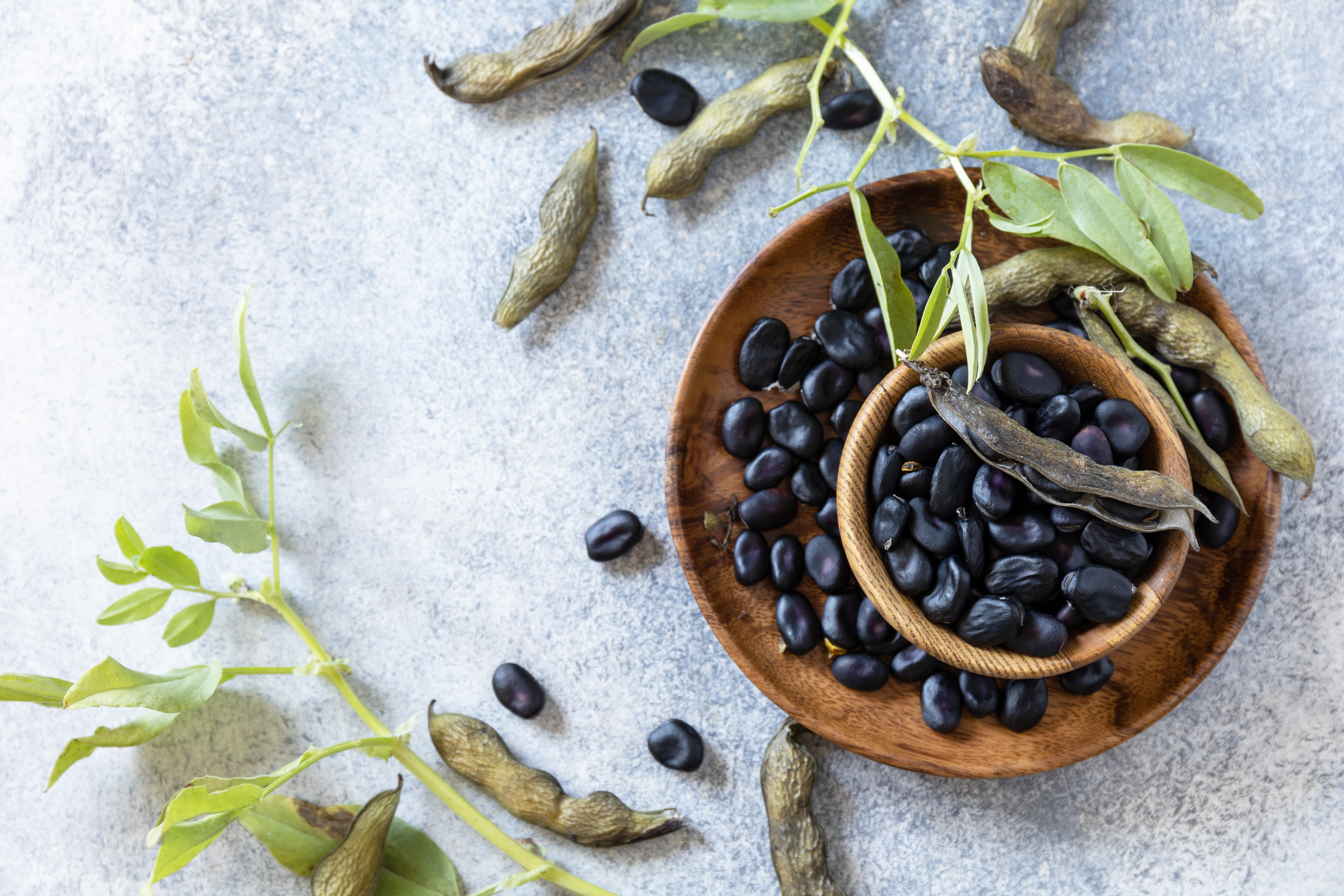
Mucuna pruriens, commonly known as velvet bean, is a medicinal plant belonging to the family Fabaceae and has been widely used in Ayurveda for neurological disorders, male reproductive health, and other conditions. Its seeds are particularly valued for their high content of L-3,4-dihydroxyphenylalanine (L-DOPA), a dopamine precursor used in the treatment of Parkinson’s disease. In addition to its neuroprotective potential, M. pruriens has been investigated for its antioxidant, antidiabetic, anti-inflammatory, antimicrobial, analgesic, and aphrodisiac properties.1
These activities have been associated with L-DOPA, d-chiro-inositol derivatives, phenolic compounds, tannins, and other phytochemicals. Although promising findings have emerged from experimental and preliminary clinical research, further evidence is required to establish the efficacy, safety, and therapeutic applications of M. pruriens preparations.
Phytochemical composition
Several bioactive constituents have been identified in different parts of M. pruriens, particularly its seeds. L-DOPA is a major phenolic constituent and has been reported to account for approximately 5% of the seed content in some analyses. Other constituents include tetrahydroisoquinoline derivatives, indole compounds, phenols, tannins, and d-chiro-inositol derivatives.
|
Bioactive constituent |
Potential pharmacological relevance |
|
L-DOPA |
Dopamine precursor; established therapeutic relevance in Parkinson’s disease |
|
D-Chiro-inositol and its galactosyl derivatives (FP1 and FP2) |
Potential insulin-mimetic and glucose-regulating effects |
|
Phenolic compounds and tannins |
Antioxidant and potential antimicrobial activity |
|
Tetrahydroisoquinoline derivatives |
Potential contribution to neuropharmacological activity |
|
Indole compounds, including N,N-dimethyltryptamine |
Biological activity requiring further characterisation |
The distribution and concentration of these constituents vary across seeds, roots, stems, and leaves. Consequently, the pharmacological effects of extracts may differ according to the plant part, extraction solvent, and preparation method.
Pharmacological activities and therapeutic potential
Neuroprotective and antiparkinsonian activity:
- The neuroprotective potential of M. pruriens has been investigated extensively because of its L-DOPA content. Following absorption, L-DOPA crosses the blood-brain barrier and is converted into dopamine, thereby helping restore dopaminergic neurotransmission impaired in Parkinson’s disease.
- Seed preparations have demonstrated antiparkinsonian effects in experimental studies. Notably, an n-propanol seed extract with negligible L-DOPA content demonstrated neuroprotective activity in cultured dopaminergic neurons, suggesting that additional constituents may contribute to neuronal protection. However, these findings do not establish the superiority of whole-plant extracts over standardised L-DOPA treatment.
Antioxidant activity:
- Antioxidant properties have been demonstrated in vitro using methanolic seed extracts, including the scavenging of DPPH radicals and reactive oxygen species (ROS). Protective effects against stress-induced lipid peroxidation have also been investigated in experimental models.
- However, L-DOPA may undergo oxidation and generate reactive intermediates capable of promoting oxidative damage. Increased oxidised glutathione levels and depletion of reduced glutathione have been reported in experimental neural tissue models. Therefore, the overall antioxidant or pro-oxidant effects of M. pruriens may depend on its composition, concentration, and biological context.
Antidiabetic activity:
- The antidiabetic potential of M. pruriens seeds has been associated with d-chiro-inositol and its galactosyl derivatives, FP1 and FP2. These compounds have been investigated for insulin-mimetic activity and their possible involvement in glucose regulation.
- Nevertheless, the available findings are insufficient to establish the efficacy or appropriate dosage of M. pruriens for diabetes management in humans.
Antimicrobial activity:
- Methanolic extracts of M. pruriens leaves have demonstrated mild antibacterial activity against selected microorganisms in experimental investigations. Phenols and tannins have been proposed as potential contributors to these effects.
- Further research is required to isolate the active constituents, establish their mechanisms of action, and determine whether the observed activity can be translated into clinically useful antimicrobial treatments.
Anti-inflammatory and analgesic activity:
- Anti-inflammatory and analgesic properties have been reported in pharmacological investigations of M. pruriens. These effects suggest potential applications in inflammatory conditions and pain management.
- However, the responsible compounds, underlying mechanisms, and clinical relevance remain insufficiently established.
Reproductive health and aphrodisiac potential:
- In Ayurveda, M. pruriens seeds have traditionally been used as an aphrodisiac and for supporting male reproductive health. Their application in male infertility has received research interest, particularly in relation to hormonal regulation, semen parameters, and oxidative stress.
- Although promising findings have been reported in some studies, these traditional applications should not be interpreted as proof of efficacy for infertility or sexual dysfunction. Further controlled clinical studies are required to establish the benefits, appropriate preparations, and safety of treatment.
Antiepileptic and antineoplastic activity:
- Antiepileptic and antineoplastic activities have been reported for methanolic extracts of M. pruriens. These findings indicate potential biological activity beyond its established relevance to dopaminergic therapy.
- However, the evidence remains preliminary, and clinical applications in epilepsy or cancer have not been established.
Anthelmintic, antivenom, and dermatological potential:
- Anthelmintic activity has been investigated in extracts and preparations of M. pruriens, while potential antivenom effects have also been explored experimentally. Traditional applications of seed paste for scorpion stings have been described, but these should not replace emergency medical treatment for envenomation.
- Dermatological research has focused on the antioxidant potential of leaf extracts. In preliminary experiments, methanolic leaf extract treatment reduced baseline levels of 4-hydroxynonenal (4-HNE), a marker of lipid peroxidation, in cultured human keratinocytes. These findings warrant further investigation but do not establish efficacy or safety for topical treatment of psoriasis, dermatitis, eczema, or other skin disorders.
Safety and clinical considerations
Despite its medicinal potential, M. pruriens should be used cautiously because its L-DOPA content may vary substantially among preparations. Potential adverse effects, interactions with medicines, and the consequences of prolonged use require careful assessment. Its use for Parkinson’s disease should be medically supervised, particularly when other dopaminergic medicines are prescribed. Unstandardised extracts should not be considered interchangeable with pharmaceutical L-DOPA, and the safety of preparations intended for diabetes, infertility, or topical application should not be assumed from experimental findings.
Conclusion
Mucuna pruriens is a pharmacologically important medicinal plant whose bioactive constituents, particularly L-DOPA and d-chiro-inositol derivatives, have attracted considerable research interest. Its potential neuroprotective, antioxidant, antidiabetic, antimicrobial, anti-inflammatory, and reproductive health applications reflect its diverse phytochemical profile. However, the strength of evidence varies across indications, and several proposed benefits remain supported primarily by experimental studies. Further research should prioritise standardised preparations, constituent-specific mechanisms, dose-response relationships, drug interactions, and well-designed clinical trials. Such investigations will help clarify the therapeutic value of M. pruriens and determine its appropriate role in evidence-based healthcare.1,2
References:
- Lampariello LR, Cortelazzo A, Guerranti R, et al. The Magic Velvet Bean of Mucuna pruriens. J Tradit Complement Med. 2012;2(4):331-339. doi:10.1016/s2225-4110(16)30119-5 https://pmc.ncbi.nlm.nih.gov/articles/PMC3942911/#sec1-10
- Bashev Z, Karcheva-Bahchevanska D, Ardasheva R, Ivanova S. A Comprehensive Review of the Therapeutic Potential of Mucuna Pruriens. Molecules. 2026;31(5):868. Published 2026 Mar 5. doi:10.3390/molecules31050868 https://pmc.ncbi.nlm.nih.gov/articles/PMC12985525/