
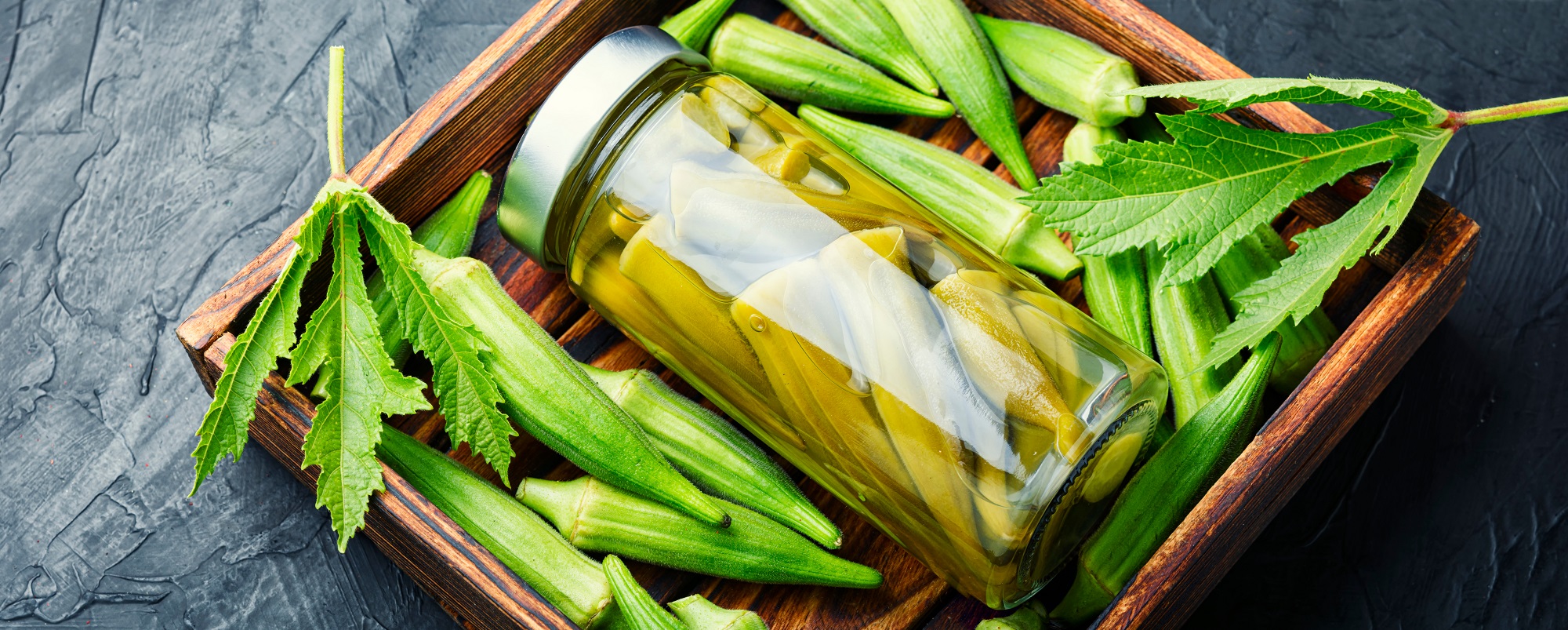
Okra (Abelmoschus esculentus), commonly known as bhindi or lady’s finger, is a widely consumed vegetable that has attracted interest for its potential role in blood glucose regulation. In traditional dietary practices, okra-soaked water is promoted as a natural remedy for diabetes. Okra contains soluble fiber, polysaccharides, and other phytochemicals that may influence glucose absorption and metabolic responses. However, evidence from studies of whole okra, powders, and extracts cannot be directly extrapolated to okra water. Its efficacy as a standalone intervention for diabetes remains unproven.1,2
Traditional uses and potential mechanisms
- Okra has traditionally been consumed as a food and used in complementary approaches to managing elevated blood glucose, although these practices do not establish clinical effectiveness.
- Its soluble fiber and mucilage may slow carbohydrate digestion or absorption, potentially influencing postprandial glucose responses.
- Experimental studies suggest that okra-derived compounds may affect glucose metabolism and insulin sensitivity; however, the mechanisms responsible for any clinical benefits remain incompletely established.
- Soaking okra in water does not guarantee that sufficient amounts of its potentially active constituents are extracted to produce a therapeutic effect.1,3
Clinical evidence and limitations
- A systematic review and meta-analysis published in 2023 reported a reduction in fasting blood glucose with okra interventions, but no statistically significant overall improvement in HbA1c was demonstrated. The included studies used different preparations, limiting conclusions about okra water specifically.1
- A subsequent meta-analysis published in 2024 also reported improvements in fasting glucose and HbA1c with some okra-based interventions, although heterogeneity between studies and uncertainty about optimal dosing remain important limitations.2
- No reliable clinical evidence establishes that drinking okra-soaked water alone provides sustained glycemic control or prevents diabetes complications.
Clinical considerations and safety
|
Clinical consideration |
Implications for practice |
|
Dietary use |
Okra can be included as a vegetable within an individualized diabetes meal plan. |
|
Okra water |
No standardized preparation or clinically validated dose has been established for diabetes management. |
|
Drug interactions |
Potential additive glucose-lowering effects with antidiabetic medications remain insufficiently characterized; glucose monitoring is prudent when use coincides with treatment changes. |
|
Contraindications |
Specific contraindications to okra water are poorly studied; patients with known okra allergy should avoid it. |
|
Standard treatment |
Okra water should not replace prescribed medications, nutritional therapy, or routine glucose and HbA1c monitoring. |
Okra consumed as food is generally different from concentrated extracts or supplements in terms of exposure and safety. The American Diabetes Association's 2026 Standards of Care do not recommend herbal supplements for glycemic benefits because evidence remains insufficient.3
Conclusion
Okra water is a traditional dietary remedy that has attracted interest because of the fiber and bioactive compounds found in okra. Although studies of whole okra, powders, and extracts suggest possible glucose-lowering effects, these findings cannot establish the efficacy of okra water. Clinicians should emphasize evidence-based diabetes care, balanced nutrition, and appropriate glucose monitoring while explaining that the preparation, dose, long-term safety, and clinical benefits of okra water remain uncertain.
References:
- Mokgalaboni K, Lebelo SL, Modjadji P, Ghaffary S. Okra ameliorates hyperglycaemia in pre-diabetic and type 2 diabetic patients: a systematic review and meta-analysis of the clinical evidence. Front Pharmacol. 2023;14:1132650. doi:10.3389/fphar.2023.1132650. https://pmc.ncbi.nlm.nih.gov/articles/PMC10107009/
- Bahari H, Shahraki Jazinaki M, Rahnama I, Aghakhani L, Amini MR, Malekahmadi M. The cardiometabolic benefits of okra-based treatment in prediabetes and diabetes: a systematic review and meta-analysis of randomized controlled trials. Front Nutr. 2024;11:1454286. Published 2024 Dec 12. doi:10.3389/fnut.2024.1454286. https://pubmed.ncbi.nlm.nih.gov/39726865/
- American Diabetes Association Professional Practice Committee for Diabetes. 5. Facilitating positive health behaviors and well-being to improve health outcomes: Standards of Care in Diabetes—2026. Diabetes Care. 2026;49(suppl 1):S89-S131. doi:10.2337/dc26-S005. https://diabetesjournals.org/care/article/49/Supplement_1/S89/163932/5-Facilitating-Positive-Health-Behaviors-and-Well