
Introduction
Benign prostatic hyperplasia affects a large proportion of men over the age of 50 years and represents a major cause of lower urinary tract symptoms. The pathophysiology involves stromal and epithelial proliferation within the prostate, resulting in bladder outlet obstruction and progressive urinary dysfunction. Chronic inflammation, hormonal alterations, and oxidative stress are recognized contributors to disease progression.
Ayurveda describes urinary obstruction and impaired micturition under Mutraghata, a condition primarily associated with aggravated Vata Dosha. Among the herbs indicated for urinary disorders, Varuna occupies a prominent position due to its ability to improve urinary flow, reduce obstruction, and support urinary tract health.1
Ayurvedic perspective
Varuna is described in classical Ayurvedic texts as:
- Tikta and Kashaya Rasa (bitter and astringent taste)
- Laghu and Tikshna Guna (light and penetrating qualities)
- Ushna Virya (hot potency)
- Katu Vipaka
- Mutrala (diuretic)
- Ashmarighna (anti-urolithiatic)
- Shothahara (anti-inflammatory)
These properties make it particularly useful in conditions involving urinary obstruction, bladder dysfunction, and prostate enlargement.
Phytochemical constituents
The therapeutic activities of Varuna are attributed to several bioactive compounds, including:
- Lupeol
- Friedelin
- Betulinic acid
- Saponins
- Flavonoids
- Glucosinolates
These constituents contribute to anti-inflammatory, antioxidant, and uroprotective actions.
Mechanisms relevant to BPH
Anti-inflammatory activity:
Chronic prostatic inflammation is increasingly recognized as a factor in BPH progression. Lupeol and related triterpenoids exhibit anti-inflammatory effects by reducing inflammatory mediators and tissue edema, potentially improving urinary symptoms.
Improvement of urinary flow:
Varuna is traditionally used to relieve urinary obstruction. Its diuretic and smooth muscle-modulating effects may contribute to improved bladder emptying and reduced urinary retention.
Antioxidant protection:
Oxidative stress plays an important role in prostatic enlargement and aging-related tissue damage. Varuna contains antioxidant compounds that help neutralize reactive oxygen species and protect urinary tissues.
Bladder and urinary tract support:
Experimental studies suggest that Varuna may enhance bladder function, reduce irritation of the urinary tract, and support normal micturition.2
Anti-urolithiatic effects:
Although primarily known for managing urinary calculi (Ashmari), its ability to maintain urinary tract health may provide additional benefits in patients with coexisting urinary disorders.
Clinical relevance in BPH
Reduction of lower urinary tract symptoms:
Traditional and preliminary clinical observations suggest improvement in:
- Urinary frequency
- Nocturia
- Hesitancy
- Weak urinary stream
- Sensation of incomplete emptying
Supportive role in integrative management:
Varuna is often incorporated into Ayurvedic formulations such as Varunadi Kashaya and polyherbal urinary-support formulations used in prostate disorders and urinary obstruction.
Potential benefits in early BPH:
Because of its anti-inflammatory and urinary-supportive properties, Varuna may be particularly useful in mild-to-moderate symptomatic BPH as an adjunct to lifestyle and medical management.
Safety profile
Varuna has been used safely in traditional medicine for centuries and is generally well tolerated. Adverse effects are uncommon and usually limited to mild gastrointestinal discomfort in sensitive individuals.
Conclusion
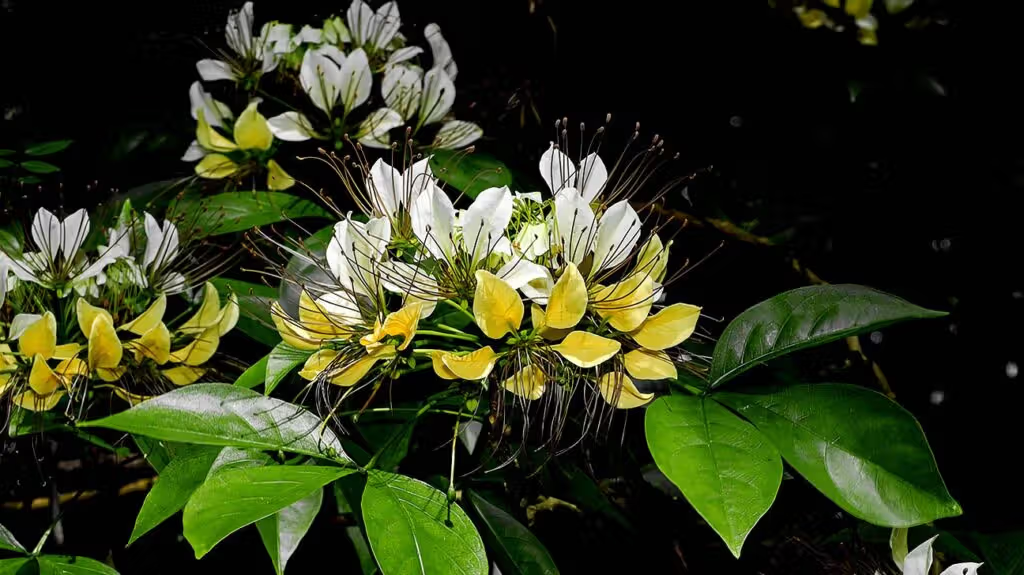
Varuna (Crataeva nurvala) is an important Ayurvedic herb with promising applications in benign prostatic hyperplasia and associated lower urinary tract symptoms. Its anti-inflammatory, antioxidant, diuretic, and uroprotective properties support its traditional use in urinary obstruction and prostate disorders. Although further large-scale clinical trials are needed, current pharmacological and clinical evidence suggests that Varuna may serve as a valuable complementary therapy in the integrative management of BPH.
Reference:
- Agarwal S, Gupta SJ, Saxena AK, Gupta N, Agarwal S. Urolithic property of Varuna (Crataeva nurvala): An experimental study. Ayu. 2010;31(3):361-366. doi:10.4103/0974-8520.77161 https://pmc.ncbi.nlm.nih.gov/articles/PMC3221072/
- Yadav, Durgavati & Sharma, Dr. Amit & Srivastava, Shivani & Tripathi, Yamini Bhusan. (2016). Nephroprotective Potential of Standardized Herbals Described In Ayurveda: A Comparative Study. Journal of Chemical and Pharmaceutical Research. 8. 419-427. https://www.researchgate.net/profile/Shivani-Srivastava-10/publication/306346562