
Introduction
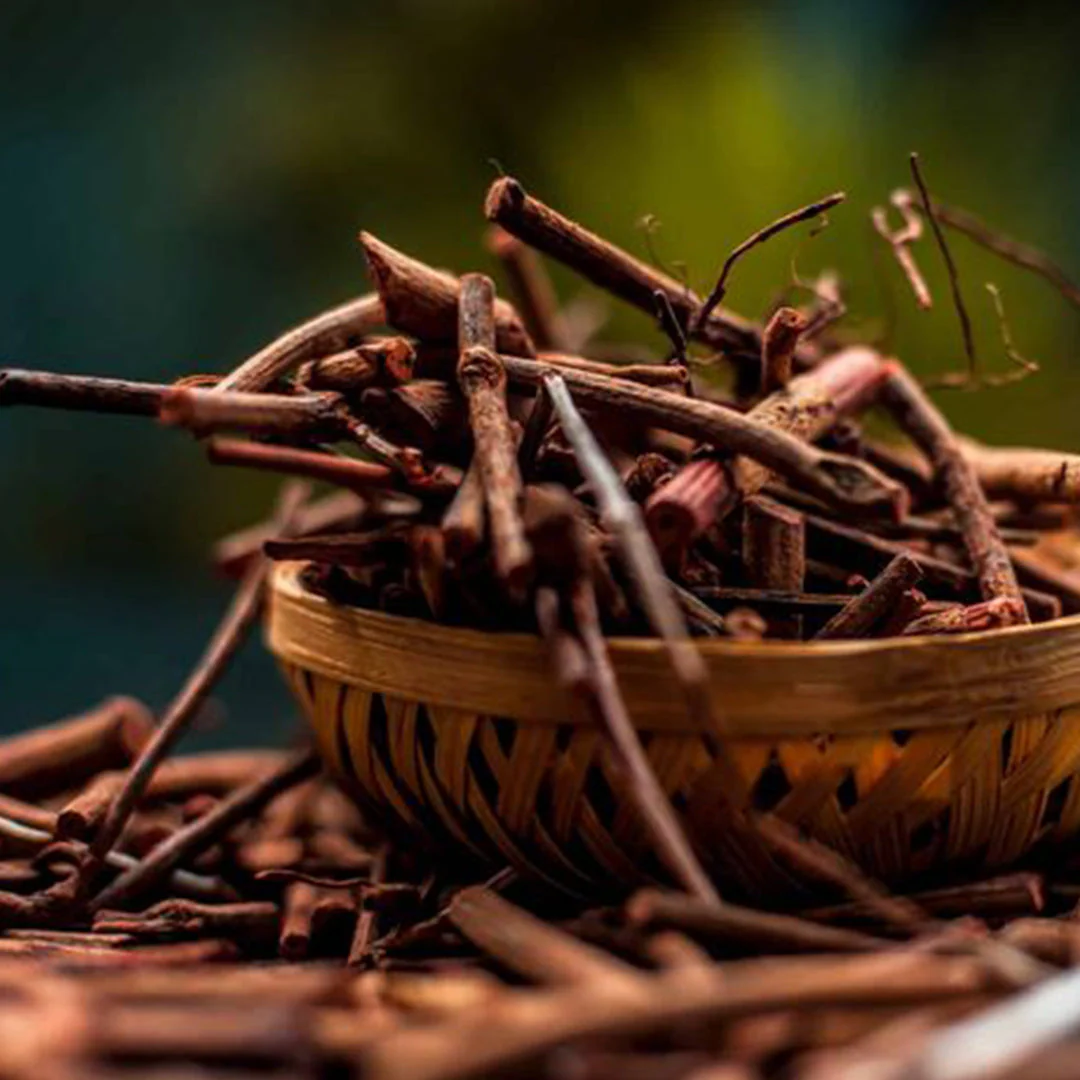
Rubia cordifolia Linn., commonly known as Manjistha or Indian Madder, is a perennial, herbaceous climber characterized by slender, cylindrical roots covered with a thin red bark. It is widely distributed across the Himalayan regions from Kashmir to the eastern ranges, as well as in the Nilgiri hills and other mountainous regions of India.
Manjistha is traditionally recognized for its broad-spectrum therapeutic potential, particularly in dermatological disorders. One of its notable pharmacological attributes is its anti-acne activity, attributed to combined anti-bacterial, anti-inflammatory, antioxidant, and anti-androgenic properties. The roots and stems are rich sources of anthraquinones and have been extensively reported to exhibit antioxidant, anti-inflammatory, anticancer, immunomodulatory, and hepatoprotective activities, making the plant highly relevant in the management of blood-related, urinary, and skin disorders.
In classical traditional medicine systems, Manjistha is regarded as a potent “blood purifier” and is widely used in the management of dermatological and systemic conditions associated with impaired skin health. Externally, it has been applied in conditions such as burns, freckles, blemishes, and chronic skin diseases, often in combination with natural adjuvants such as honey. It has also been traditionally indicated in erysipelas, leucoderma, oedema, and febrile conditions, reflecting its systemic anti-inflammatory and detoxifying properties.
Manjistha is incorporated into numerous polyherbal formulations and cosmetic preparations due to its anti-inflammatory, antiseptic, and skin-conditioning effects. It is traditionally used both internally and externally to enhance skin radiance, improve complexion, and reduce pimples, pigmentation, and discoloration.
The root powder is commonly used in topical formulations, often combined with agents such as honey, ghee, turmeric, sandalwood, and orange peel powders, to promote skin healing and improve dermatological appearance. Ethnomedicinal practices, including those of the Vanraji tribes of the Kumaun Himalayas, report the use of whole plant preparations with honey for the management of acne and hyperpigmentation disorders.
Acne vulgaris is one of the most prevalent chronic inflammatory dermatological conditions globally, affecting a large proportion of adolescents and adults. Its pathogenesis is multifactorial and involves four key processes: androgen-mediated sebaceous gland hyperactivity, follicular hyperkeratinization, colonization by Cutibacterium acnes (formerly Propionibacterium acnes), and activation of inflammatory pathways.
Clinically, acne manifests in different forms, including comedonal (non-inflammatory), papulopustular, and nodulocystic lesions, with inflammatory variants contributing significantly to tissue damage and scarring.
Conventional acne management includes topical agents, systemic antibiotics, retinoids, and hormonal therapies. However, increasing antibiotic resistance, adverse effects, and treatment costs have driven growing interest in plant-based therapeutic alternatives. Herbal medicines, with a long history of traditional use, are now being revisited for their scientifically validated anti-acne potential.
Among medicinal plants, Manjistha stands out due to its multi-target pharmacological profile, demonstrating anti-inflammatory, antioxidant, antibacterial, and anti-androgenic actions, making it a promising phytotherapeutic agent in acne management.
Beneficial role of Manjistha in acne1
Anti-acne activity:
Methanolic extract of Rubia cordifolia has demonstrated significant anti-acne potential by inhibiting the proliferation of Cutibacterium acnes (formerly Propionibacterium acnes) in in vitro studies. It has shown moderate inhibitory effects on tumor necrosis factor-alpha (TNF-α) and comparatively lower activity against interleukin-8 (IL-8), indicating a selective immunomodulatory profile in inflammatory pathways associated with acne pathogenesis.
The plant is traditionally described as an astringent and is widely used in external inflammatory conditions, including ulcers and various dermatological disorders. Anthraquinone-rich fractions of R. cordifolia, when incorporated into gel formulations, have demonstrated significant anti-acne activity against C. acnes, Staphylococcus epidermidis, and Malassezia furfur, with efficacy comparable to standard clindamycin gel preparations. These findings support its potential as a broad-spectrum dermatological antimicrobial agent.
Anti-inflammatory activity:
The aqueous extract of Rubia cordifolia has shown significant anti-inflammatory activity in experimental animal models. This effect has been attributed, in part, to the presence of bioactive constituents such as rubimallin. In carrageenan-induced paw edema models in rats, the extract produced a dose-dependent reduction in inflammation, with efficacy comparable to phenylbutazone.
Further mechanistic studies indicate that R. cordifolia inhibits the lipoxygenase pathway, thereby reducing the synthesis of inflammatory mediators such as leukotrienes, which are implicated in conditions including asthma, arthritis, and other chronic inflammatory disorders. Additionally, it suppresses the formation of cumene hydroperoxides, further contributing to its anti-inflammatory profile.
In vitro studies have also demonstrated notable nitric oxide scavenging activity, suggesting antioxidant-mediated anti-inflammatory potential. Moreover, formulations containing anthraquinone derivatives such as munjistin and purpurin derived from cell cultures have exhibited antiproliferative activity in experimental inflammatory models.
Antimicrobial activity:
Extracts of Rubia cordifolia have demonstrated significant inhibitory activity against C. acnes in standardized cultures, with minimum inhibitory concentration (MIC) studies indicating activity at concentrations around 600 µg/mL. These findings are further supported by cup-plate diffusion assays, confirming its antimicrobial efficacy in acne-related pathogens.
The plant exhibits broad-spectrum antibacterial activity, including effectiveness against Klebsiella pneumoniae. Root extracts have been extensively evaluated against multiple pathogenic bacterial strains, with key phytoconstituents such as sitosterol and daucosterol contributing to antibacterial effects. Anthraquinones and flavonoids present in the root have also demonstrated inhibitory activity against phytopathogens.
Additional bioactive compounds, including aldehyde acetate, dihydromollugin, and rubimallin, have shown significant antibacterial activity against Klebsiella pneumoniae. Ethanolic extracts have demonstrated inhibition of β-lactamase-producing uropathogenic Escherichia coli, indicating potential relevance in resistant bacterial infections.
Both chloroform and methanol extracts exhibit activity against Gram-positive organisms, while methanolic extracts also show dose-dependent inhibition of Gram-negative bacteria such as Pseudomonas aeruginosa. Aqueous extracts have demonstrated antibacterial effects against Bacillus subtilis and Staphylococcus aureus, comparable to standard antibiotics such as streptomycin and penicillin G. Ethanolic whole plant extracts have shown similar antibacterial efficacy.
Furthermore, rubiacordone A has been reported to possess significant antimicrobial activity against Gram-positive bacteria, including Bacillus subtilis, Streptococcus faecalis, and Bacillus cereus. Green-synthesized silver nanoparticles using R. cordifolia root extract have exhibited potent antibacterial effects against multiple pathogens, including Vibrio alginolyticus, Pseudomonas aeruginosa, Shigella spp., Plesiomonas shigelloides, and Vibrio parahaemolyticus, with particularly strong activity against P. aeruginosa and P. shigelloides.
Antioxidant activity
Alcoholic extracts of Rubia cordifolia roots, along with isolated constituents such as rubiadin, have demonstrated significant antioxidant properties. Hydroxyanthraquinones are identified as the major phenolic compounds responsible for its antioxidant potential.
These extracts have shown protective effects against lipid peroxidation and have been reported to restore reduced glutathione (GSH) levels in rat liver homogenates, with activity comparable to standard antioxidants such as vitamin E and para-benzoquinone. Collectively, these findings highlight the strong free radical scavenging and cytoprotective potential of R. cordifolia, which is particularly relevant in oxidative stress–mediated inflammatory skin conditions such as acne.
Conclusion
A growing clinical trend toward combination pharmacotherapy in the management of various diseases, including dermatological conditions, has led to improved therapeutic outcomes in certain cases. However, the concurrent use of multiple agents also increases the risk of drug–drug interactions, cumulative toxicity, and adverse effects. This highlights the need for systematic evaluation of individual herbal agents as standalone or adjunctive therapeutic options.
In this context, Manjistha (Rubia cordifolia) presents a multi-target phytotherapeutic profile that may address key pathogenic mechanisms involved in acne vulgaris. Its diverse pharmacological actions include blood purification (Rakta shodhana), antioxidant activity, anti-inflammatory effects, antimicrobial properties, and stress-modulating potential, all of which are relevant to the multifactorial pathogenesis of acne.
The therapeutic relevance of Manjistha in dermatological health is supported by both traditional Ayurvedic literature and experimental pharmacological studies. Collectively, these properties suggest its potential role as a rational, plant-based monotherapy or adjunctive agent in acne management. By modulating inflammatory pathways, reducing oxidative stress, and improving microbial balance, Manjistha may contribute to improved cutaneous homeostasis and overall skin health, offering a promising integrative approach for acne therapy.
References:
- Chaudhary A, Meena V. Manjistha (Rubia Cordifolia)-A helping herb in cure of acne. Journal of Ayurveda & Holistic Medicine. 2015;3:11-7. https://www.researchgate.net/publication/302902410_ManjisthaRubia_Cordifolia-_A_helping_herb_in_cure_of_acne