
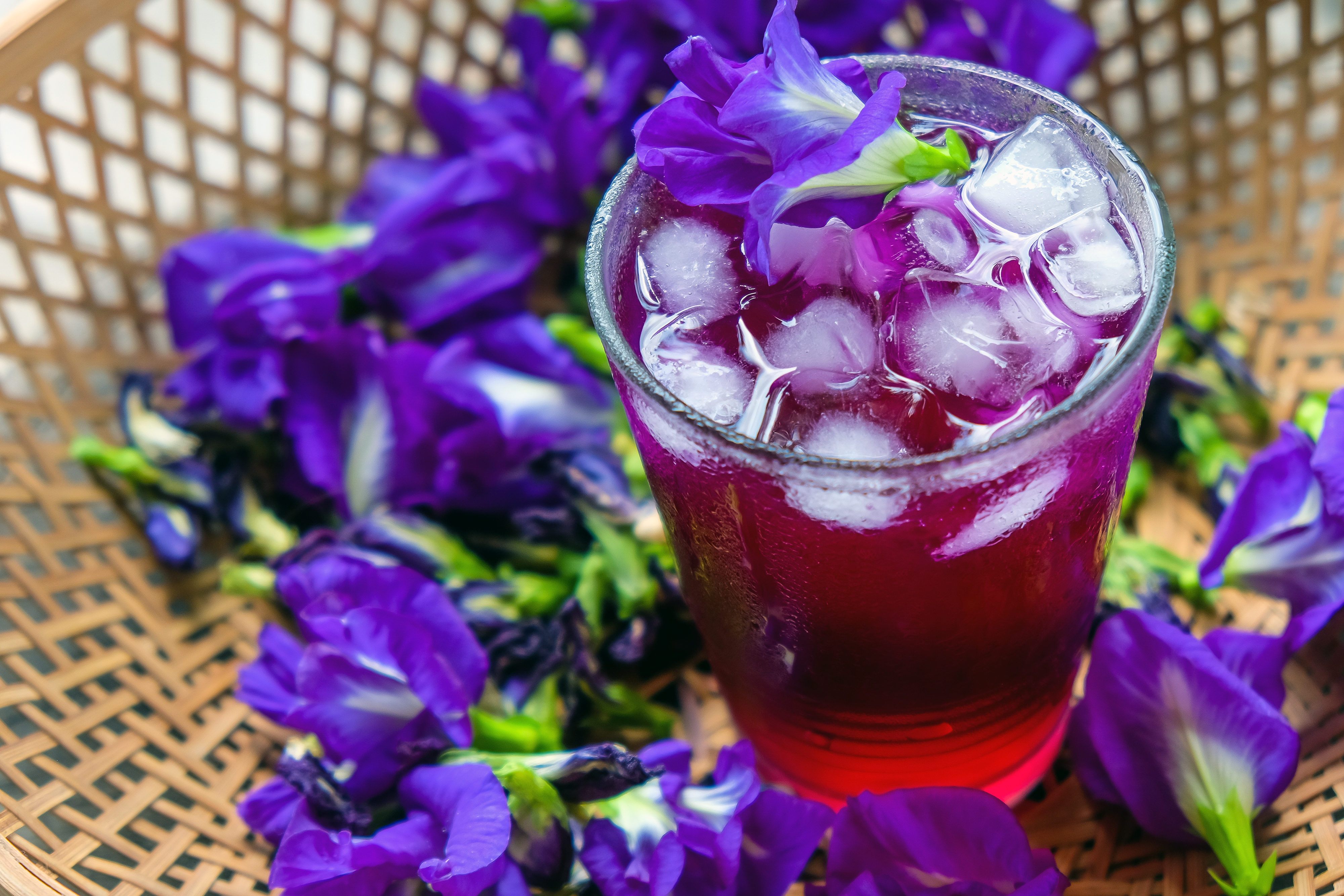
Aparajita (Clitoria ternatea L.), commonly known as butterfly pea or blue pea, is a medicinal plant traditionally used in Ayurveda. It is also referred to as Vishnukranta and Shankhapushpi in selected traditional references, although botanical identity should be verified because the name Shankhapushpi is used for multiple plants. Aparajita has attracted scientific interest for its potential neuroprotective, antioxidant, and cognition-related properties. Its traditional relevance to Medhya Rasayana provides a framework for examining its possible role in memory, learning, and intellectual function. However, traditional use and experimental findings should not be equated with proven clinical efficacy.
Ayurvedic concept of Medhya Rasayana
In Ayurveda, Rasayana refers to a group of approaches traditionally intended to support nourishment, resilience, and healthy ageing. Medhya Rasayana specifically relates to Medha (intellect and cognitive capacity), Smriti (memory), and associated mental functions. Classical Ayurvedic literature discusses several herbs and formulations in this context. Contemporary reviews identify Aparajita as a plant of interest for its traditional cognitive applications. These concepts provide a traditional interpretive framework rather than direct equivalents of modern neuropsychological outcomes.
Ayurvedic properties and traditional relevance
Recent Ayurvedic reviews describe Aparajita with properties including Tikta (bitter) and Kashaya (astringent) Rasa, Laghu (light) and Ruksha (dry) Guna, Sheeta Virya (cooling potency), and Katu Vipaka (pungent post-digestive effect).1 These descriptions vary across sources and should be checked against the specific Ayurvedic pharmacopoeial or classical reference used. Its reported Medhya association has encouraged investigation into its possible effects on cognitive processes. Botanical authentication, the plant part used, and the preparation method remain essential when interpreting traditional indications or research findings.
Phytochemical composition and neuroprotective potential
Aparajita contains several bioactive constituents, including flavonoids, ternatin-type anthocyanins, and other phenolic compounds. These constituents have been investigated for antioxidant and anti-inflammatory activities. Oxidative stress and neuroinflammation are relevant to neuronal ageing and cognitive dysfunction, making these pathways important areas of research. Nevertheless, the presence of antioxidant compounds or activity in laboratory assays does not independently establish neuroprotective effects in humans.
Hence, it has been recognized as a traditional Ayurvedic medicinal plant for its cognitive-enhancing, anxiolytic, antidepressant, anticonvulsant, anti-inflammatory, and antioxidant properties.2
Evidence from experimental studies
A recent study investigated Clitoria ternatea in neuroblastoma and glioblastoma cell models. The researchers reported changes in cellular differentiation, DNA repair-associated measures, mitochondrial membrane potential, and reactive oxygen species. These findings offer preliminary insights into possible cellular mechanisms relevant to neuronal health. However, cancer-derived cell lines cannot replicate the complexity of the human brain, and these results do not demonstrate improved memory, learning, or prevention of neurodegenerative diseases in clinical settings.
A systematic review of Aparajita research also identified preclinical findings related to nootropic and antioxidant activities. The authors highlighted the limited number of clinical studies and the need for further research before its therapeutic potential can be established. Overall, the available evidence supports continued investigation rather than definitive claims of cognitive enhancement.
Potential relevance to cognitive health
Aparajita's traditional association with Medhya Rasayana and its experimentally investigated antioxidant properties provide a rationale for studying its potential relevance to cognitive health. Future research could assess validated measures of memory, attention, learning, and executive function, alongside safety and pharmacokinetic outcomes. Studies should also distinguish between flower infusions, root preparations, and standardized extracts because their chemical composition and biological effects may differ. At present, evidence is insufficient to recommend Aparajita tea as a proven intervention for cognitive impairment or neurodegenerative conditions.
Safety and clinical considerations
The safety of Aparajita depends on the plant part, preparation, dose, product quality, and duration of use.3,4 Evidence supporting the long-term safety of concentrated preparations remains limited. Clinicians should consider possible herb–drug interactions and advise caution during pregnancy, particularly with medicinal-dose preparations, because safety data are inadequate and some preclinical findings raise reproductive-safety concerns. Commercial blue tea should not be assumed to have the same composition or effects as traditionally prepared medicinal formulations. It should not replace established assessment or treatment for memory loss and other cognitive symptoms.
Conclusion
Aparajita occupies an important place in discussions of Ayurvedic Medhya Rasayana and offers a promising subject for research into cognitive health. Its phytochemicals and preliminary experimental findings suggest possible antioxidant and neuroprotective mechanisms. However, well-designed human clinical trials are needed to determine whether these effects translate into meaningful cognitive benefits. A balanced approach that integrates authentic Ayurvedic references with rigorous pharmacological and clinical evidence is essential to establish its therapeutic relevance.
References:
- Walasra R, Goyal A. Aparajita (Clitoria ternatea L.) as blue tea: an integrative review of Ayurvedic and modern pharmacological perspectives. J Ayu Int Med Sci. 2026;11(7):272-277. doi:10.21760/jaims.11.7.40. https://jaims.in/jaims/article/view/6507/11699
- Pandey A, Biswas S, Mandal SK, et al. Clitoria ternatea (blue tea): a comprehensive review of its phytochemistry, pharmacology, and toxicology. J Chem Health Risks. 2026;16(1):2338. https://openurl.ebsco.com/EPDB%3Agcd%3A10%3A31096202/detailv2?sid=ebsco%3Aplink%3Acrawler-gcd&id=ebsco%3Agcd%3A192971797&crl=c&jrnl=22516719&link_origin=scholar.google.com
- Jeyaraj EJ, Lim YY, Choo WS. Extraction methods of butterfly pea (Clitoria ternatea) flower and biological activities of its phytochemicals. J Food Sci Technol. 2021;58(6):2054-2067. doi:10.1007/s13197-020-04745-3. https://pmc.ncbi.nlm.nih.gov/articles/PMC8076379/
- Anamika, Shweta. Aparajita: Nature’s Blue Healer. AGRI Catalogues. February 2026. https://www.researchgate.net/publication/401579287_Aparajita_Nature's_Blue_Healer