
Introduction
Wound healing is a dynamic process involving hemostasis, inflammation, proliferation, and remodeling. When this process is disrupted due to infection, poor circulation, metabolic disease, or persistent inflammation, the wound becomes chronic and is termed Dushta Vrana in Ayurveda.1
Classical Ayurvedic texts describe Dushta Vrana as a condition characterized by:
- Foul-smelling discharge
- Pain and swelling
- Excessive exudation
- Slough formation
- Delayed healing
- Discoloration of surrounding tissue
Sushruta emphasized the importance of topical herbal formulations for wound cleansing and regeneration. Among them, Jatyadi Taila is widely used due to its broad-spectrum antimicrobial and wound-healing properties.
Composition and ayurvedic properties
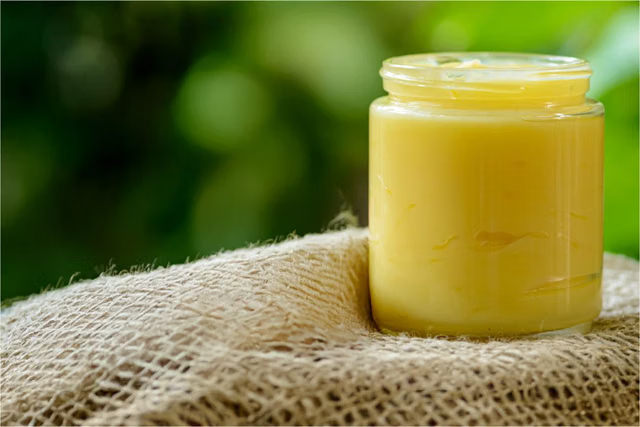
Jatyadi Taila is a classical Vrana Ropaka Taila containing multiple herbs with synergistic actions:
- Jati (Jasminum officinale): Vranaropana, antimicrobial, anti-inflammatory
- Nimba (Azadirachta indica): Krimighna, detoxifying, antibacterial
- Haridra (Curcuma longa): Shothahara, antioxidant, promotes granulation
- Daruharidra (Berberis aristata): Berberine-rich antimicrobial and anti-inflammatory
- Karanja (Pongamia pinnata): Tissue regenerative and antiseptic
The oil base enhances penetration and maintains a moist wound environment, which is essential for optimal healing.
Pharmacological basis
Antimicrobial activity:
A key feature of Dushta Vrana is microbial contamination. Constituents like nimbidin, berberine, curcumin, and karanjin exhibit broad-spectrum antibacterial and antifungal effects, reducing bacterial load and preventing infection progression.
Anti-inflammatory mechanism:
Chronic inflammation delays wound healing. Curcumin (Haridra), flavonoids (Jati), and limonoids (Nimba) inhibit inflammatory mediators such as TNF-α, IL-1β, and COX-2, thereby reducing edema, redness, and pain.2
Antioxidant protection:
Oxidative stress contributes to tissue damage in chronic wounds. Polyphenols and flavonoids in Jatyadi Taila neutralize reactive oxygen species and protect regenerating cells.
Promotion of yissue regeneration:
Experimental evidence suggests enhanced fibroblast proliferation, collagen deposition, angiogenesis, and epithelialization with these herbs. This accelerates granulation tissue formation and wound closure.
Role in management of Dushta Vrana
Jatyadi Taila acts through multiple stages of wound healing:
- Vrana shodhana (Wound cleansing): The antimicrobial and detoxifying herbs help remove necrotic tissue, slough, and microbial contamination
- Shothahara (Anti-inflammatory action): Reduces chronic inflammation, pain, and swelling, allowing progression to the proliferative phase
- Vrana ropana (Wound healing): Enhances granulation tissue formation, collagen synthesis, and epithelial regeneration
- Prevention of recurrence: Immunomodulatory and antioxidant effects help maintain tissue integrity and reduce recurrence of chronic wounds
Clinical applications
Jatyadi Taila is widely used in:
- Dushta Vrana (chronic infected wounds)
- Fistula-in-ano (Bhagandara)
- Anal fissures (Parikartika)
- Burn wounds
- Diabetic ulcers
- Post-surgical wounds
- Sinus tracts and non-healing ulcers
Clinical observations report improved wound bed preparation, reduced infection, faster granulation, and enhanced epithelialization.
Conclusion
Jatyadi Taila is a classical Ayurvedic formulation with strong therapeutic relevance in Dushta Vrana. Its multi-herbal composition provides synergistic antimicrobial, anti-inflammatory, antioxidant, and regenerative effects that address all stages of chronic wound pathology. Modern pharmacological evidence supports its traditional use, making it a valuable integrative option in wound management.
Reference:
- Dudhamal TS. Review of grey literature on Ayurveda wound healing formulations and procedures - A systematic review. J Ayurveda Integr Med. 2023;14(4):100779. doi:10.1016/j.jaim.2023.100779 https://pmc.ncbi.nlm.nih.gov/articles/PMC10424143/
- Akbik D, Ghadiri M, Chrzanowski W, Rohanizadeh R. Curcumin as a wound healing agent. Life Sci. 2014 Oct 22;116(1):1-7. doi: 10.1016/j.lfs.2014.08.016. Epub 2014 Sep 6. PMID: 25200875. https://pubmed.ncbi.nlm.nih.gov/25200875/