
Respiratory distress is a potentially life-threatening clinical condition characterised by increased work of breathing, breathlessness, tachypnoea, and, in severe cases, hypoxaemia. It may arise from infections, such as pneumonia, obstructive airway diseases, acute asthma exacerbations, or other cardiopulmonary disorders. Effective management requires prompt identification of the underlying cause, assessment of oxygenation, and timely evidence-based intervention. Traditional medicinal plants are increasingly investigated for their anti-inflammatory, antioxidant, and antimicrobial properties; however, their potential supportive role must be distinguished from proven treatment for acute respiratory emergencies.
Tulsi swarasa: An Ayurvedic perspective
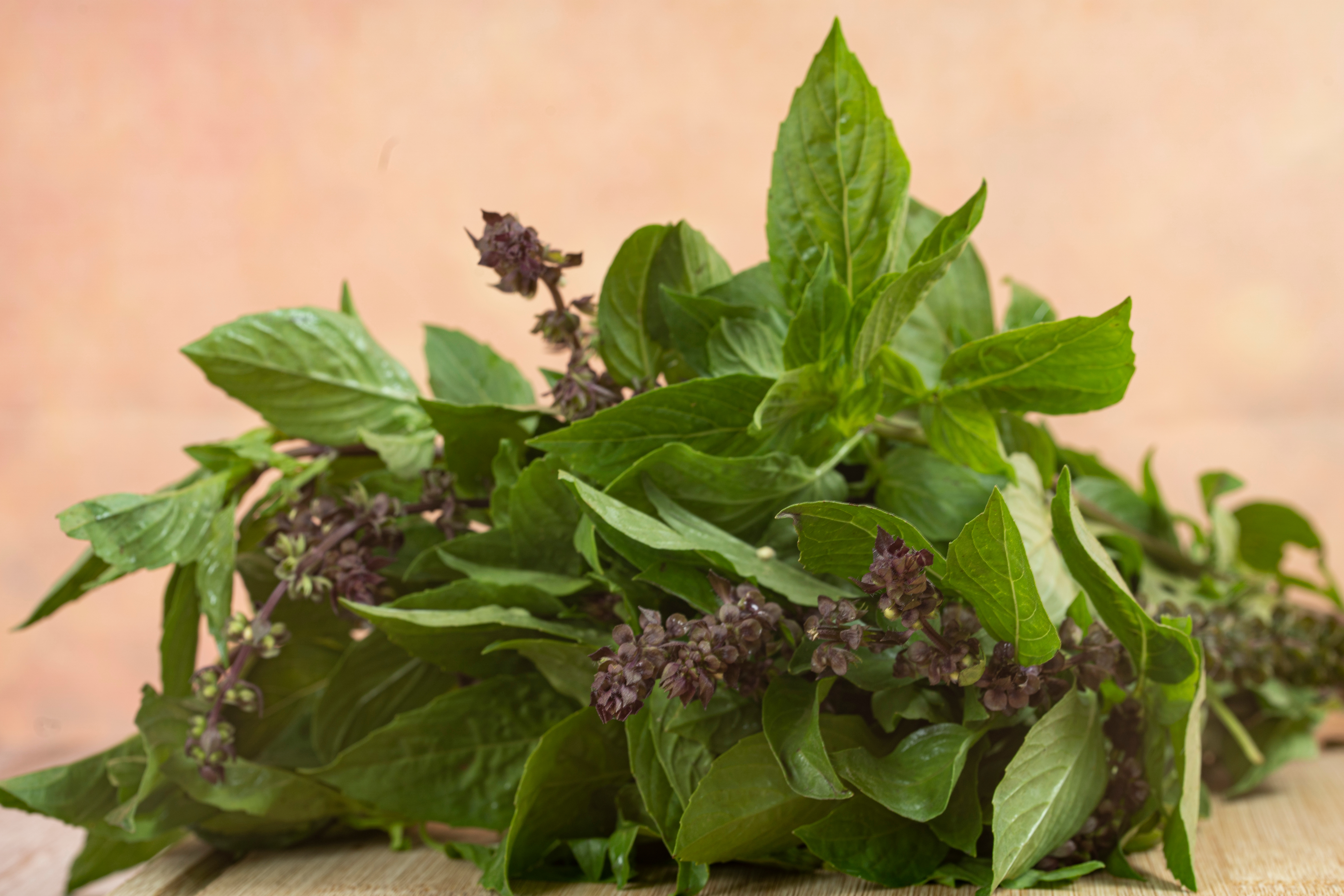
Ocimum tenuiflorum L., commonly known as Tulsi or holy basil, is an aromatic medicinal plant widely used in Ayurveda for respiratory and general health. It is traditionally associated with Kasa (cough), Shwasa (breathing difficulties), and symptoms involving excess respiratory secretions. Swarasa refers to the fresh juice extracted from a medicinal plant, generally by crushing or grinding fresh plant material and expressing the liquid. Tulsi swarasa is therefore a fresh-juice preparation rather than a standardised extract. Its chemical composition may vary according to the plant variety, growing conditions, harvested plant parts, extraction procedure, and storage. Although traditional use provides a rationale for scientific investigation, it does not independently establish efficacy in patients experiencing respiratory distress.
Phytochemical basis of therapeutic activity
Tulsi contains several bioactive constituents, including eugenol, rosmarinic acid, ursolic acid, oleanolic acid, and various flavonoids and volatile compounds. These constituents have been investigated for their antioxidant, anti-inflammatory, and antimicrobial properties. Eugenol, in particular, has demonstrated biological activities relevant to inflammatory processes, while polyphenolic compounds may contribute to antioxidant effects. Nevertheless, the concentrations of these constituents in fresh Tulsi juice are not necessarily equivalent to those in essential oils, alcoholic extracts, or standardised experimental preparations. Consequently, findings obtained using isolated compounds or concentrated extracts cannot be directly extrapolated to the clinical effectiveness of Tulsi swarasa.
Tulsi leaf extracts have traditionally been used to manage bronchitis, rheumatism, and pyrexia. Other reported therapeutic applications include the management of epilepsy, asthma, dyspnea, hiccups, cough, skin and hematological disorders, parasitic infections, neuralgia, headaches, wounds, and inflammation, as well as oral health conditions. Leaf juice has been traditionally applied topically as ear drops to relieve earache, while Tulsi tea infusions have been used to manage gastric and hepatic disorders. Additionally, the roots and stems have been traditionally employed in the management of mosquito and snake bites and malaria.1
Anti-inflammatory effects: Relevance to airway inflammation
Airway inflammation contributes to bronchial hyperresponsiveness, mucus production, and airflow limitation in conditions such as asthma. Experimental research suggests that Tulsi extracts may influence inflammatory mediators and oxidative stress pathways. Recent study by by Bhattarai et al. summarises the phytochemical and pharmacological evidence for O. tenuiflorum, including its anti-inflammatory and antioxidant activities. These mechanisms provide a scientific basis for investigating Tulsi in inflammatory respiratory conditions. However, evidence of anti-inflammatory activity in laboratory models does not establish that Tulsi swarasa can reverse bronchospasm, improve oxygenation, or relieve acute respiratory distress in humans.
Bronchoprotective potential: What do clinical observations suggest?
A case series by Burolia and Vyas investigated the effects of an aqueous Tulsi preparation on respiratory function using spirometric measurements. Improvements were reported in parameters including forced vital capacity (FVC), forced expiratory volume in one second (FEV₁), and peak expiratory flow (PEF).2 Although these findings suggest a potential area for further investigation, the case-series design limits conclusions about causality and clinical effectiveness. Importantly, the intervention was an aqueous extract of Tulsi, not necessarily fresh-pressed swarasa. The reported findings therefore cannot be directly generalised to Tulsi swarasa or interpreted as evidence of efficacy in acute respiratory distress.
Traditional use and emerging clinical research
In Ayurveda, Tulsi is traditionally used for Kasa and Shwasa, conditions associated with cough and breathing difficulties. Contemporary research continues to investigate its respiratory applications. A comparative clinical study evaluated Tulasi Arka and Vasa Arka nebulisation in 60 patients with Tamaka Shwasa, a condition commonly correlated with bronchial asthma. Both groups reportedly showed improvements in symptoms, with Vasa Arka demonstrating comparatively greater benefits.3 Nevertheless, Arka is a distinct Ayurvedic preparation, and nebulised administration differs substantially from oral swarasa. These findings should not be treated as direct evidence supporting Tulsi swarasa for respiratory distress.
Ayushdhara
- Safety considerations and clinical limitations
The safety of Tulsi depends on the preparation, dose, duration of use, and individual patient characteristics. Potential adverse effects and interactions should be considered, particularly when patients use herbal products alongside prescribed medication. Evidence from one formulation cannot automatically establish the safety of another. Healthcare professionals should also consider product quality, botanical identification, contamination risks, and the absence of standardised dosing protocols for fresh Tulsi juice.
Acute respiratory distress requires urgent medical assessment. Tulsi swarasa should not replace oxygen therapy, bronchodilators, corticosteroids, antibiotics when indicated, or other evidence-based interventions. It should not be administered orally to a patient with severe breathlessness or impaired consciousness because of the risk of aspiration.
Conclusion: From traditional use to evidence-based practice
Tulsi swarasa has a plausible pharmacological basis for further investigation because O. tenuiflorum contains compounds associated with anti-inflammatory, antioxidant, and antimicrobial activities. Preliminary respiratory research is encouraging but remains insufficient to establish its efficacy in acute respiratory distress. Future studies should evaluate authenticated, standardised preparations through controlled clinical trials, with clearly defined respiratory outcomes, dosage protocols, and safety monitoring. Until stronger evidence is available, Tulsi swarasa should be regarded as a traditional preparation with investigational potential rather than an established treatment for respiratory emergencies.
References:
- Jamshidi N, Cohen MM. The Clinical Efficacy and Safety of Tulsi in Humans: A Systematic Review of the Literature. Evid Based Complement Alternat Med. 2017;2017:9217567. doi:10.1155/2017/9217567. https://pmc.ncbi.nlm.nih.gov/articles/PMC5376420/
- Burolia RK, Vyas M. Broncho-protective Effect of Tulsi by Using Total Lung Capacity analysis on Pranveha Srotas–A Case Series. Annals of Ayurvedic Medicine. 2024 Jun 28;13(2):147-. https://www.aamjournal.in/index.php?mno=92550
- Amaregouda, Banu W, Patil B. A comparative clinical study to evaluate the therapeutic effect of Vasa Arka and Tulasi Arka nebulization in immediate management of Tamaka Shwasa. Ayushdhara. 2026;13(1):145-150. doi:10.47070/ayushdhara.v13i1.2482. https://www.researchgate.net/publication/403592226_A_Comparative_Clinical_Study_to_Evaluate_the_Therapeutic_Effect_of_Vasa_Arka_and_Tulasi_Arka_Nebulization_in_Immediate_Management_of_Tamaka_Shwasa