
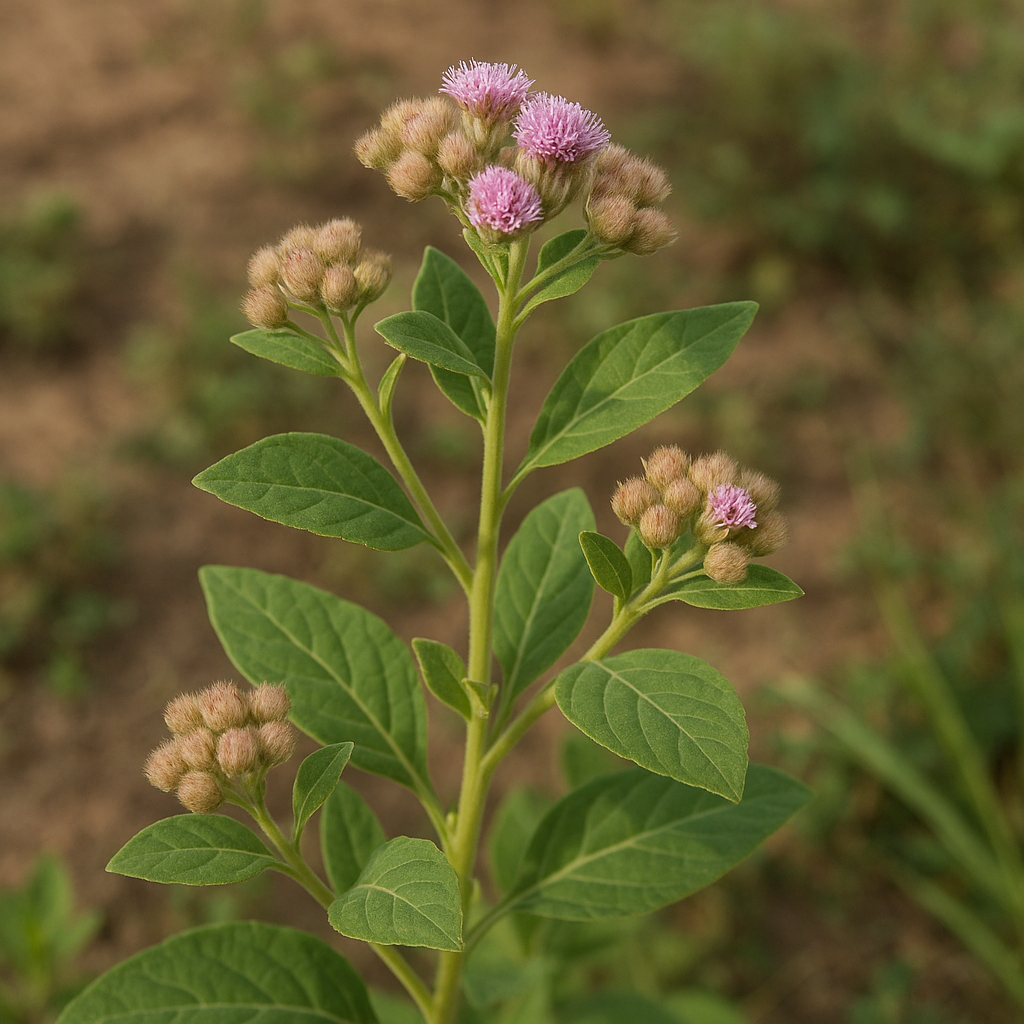
Introduction
Pain and stiffness are hallmark symptoms of many musculoskeletal disorders, including osteoarthritis (Sandhivata), rheumatoid arthritis (Amavata), cervical spondylosis (Manyastambha), lumbar spondylosis (Katigraha), and frozen shoulder (Avabahuka). Agnikarma, described by Sushruta, is considered an effective para-surgical procedure for relieving pain through controlled thermal stimulation. The procedure improves local circulation, reduces muscle spasm, and modulates pain pathways. However, chronic musculoskeletal conditions often require continued management after Agnikarma to address inflammation, stiffness, and tissue degeneration. Rasna is one of the most important Ayurvedic herbs employed for this purpose. Its traditional use in Vata Vyadhi and inflammatory joint disorders makes it an ideal supportive therapy following Agnikarma.1
Pharmacological basis of rasna
The therapeutic effects of Pluchea lanceolata are attributed to its rich phytochemical composition, including flavonoids, sterols, triterpenoids, sesquiterpenes, and phenolic compounds. Experimental studies have demonstrated significant anti-inflammatory activity through inhibition of inflammatory mediators such as prostaglandins and cytokines.
Rasna also exhibits analgesic properties that help reduce pain perception and improve patient comfort. Its antioxidant activity protects tissues from oxidative stress, which plays an important role in chronic inflammation and joint degeneration. Furthermore, anti-arthritic effects observed in experimental studies suggest its potential in preserving joint function and reducing disease progression.
Role following agnikarma
Agnikarma provides rapid symptomatic relief through thermal analgesia and improved microcirculation. Following the procedure, Rasna can help sustain these benefits by addressing the underlying inflammatory processes responsible for persistent pain and stiffness.2
The herb reduces inflammation in periarticular tissues, tendons, ligaments, and muscles, thereby minimizing post-procedural discomfort. Improved circulation induced by Agnikarma may facilitate better tissue penetration and utilization of bioactive compounds present in Rasna formulations. Additionally, Rasna helps reduce muscle tightness and joint stiffness, supporting restoration of normal movement and functional capacity.
From an Ayurvedic perspective, Rasna pacifies aggravated Vata Dosha, which is considered the principal factor responsible for pain, stiffness, and restricted mobility. Thus, its use after Agnikarma helps maintain therapeutic outcomes and prevent recurrence of symptoms.
Clinical applications
Rasna-assisted post-Agnikarma therapy is commonly utilized in:
- Osteoarthritis (Sandhivata)
- Rheumatoid arthritis (Amavata)
- Cervical spondylosis (Manyastambha)
- Lumbar spondylosis (Katigraha)
- Sciatica (Gridhrasi)
- Frozen shoulder (Avabahuka)
- Chronic muscular pain syndromes
Clinical observations indicate improvements in pain intensity, joint mobility, morning stiffness, and overall functional performance when Rasna-based therapies are incorporated into rehabilitation protocols.
Conclusion
Rasna (Pluchea lanceolata) is an important Ayurvedic medicinal plant with significant anti-inflammatory, analgesic, and anti-arthritic properties. As a supportive therapy following Agnikarma, it helps sustain pain relief, reduce stiffness, improve mobility, and facilitate tissue recovery.3 The complementary actions of thermal therapy and herbal intervention provide a comprehensive approach to managing chronic musculoskeletal disorders. Further clinical studies are needed to establish standardized treatment protocols and strengthen the evidence supporting this integrative strategy.
Reference:
- Srivastava P, Shanker K. Pluchea lanceolata (Rasana): Chemical and biological potential of Rasayana herb used in traditional system of medicine. Fitoterapia. 2012 Dec;83(8):1371-85. doi: 10.1016/j.fitote.2012.07.008. Epub 2012 Aug 2. PMID: 22877846. https://pubmed.ncbi.nlm.nih.gov/22877846/
- Samota B, Sharma S, Singh M, Sharma R, Garg P. Role of Agnikarma along with Ayurveda medication in management of trigger thumb - A Case Report. J Ayurveda Integr Med. 2026;17(2):101339. doi:10.1016/j.jaim.2026.101339 https://pmc.ncbi.nlm.nih.gov/articles/PMC12996233/
- Bhagwat DP, Kharya MD, Bani S, et al. Immunosuppressive properties of Pluchea lanceolata leaves. Indian J Pharmacol. 2010;42(1):21-26. doi:10.4103/0253-7613.62405 https://pmc.ncbi.nlm.nih.gov/articles/PMC2885635/