
Introduction
Chronic wounds remain a major clinical challenge due to impaired healing mechanisms, infection, oxidative stress, and systemic metabolic dysfunction. In Ayurveda, such wounds are categorized as Dushta Vrana, arising from vitiation of Rakta, Pitta, and Kapha Doshas along with accumulation of Ama (metabolic toxins).
Classical surgical texts authored by Sushruta emphasize that successful wound management requires both local cleansing of the wound bed and systemic purification of the body. Triphala is one of the most frequently used formulations for achieving this dual therapeutic objective.1
Ayurvedic perspective of triphala
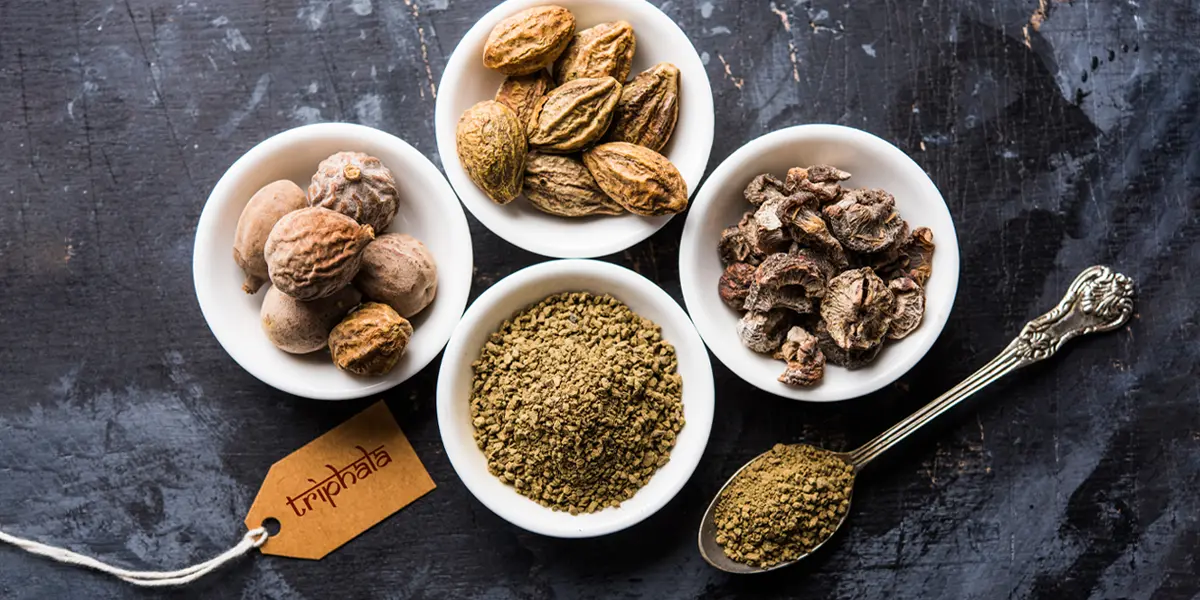
Triphala is considered a Rasayana and Tridoshahara formulation with the following properties:
- Ruksha and Laghu Guna (light and dry qualities)
- Madhura, Amla, Kashaya Rasa (sweet, sour, and astringent tastes)
- Madhura Vipaka (sweet post-digestive effect)
- Shodhana (detoxifying action)
- Vrana Ropana (wound healing action)
Individual components
- Haritaki (Terminalia chebula): Detoxification, laxative, antimicrobial
- Bibhitaki (Terminalia bellirica): anti-inflammatory, antioxidant
- Amalaki (Phyllanthus emblica): Rich vitamin C source, collagen support, immunomodulation
Systemic detoxification in Dushta Vrana
Correction of Agni and reduction of Ama:
Triphala improves digestive and metabolic function (Agni), reducing accumulation of Ama, which is considered a major contributor to chronic wound pathology and systemic inflammation.
Antioxidant and anti-inflammatory effects:
Rich polyphenolic compounds (gallic acid, ellagic acid, chebulinic acid, emblicanin) reduce oxidative stress and suppress inflammatory mediators such as TNF-α and IL-1β, thereby supporting systemic healing.
Immunomodulation:
Triphala helps regulate immune responses, balancing pro-inflammatory and anti-inflammatory pathways, which is essential in chronic infected wounds.
Local detoxification and wound healing
Antimicrobial activity:
Triphala exhibits broad-spectrum antibacterial and antifungal effects against wound pathogens, helping reduce infection load in Dushta Vrana.
Biofilm disruption:
Studies show Triphala can inhibit microbial biofilm formation, a major barrier in chronic wound healing.
Promotion of granulation tissue:
Triphala enhances fibroblast proliferation, collagen synthesis, and angiogenesis, accelerating wound contraction and epithelialization.
Autolytic debridement support:
Its astringent and cleansing properties help remove slough and necrotic tissue, improving wound bed preparation.
Dual action concept: Systemic + local detoxification
Triphala is unique because it works at two levels:
Systemic level:
- Detoxifies blood (Raktashodhana)
- Improves metabolism (Agni)
- Reduces inflammatory load
Local level:
- Cleans infected wound bed (Vrana Shodhana)
- Controls microbial growth
- Enhances tissue regeneration
This dual mechanism makes it especially valuable in chronic, recurrent, and non-healing ulcers.
Clinical applications
Triphala is widely used in Dushta Vrana management such as:
- Chronic non-healing ulcers
- Diabetic foot ulcers
- Venous leg ulcers
- Pressure sores
- Infected post-surgical wounds
- Sinus tracts and chronic discharge wounds
- Inflammatory dermatological ulcers
It is used both orally (as Churna, Kwatha) and topically (as wash, paste, or irrigation solution).2
Conclusion
Triphala is a cornerstone formulation in the Ayurvedic management of Dushta Vrana due to its combined systemic detoxification and local wound-cleansing properties. Its antioxidant, antimicrobial, immunomodulatory, and tissue-regenerative actions support both internal correction of disease pathology and external wound healing. Contemporary evidence strongly supports its role as a multi-target therapeutic agent in chronic wound management, validating its classical Ayurvedic indications.
Reference:
- Peterson CT, Denniston K, Chopra D. Therapeutic Uses of Triphala in Ayurvedic Medicine. J Altern Complement Med. 2017;23(8):607-614. doi:10.1089/acm.2017.0083 https://pmc.ncbi.nlm.nih.gov/articles/PMC5567597/
- Bairwa VK, Kashyap AK, Meena P, Jain BP. Triphala's characteristics and potential therapeutic uses in modern health. Int J Physiol Pathophysiol Pharmacol. 2025;17(2):19-36. Published 2025 Apr 25. doi:10.62347/OBSS5026 https://pmc.ncbi.nlm.nih.gov/articles/PMC12089839/