
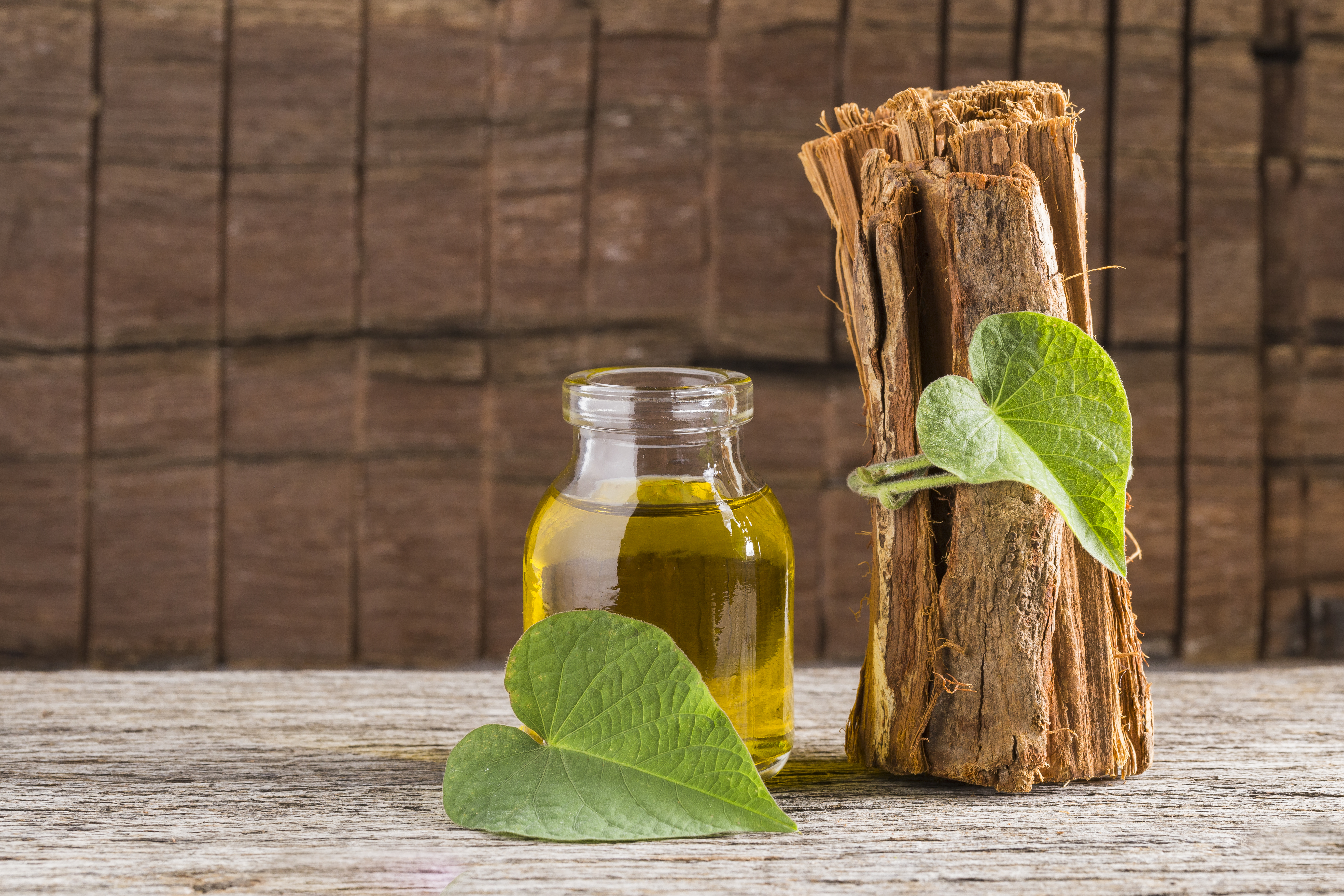
Guduchi (Tinospora cordifolia, also called Giloy) is a climbing shrub of the Menispermaceae family. It is central to Ayurvedic practice. It is prescribed for general debility, fever, diabetes, dyspepsia, urinary infections, jaundice and skin diseases. Fever is both a symptom of infection and a sign of immune activation. This makes the herb’s reputation as an “immune-balancing” agent a natural subject for scientific inquiry.
Phytochemistry: The active players
The stem and leaves contain a diverse chemical mix. Compounds isolated from the plant include alkaloids, diterpenoids, phenols, aliphatic compounds and polysaccharides. Researchers have noted that it is not well established which of these compounds drive which activities. The polysaccharide fraction (such as arabinogalactan-type glucans) is often linked to immune stimulation. The alkaloids and diterpenoids are more often tied to anti-inflammatory effects.1 Standardised extracts are therefore essential for reproducible research.
Immune activation: Cellular effects
Preclinical work shows broad immune stimulation. According to one review, components of the plant can increase macrophage phagocytic activity, antibody production, nitric oxide production, cytokine production, lymphocyte proliferation and chemotactic index. In febrile infections, faster pathogen clearance depends on exactly these innate and adaptive arms. Macrophage activation and antibody generation are key to this.
Antipyretic and anti-inflammatory evidence
Direct fever-reducing data come from animal studies. Experiments in Swiss albino mice reported that the extract showed significant analgesic effects in a dose-dependent manner, along with anti-inflammatory activity in the carrageenan test and antipyretic effects in the brewer’s yeast-induced pyrexia test. These findings lend experimental support to the traditional use of Guduchi decoctions in fever. Yeast-induced pyrexia is an artificial model, however, and does not replicate infection-driven fever in people.
Traditional use in fever
Classical practice offers a clear template. Leaf juice or decoction is taken orally with honey in fever.2 Guduchi is also commonly included in multi-herb formulations rather than used alone. This complicates interpretation, because any observed benefit cannot be attributed to a single ingredient.
- Ethnomedicinal uses of T. cordifolia in various regions in India for fever2:
|
Areas |
Part used/Dosage form |
Route of administration |
Ailment |
|
Baiga, resident of Naugarh and Chakia blocks, Varanasi, Uttar Pradesh |
Pills prepared of T. cordifolia stem and Solanum surattense roots paste |
Orally |
Fever |
|
Mumbai tribals and its neighbouring fishermen along the sea coast |
Whole plant |
Orally |
Fever, chronic diarrhoea, jaundice, periodic fever |
|
Khedbrahma tribals, North Gujarat |
Old stems decoction |
Orally |
Periodic fever |
|
Jammu, J&K and Bigwada, Rajasthan tribals |
Stem decoction |
Orally |
Fever |
|
Bhuvneshwar, Orissa |
Warm juice of the root |
Orally |
Fever |
|
Patiala, Punjab |
Leaves juice or decoction along with honey |
Orally |
Fever |
Safety: A genuine caveat
Enthusiasm needs to be balanced against safety signals. Several recent reports have documented clinically apparent liver injury with long-term use of T. cordifolia. It adds that the clinical features suggest the injury is immunologically mediated,3 and autoantibodies were frequent. That is a real concern for a herb marketed as an immune modulator, especially in people with autoimmune tendencies. In contrast, a GLP-compliant 28-day rat study of a stem aqueous extract concluded that the extract was non-clinically safe, although it was acknowledged that case reports have linked the herb to apparent liver toxicity. The evidence is therefore conflicting. Preparation, dose, duration and co-ingredients all are the significant concerns.
The evidence gap in humans
The same review states that none of the biological or clinical activities demonstrated in animal studies have been shown in studies in humans. Reviews likewise conclude that further research is necessary to ascertain the effectiveness of giloy-based products. Well-designed randomised trials in specific febrile illnesses, with standardised extracts and liver monitoring, remain largely missing.
Practical takeaways
- Human evidence in febrile conditions is limited, so Guduchi should not replace medical evaluation of persistent, high or unexplained fever.
- Prolonged or high-dose use, and use alongside other herbal products, warrants caution. People with liver disease or autoimmune conditions should consult a physician first.
Conclusion
Guduchi is a promising, mechanistically interesting immunomodulator, and its pharmacology lines up well with the demands of a febrile response. Its promise is still preclinical. Rigorous clinical trials and careful hepatic safety monitoring will decide whether tradition translates into evidence-based practice.
References:
- Gupta A, Gupta P, Bajpai G. Tinospora cordifolia (Giloy): An insight on the multifarious pharmacological paradigms of a most promising medicinal ayurvedic herb. Heliyon. 2024;10(4):e26125. Published 2024 Feb 15. doi:10.1016/j.heliyon.2024.e26125. https://pmc.ncbi.nlm.nih.gov/articles/PMC10882059/
- Sharma R, Banerjee S, Arya R, et al. Role of Tinospora cordifolia (Willd.) Hook. F. in neurological disorders: A comprehensive review and network pharmacology-based analysis. J Pharmacol Sci. 2026;162(2):143-161. doi:10.1016/j.jphs.2026.08.001. https://www.sciencedirect.com/science/article/pii/S1347861326000459
- Nnamani I, Tolu-Akinnawo O, Dufera RR, Akintunde A, Maliakkal B. Tinospora cordifolia (Guduchi/Giloy)-Induced Liver Injury: A Case Review. Cureus. 2023;15(5):e39793. Published 2023 May 31. doi:10.7759/cureus.39793. https://pmc.ncbi.nlm.nih.gov/articles/PMC10238282/