
Introduction
Marma therapy is an Ayurvedic technique that involves stimulation of vital points (marma sthanas) considered junctions of muscles, vessels, nerves, bones, and joints, where Prana is concentrated. Described in the Sushruta Samhita, 107 marma points are used therapeutically, especially in Vata-related disorders where pain, stiffness, and neuromuscular dysfunction predominate. Marma stimulation is believed to restore Vata balance, improve circulation, and enhance neuromuscular function. Modern interpretations suggest effects on autonomic regulation, pain modulation pathways, and neurovascular dynamics. Thus, marma therapy is increasingly explored as a complementary, non-pharmacological approach for managing musculoskeletal and chronic pain conditions in integrative medicine.1
Classical concept of marmas
According to Sushruta, marmas are anatomical sites where five structural components—mamsa, sira, snayu, asthi, and sandhi—intersect. Based on clinical outcomes of injury, marmas are classified as:
- Sadyo Pranahara (fatal immediately)
- Kalantara Pranahara (delayed fatal)
- Vaikalyakara (causing deformity)
- Vishalyaghna
- Rujakara (pain-producing)
These classifications highlight the functional and clinical importance of marma points in both diagnosis and treatment.
Marma therapy in pain management
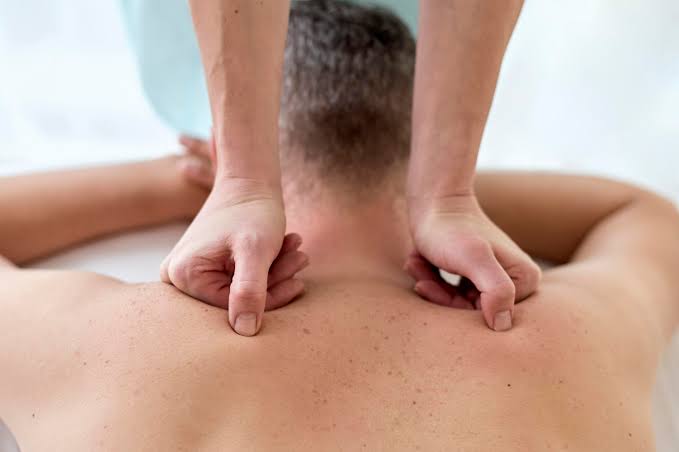
Marma therapy involves gentle stimulation using fingertip pressure, medicated oils, or massage techniques. It is widely applied in:
- Cervical spondylosis
- Osteoarthritis
- Low back pain
- Sciatica
- Frozen shoulder
- Sports injuries
From an Ayurvedic standpoint, marma stimulation pacifies aggravated Vata dosha, improves srotas (microchannel) flow, and restores neuromuscular coordination.
Proposed neuro-musculoskeletal mechanisms
Modern interpretations suggest that marma therapy may act through multiple physiological pathways:
- Neuromodulation: Stimulation of sensory afferents may alter pain perception via spinal gating mechanisms
- Myofascial release: Reduction of muscle tension at trigger point-like structures
- Microcirculatory improvement: Enhanced local blood flow and oxygen delivery
- Autonomic regulation: Balancing sympathetic overactivity associated with chronic pain
- Endogenous analgesia: Possible activation of endorphin-mediated pathways
These mechanisms align marma therapy with other manual therapies such as acupuncture and acupressure, though conceptual frameworks differ.
Clinical evidence and contemporary relevance
Preliminary clinical observations suggest marma therapy may reduce pain intensity, improve joint mobility, and enhance functional outcomes in chronic musculoskeletal disorders. However, most studies are pilot-level or observational, with limited randomized controlled trials.
The overlap between marma points and neurovascular or myofascial trigger points has been proposed as a potential anatomical correlation, supporting further research interest in integrative rehabilitation medicine.
Limitations
Despite its clinical promise, marma therapy faces limitations including:
- Lack of standardized protocols
- Limited high-quality clinical trials
- Variability in practitioner technique
- Insufficient neurophysiological validation
Conclusion
Marma therapy represents a traditional Ayurvedic neuro-musculoskeletal intervention with potential applications in pain management.2 Its effects may be mediated through neuromodulation, circulatory enhancement, and autonomic regulation. While promising, stronger clinical evidence is required to establish standardized therapeutic protocols and validate efficacy in modern pain medicine.
Reference:
- Wu T, Wang XY. A comparative study on marma and acupoints. J Ayurveda Integr Med. 2023;14(4):100769. doi:10.1016/j.jaim.2023.100769 https://pmc.ncbi.nlm.nih.gov/articles/PMC10382659/
- Chopra A, Saluja M, Tillu G. Ayurveda-modern medicine interface: A critical appraisal of studies of Ayurvedic medicines to treat osteoarthritis and rheumatoid arthritis. J Ayurveda Integr Med. 2010;1(3):190-198. doi:10.4103/0975-9476.72620 https://pmc.ncbi.nlm.nih.gov/articles/PMC3087360/