
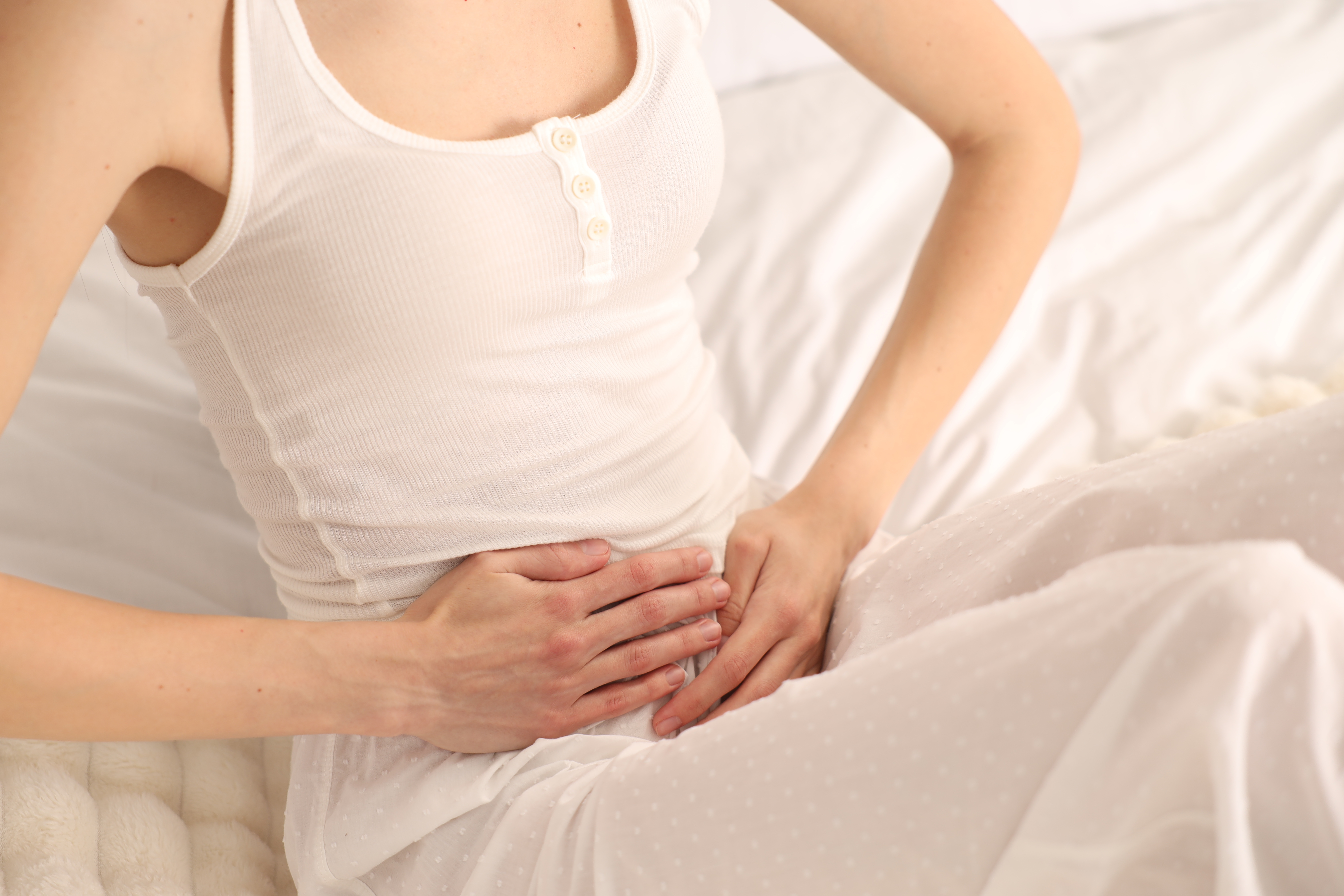
Dysmenorrhoea, derived from the Greek terms dys (difficulty or abnormality), meno (month or menstrual cycle), and rrhoea (flow), is characterised by painful menstruation. The pain is typically experienced in the lower abdomen or pelvic region and may radiate to the lower back, thighs, and legs. It can interfere with daily activities, productivity, and quality of life. Dysmenorrhoea is classified into primary and secondary types.
Primary dysmenorrhoea occurs without identifiable pelvic pathology and is commonly associated with menstrual uterine contractions, whereas secondary dysmenorrhoea results from underlying conditions such as endometriosis or uterine fibroids.
Classification of dysmenorrhoea
Dysmenorrhoea, referred to as Usre-tams in Unani medicine, is classified into two principal types:
- Primary dysmenorrhoea (Usre-tams ibtidaee): Recurrent, cyclical menstrual pain occurring without an identifiable underlying pelvic abnormality. The pain is typically spasmodic and recurs with successive menstrual cycles.
- Secondary dysmenorrhoea (Usre-tams sanwi): Menstrual pain associated with an underlying pelvic disorder. The pain may begin one to two weeks before menstruation, persist throughout menstrual bleeding, and occasionally continue after its completion.
This distinction is clinically important because secondary dysmenorrhoea requires evaluation and treatment of the underlying pathology.
Unani medicines for primary dysmenorrhoea
Unani Tibb is recognised as one of the oldest systems of medicine, from which the modern system of medicine is believed by many to have evolved. The term Unani is derived from the Greek or Ionian tradition, while Tibb denotes medicine in Arabic.1
Traditional Unani practice incorporates medicinal plants with purported analgesic, anti-inflammatory, antispasmodic, and emmenagogue properties. These actions are described using traditional pharmacological terms, including Musakkin-e-Alam (pain-relieving), Muhallil-e-Auram (anti-inflammatory or resolving swelling), and Mudir-e-Haiz (promoting menstrual flow).
Single herbal drugs
Several single drugs have traditionally been used to manage menstrual discomfort. Their reported applications and principal constituents are summarised below1:
|
Unani drug |
Botanical name |
Traditional therapeutic applications and relevant constituents |
|
Asgand |
Withania somnifera |
The roots are used as a uterine tonic and for inflammatory conditions. Withanolides are among its principal bioactive constituents. |
|
Babuna |
Matricaria chamomilla |
Traditionally used for menstrual pain and inflammation. Chamazulene, apigenin, glycosides, and essential oils have been investigated for anti-inflammatory and antispasmodic activities. |
|
Badiyan |
Foeniculum vulgare |
The seeds are used for menstrual and digestive complaints. Volatile oils, including anethole, contribute to its pharmacological profile. |
|
Darchini |
Cinnamomum verum |
The bark is traditionally employed for pain relief and spasmodic complaints. Eugenol, cinnamaldehyde, and other volatile constituents have been investigated for their biological activities. |
|
Hulba |
Trigonella foenum-graecum |
The seeds are used for painful and inflammatory conditions. Trigonelline, saponins, mucilage, and fixed oils contribute to its phytochemical profile. |
|
Elva |
Aloe vera |
Traditionally classified as an emmenagogue and anti-inflammatory agent. Aloin and related anthraquinones are associated with its laxative effects, although these compounds also present safety concerns. |
|
Kalonji |
Nigella sativa |
Traditionally used for various inflammatory and painful conditions. Thymoquinone is a prominent bioactive constituent investigated for anti-inflammatory and antioxidant effects. |
|
Khar-e-Khasak |
Tribulus terrestris |
Traditionally employed to support reproductive and urinary functions. Its steroidal saponins and other constituents have been investigated pharmacologically. |
|
Zanjbeel |
Zingiber officinale |
Ginger is traditionally used for digestive and menstrual complaints. Gingerols and shogaols have demonstrated anti-inflammatory properties in experimental studies. |
|
Zafran |
Crocus sativus |
Traditionally used for menstrual and other functional complaints. Crocin, crocetin, and safranal are among its principal bioactive constituents. |
Other medicinal plants used in Unani practice include Abhal (Juniperus communis), Amaltas (Cassia fistula), Asarun (Asarum europaeum), Bakain (Melia azedarach), Hilteet (Ferula foetida), Mur (Commiphora myrrha), Pudina (Mentha viridis), Qust (Saussurea lappa), and Revand Chini (Rheum emodi). Their traditional applications include pain relief, menstrual regulation, and the management of inflammatory complaints. Nevertheless, traditional indications should not be interpreted as proof of clinical efficacy in primary dysmenorrhoea.
Potential pharmacological mechanisms
The proposed benefits of these medicinal plants have been associated with their bioactive phytochemicals. Anti-inflammatory compounds may influence inflammatory signalling, while certain plant constituents have demonstrated antispasmodic effects in experimental models. These mechanisms are relevant to primary dysmenorrhoea, in which increased endometrial prostaglandin production contributes to uterine hypercontractility, vasoconstriction, and menstrual pain. However, the presence of potentially active compounds does not establish that a particular herbal preparation effectively reduces prostaglandin-mediated pain in humans.
Safety and clinical considerations
Despite their traditional use, herbal medicines may produce adverse effects, interact with conventional medications, or vary in composition and potency.
- Particular caution is warranted with anthraquinone-containing aloe latex, Asarum species, Melia azedarach, and pennyroyal (Mentha pulegium), owing to potential toxicity.
- Herbal preparations intended to stimulate menstruation should not be used to self-treat missed periods because pregnancy must first be excluded when relevant.
- Nonsteroidal anti-inflammatory drugs (NSAIDs) remain established first-line pharmacological treatments for primary dysmenorrhoea, with hormonal contraceptives representing another treatment option when appropriate.
Conclusion
Unani medicine encompasses a diverse range of single herbal drugs traditionally used to manage primary dysmenorrhoea. Plants such as Babuna, Badiyan, Hulba, Darchini, and Zanjbeel contain bioactive constituents with pharmacological properties relevant to pain and inflammation. An evidence-based approach that integrates appropriate diagnostic evaluation with established treatment options is essential for the safe management of menstrual pain.3
References:
- Jabin F. A guiding tool in Unani Tibb for maintenance and preservation of health: a review study. Afr J Tradit Complement Altern Med. 2011;8(5 Suppl):140-143. doi:10.4314/ajtcam.v8i5S.7 https://pmc.ncbi.nlm.nih.gov/articles/PMC3252723/
- Raza A, Mustafa MT. Therapeutic evaluation of Unani medicine including single drugs and polyherbal formulation in primary dysmenorrhoea. Int J Unani Integr Med. 2026;10(2):21-29. https://www.unanijournal.com/articles/433/10-2-3-139.pdf
- Perveen S, Wadud A, Ahmed Makbul SA, et al. Unani concept of drug substitution (therapeutic interchange) and its validation on scientific parameters. J Ayurveda Integr Med. 2020;11(3):301-307. doi:10.1016/j.jaim.2017.11.006 https://pmc.ncbi.nlm.nih.gov/articles/PMC7527810/