
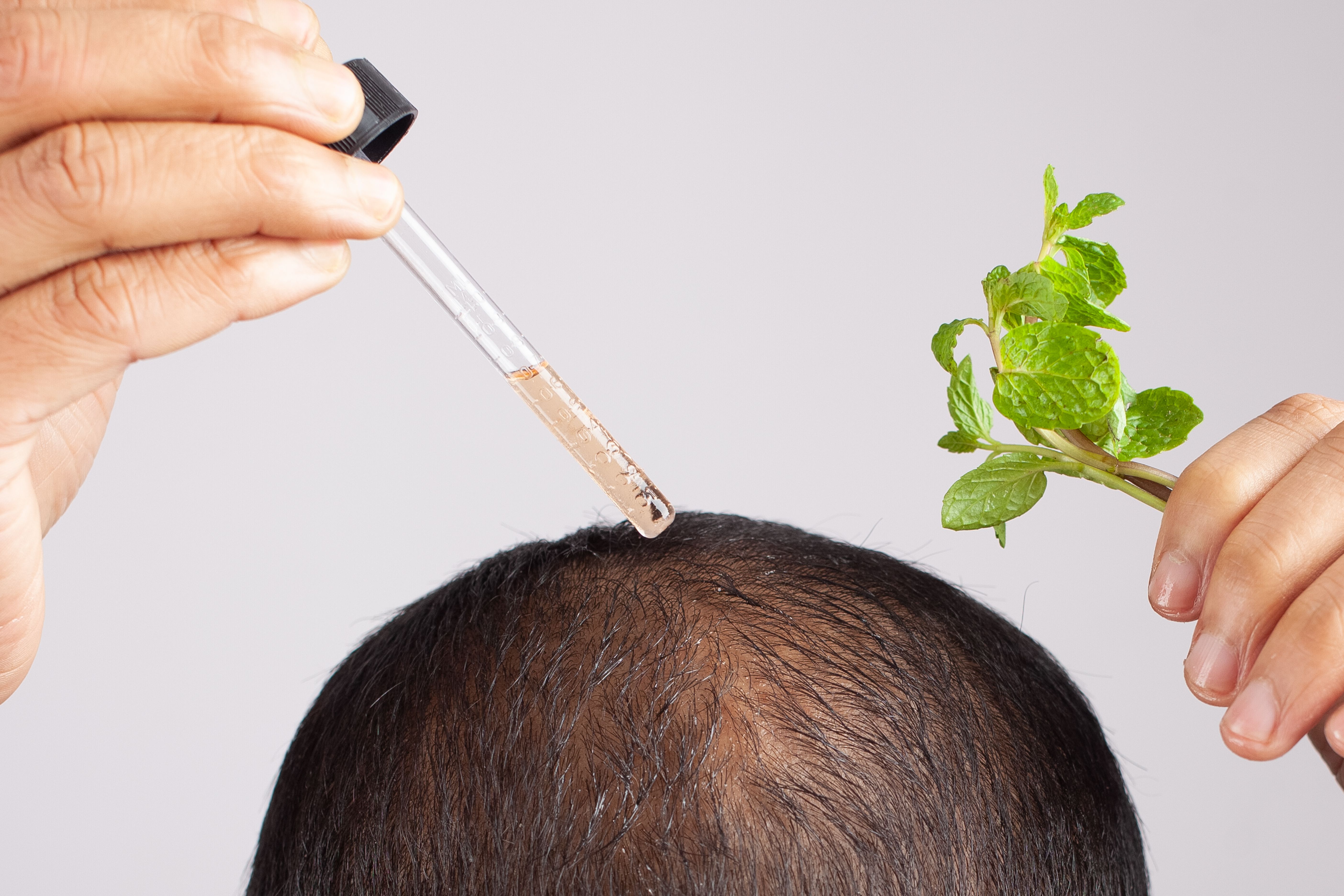
Androgenetic alopecia is a common, progressive form of hair loss characterised by gradual hair follicle miniaturisation and shortening of the hair growth cycle. It is primarily influenced by genetic susceptibility and androgen activity, particularly dihydrotestosterone (DHT). Neelibhringadi Taila, a traditional Ayurvedic polyherbal oil, is used in hair care for managing hair fall, supporting scalp health and maintaining hair quality. Its potential role in androgenetic alopecia has gained attention as part of integrative approaches to hair management.1
Composition and phytochemical properties
Neelibhringadi Taila is a classical Ayurvedic formulation traditionally used for external application through Shiro Abhyanga (scalp massage). Its composition may vary depending on the classical reference and manufacturer. Common ingredients include:
- Neeli (Indigofera tinctoria): Traditionally used to support hair health and pigmentation
- Bhringraj (Eclipta alba): Contains wedelolactone and other phytoconstituents with reported antioxidant and anti-inflammatory properties
- Amalaki (Emblica officinalis): Rich in polyphenols and vitamin C-related antioxidant compounds that may help protect against oxidative stress
- Yashtimadhu (Glycyrrhiza glabra): Contains glycyrrhizin and flavonoids with potential anti-inflammatory properties
- Cardiospermum halicacabum: Traditionally incorporated for its potential skin-soothing and anti-inflammatory effects
Sesame oil or coconut oil may serve as the base, depending on the preparation.
Potential role in androgenetic alopecia
The potential benefits of Neelibhringadi Taila in androgenetic alopecia are primarily associated with scalp conditioning and the biological properties of its constituent herbs.
Antioxidant activity: Oxidative stress may contribute to follicular ageing and dysfunction. Polyphenols present in ingredients such as Amalaki may provide antioxidant activity and help protect scalp tissues from oxidative damage.
Anti-inflammatory effects: Chronic perifollicular inflammation has been investigated as a contributing factor in androgenetic alopecia. Certain herbal constituents may influence inflammatory pathways and support scalp health.
Scalp conditioning: Regular topical oil application may improve scalp hydration, reduce dryness and improve hair-shaft lubrication, potentially reducing breakage.
Hair growth support: Traditional Ayurvedic use associates Bhringraj and Neeli with hair nourishment and growth. However, their ability to reverse androgen-mediated follicular miniaturisation has not been established.
Conclusion
Overall, Neelibhringadi Taila demonstrates traditional relevance and emerging clinical potential in hair health. Further large-scale, controlled studies are needed to establish its efficacy, formulation standardisation and long-term safety in androgenetic alopecia.2
Reference
- Patel MN, Patel N, Merja A, Patel RR, Mishra M. An Integrative Approach of Neeli Bhringraj Polyherbal Hair Oil in Clinical Evaluation of Androgenetic Alopecia (Khalitya) and Premature Hair Graying (Pālitya): A Randomized, Double-Blind Clinical Study. Cureus. 2026;18(7):e111988. Published 2026 Jul 3. doi:10.7759/cureus.111988 https://pmc.ncbi.nlm.nih.gov/articles/PMC13429210/
- Medi, Rama & Kaji, Mahathi & Sk, Asfa & A, Suneetha & Patibandla, Jahnavi. (2025). A Comprehensive Review on the Efficacy of Neelibhringadi Hair Oil in Modern Hair Care. International Journal of Zoology, Environment and Life Sciences. 26-30. 10.70604/ijzels.v2i2.62. https://www.researchgate.net/publication/395322380