
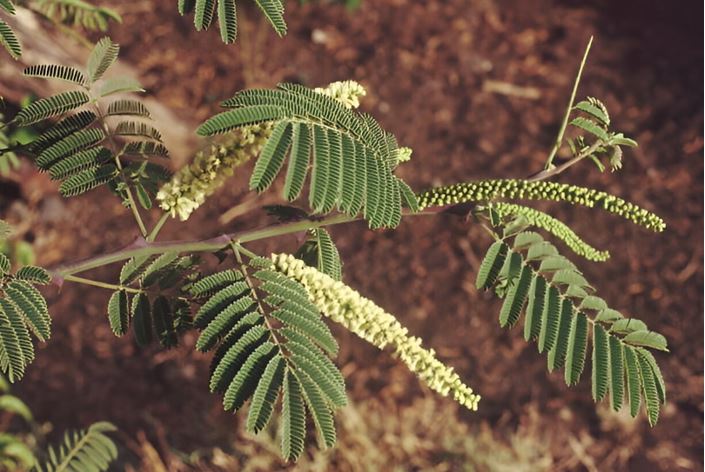
Introduction
The skin (Twak) and blood (Rakta Dhatu) share a close physiological relationship in Ayurveda. Disturbances in blood quality frequently manifest as inflammatory, infective, allergic, and pigmentary skin disorders. Classical texts identify Raktadushti as a major pathogenic factor in diseases such as Kushtha (skin diseases), Vicharchika (eczema), Kitibha (psoriasis), Yuvanapidika (acne), and Sheetapitta (urticaria).
Raktamokshana, described by Sushruta, is employed to remove vitiated blood and reduce local inflammatory pathology. However, long-term disease control requires herbs that support blood purification and tissue healing. Khadira has traditionally been regarded as one of the foremost remedies for chronic skin disorders and is a major ingredient in several Ayurvedic dermatological formulations.1
Ayurvedic perspective
Khadira possesses:
- Kashaya Rasa (astringent taste)
- Laghu and Ruksha Guna (light and dry qualities)
- Sheeta Virya (cool potency)
- Katu Vipaka (pungent post-digestive effect)
Classical Ayurvedic texts attribute the following actions to Khadira:
- Kushthaghna (beneficial in skin diseases)2
- Raktashodhaka (blood purifier)
- Kandughna (anti-pruritic)
- Krimighna (antimicrobial)
- Vranaropana (wound healer)
- Pittahara and Kaphahara actions
These properties make Khadira particularly suitable for chronic inflammatory and recurrent skin disorders.
Pharmacological basis
Anti-inflammatory activity:
Catechin and epicatechin, the major phytoconstituents of Acacia catechu, exhibit potent anti-inflammatory effects. Experimental studies have demonstrated inhibition of inflammatory mediators such as TNF-α, IL-6, and prostaglandins, thereby reducing erythema, swelling, and irritation.
Antioxidant properties:
Khadira is rich in polyphenols and tannins that possess strong antioxidant activity. These compounds neutralize reactive oxygen species, protecting skin tissues from oxidative damage associated with chronic inflammation.
Antimicrobial effects:
The antimicrobial properties of Khadira help control bacterial and fungal colonization often associated with dermatological disorders. This action is particularly beneficial in infected eczema, acne lesions, and chronic wounds.
Wound-healing activity:
Research suggests that Khadira promotes fibroblast proliferation, collagen synthesis, and epithelial regeneration. These effects contribute to improved healing of ulcerative and erosive skin lesions.
Complementary role with raktamokshana
Raktamokshana directly removes vitiated blood and decreases local inflammatory burden. Following purification, Khadira helps maintain the quality of Rakta Dhatu through its blood-purifying and anti-inflammatory actions. Its antioxidant and antimicrobial effects further support recovery and reduce disease recurrence.
The combination of Raktamokshana and Khadira addresses both immediate pathological factors and long-term maintenance of skin health, making it particularly useful in chronic dermatological conditions.
Clinical applications
Khadira is commonly utilized along with Raktamokshana in:
- Psoriasis (Kitibha Kushtha)
- Eczema (Vicharchika)
- Acne vulgaris (Yuvanapidika)
- Urticaria (Sheetapitta)
- Chronic dermatitis
- Pruritic skin disorders
- Non-healing ulcers
- Allergic skin conditions
It is frequently prescribed as decoctions, powders, medicated oils, and formulations such as Khadirarishta.
Conclusion
Khadira (Acacia catechu) is a highly valued Ayurvedic medicinal plant with significant Raktashodhana, anti-inflammatory, antioxidant, antimicrobial, and wound-healing properties. As a complementary therapy to Raktamokshana, it supports blood purification, reduces inflammation, promotes skin regeneration, and helps prevent recurrence of dermatological disorders. Contemporary pharmacological evidence supports its traditional use, highlighting its importance in integrative Ayurvedic dermatology.
Reference:
- Sunil MA, Sunitha VS, Radhakrishnan EK, Jyothis M. Immunomodulatory activities of Acacia catechu, a traditional thirst quencher of South India. J Ayurveda Integr Med. 2019;10(3):185-191. doi:10.1016/j.jaim.2017.10.010 https://pmc.ncbi.nlm.nih.gov/articles/PMC6822161/
- Singh, K. N. and Lal, Brij (2006) "Notes on Traditional Uses of Khair (Acacia catechu Willd.) by Inhabitants of Shivalik Range in Western Himalaya," Ethnobotanical Leaflets: Vol. 2006: Iss. 1, Article 12.
Available at: https://opensiuc.lib.siu.edu/ebl/vol2006/iss1/12