
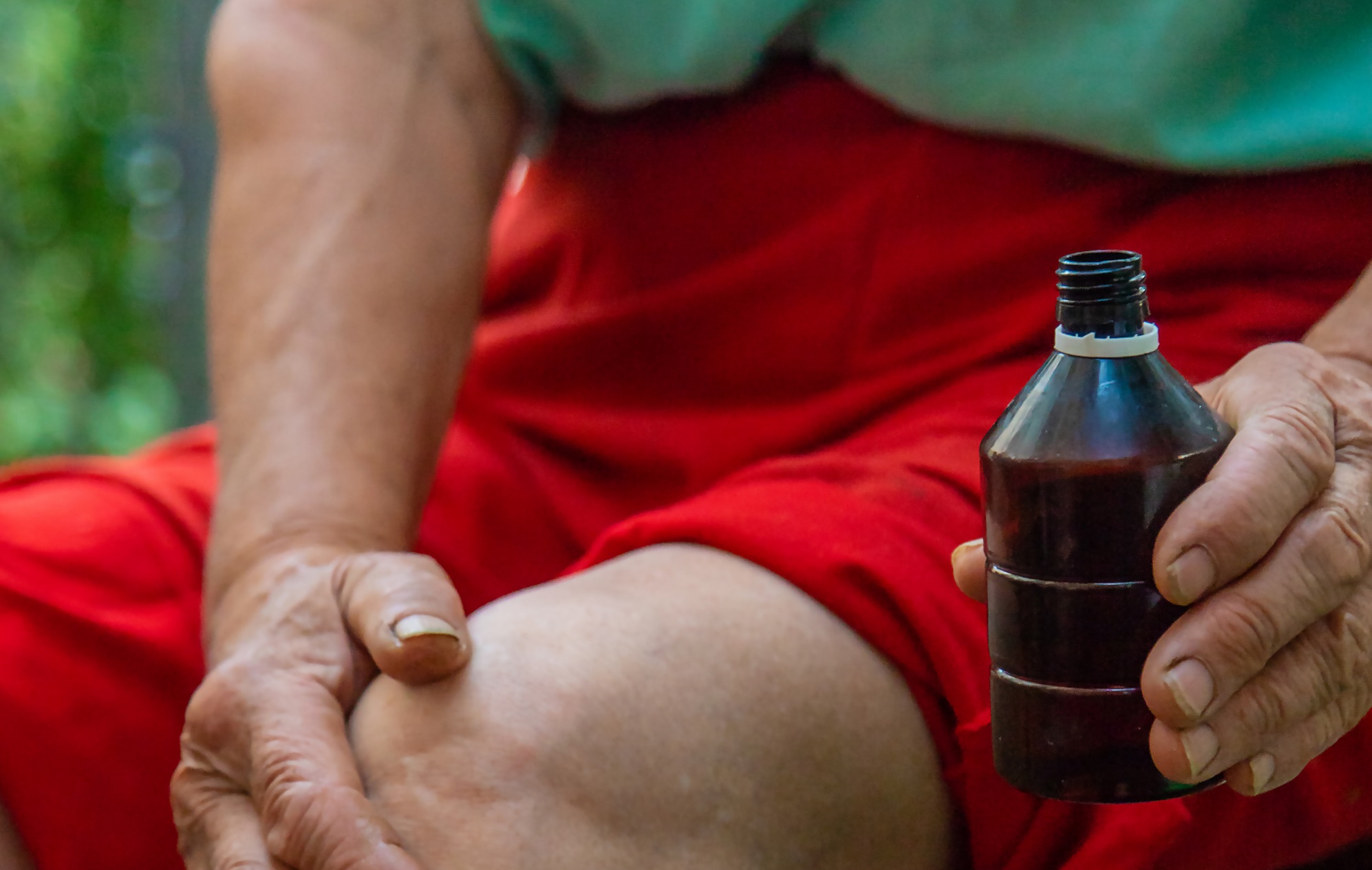
Osteoarthritis (OA) is a chronic joint disorder characterised by progressive changes in articular cartilage, subchondral bone, and surrounding tissues. Common symptoms include joint pain, stiffness, swelling, and reduced mobility, particularly in the knees, hips, and hands. Inflammation within the joint contributes to symptoms and disease progression, making pain control and preservation of physical function important goals of management. Shallaki, the Ayurvedic name for Boswellia serrata, is a medicinal tree whose gum resin has traditionally been used for joint pain and inflammatory conditions. Its resin contains boswellic acids, which have been investigated for their potential anti-inflammatory and analgesic properties.1
Phytochemical composition of Shallaki
The gum resin of Boswellia serrata contains several bioactive constituents, particularly pentacyclic triterpenic acids known as boswellic acids. Important constituents include:
- β-Boswellic acid: Investigated for its potential effects on inflammatory pathways
- Acetyl-11-keto-β-boswellic acid (AKBA): Studied for its influence on enzymes involved in inflammatory mediator production
- Other boswellic acids: May contribute to the overall biological activity of the resin
- Volatile oils and other resin constituents: Contribute to the complex chemical composition of the plant extract
The concentration and relative proportions of these compounds vary among extracts. Therefore, findings from one standardised preparation cannot automatically be applied to every Shallaki product.
Potential role of Shallaki in osteoarthritis
Modulation of inflammatory pathways:
Boswellic acids have been investigated for their ability to influence 5-lipoxygenase (5-LOX), an enzyme involved in leukotriene synthesis. Leukotrienes participate in inflammatory responses, and modulation of this pathway may help explain some of the anti-inflammatory effects associated with Boswellia extracts.
This mechanism provides a biological rationale for investigating Shallaki in osteoarthritis, although its effects on inflammation in human joints are not fully established.
Relief of joint pain and stiffness:
Oral Boswellia extracts may reduce pain and stiffness in people with osteoarthritis. A systematic review and meta-analysis included nine randomised controlled trials involving 712 participants and reported improvements in pain, stiffness, and physical function.2 However, differences in extract composition and study methods limit the generalisability of these results.
Improvement in physical function:
Pain and stiffness can interfere with walking, climbing stairs, and performing routine activities. Improvements in functional measures, including the Western Ontario and McMaster Universities Osteoarthritis Index (WOMAC) and the Lequesne Functional Index can be observed.3
These findings suggest that standardised Boswellia extracts may have a supportive role in symptom management. However, they do not establish that Shallaki restores damaged cartilage or reverses osteoarthritis.
Potential effects on inflammatory biomarkers:
Boswellia supplementation influences inflammatory markers such as C-reactive protein (CRP), interleukin-6 (IL-6), and tumour necrosis factor-alpha (TNF-α).4
Conclusion
Shallaki (Boswellia serrata) is an Ayurvedic medicinal plant with potential anti-inflammatory and pain-relieving properties relevant to osteoarthritis. Its boswellic acids may influence inflammatory pathways, while clinical research suggests possible improvements in joint pain, stiffness, and physical function. Nevertheless, differences in extract composition, limitations in study quality, and uncertainty about long-term outcomes require cautious interpretation. Further high-quality research is needed to establish the most effective preparations, appropriate dosing, and long-term safety. Shallaki may be considered a complementary option under professional guidance, alongside established osteoarthritis care.
Reference:
- Yu G, Xiang W, Zhang T, Zeng L, Yang K, Li J. Effectiveness of Boswellia and Boswellia extract for osteoarthritis patients: a systematic review and meta-analysis. BMC Complement Med Ther. 2020;20(1):225. Published 2020 Jul 17. doi:10.1186/s12906-020-02985-6 https://pmc.ncbi.nlm.nih.gov/articles/PMC7368679/
- Dubey V, Kheni D, Sureja V. Efficacy evaluation of standardized Boswellia serrata extract in osteoarthritis: A systematic review and sub-group meta-analysis study. Explore (NY). 2024;20(5):102983. doi: 10.1016/j.explore.2024.02.001 https://www.sciencedirect.com/science/article/abs/pii/S1550830724000090
- Majeed A, Majeed S, Satish G, et al. A standardized Boswellia serrata extract shows improvements in knee osteoarthritis within five days-a double-blind, randomized, three-arm, parallel-group, multi-center, placebo-controlled trial. Front Pharmacol. 2024; 15:1428440. Published 2024 Jul 18. doi:10.3389/fphar.2024.1428440 https://pmc.ncbi.nlm.nih.gov/articles/PMC11291344/
- Majeed M, Majeed S, Narayanan NK, Nagabhushanam K. A pilot, randomized, double-blind, placebo-controlled trial to assess the safety and efficacy of a novel Boswellia serrata extract in the management of osteoarthritis of the knee. Phytother Res. 2019;33(5):1457-1468. doi:10.1002/ptr.6338 https://pmc.ncbi.nlm.nih.gov/articles/PMC6681146/