Hair loss is a common concern that can significantly affect an individual's appearance, self-esteem and quality of life. Among its various causes, androgenetic alopecia (AGA) is one of the most prevalent forms, characterised by progressive hair follicle miniaturisation and reduced hair density. Although conventional treatments, including Minoxidil and Finasteride, are available, interest in plant-derived alternatives has increased because of their potential therapeutic properties.
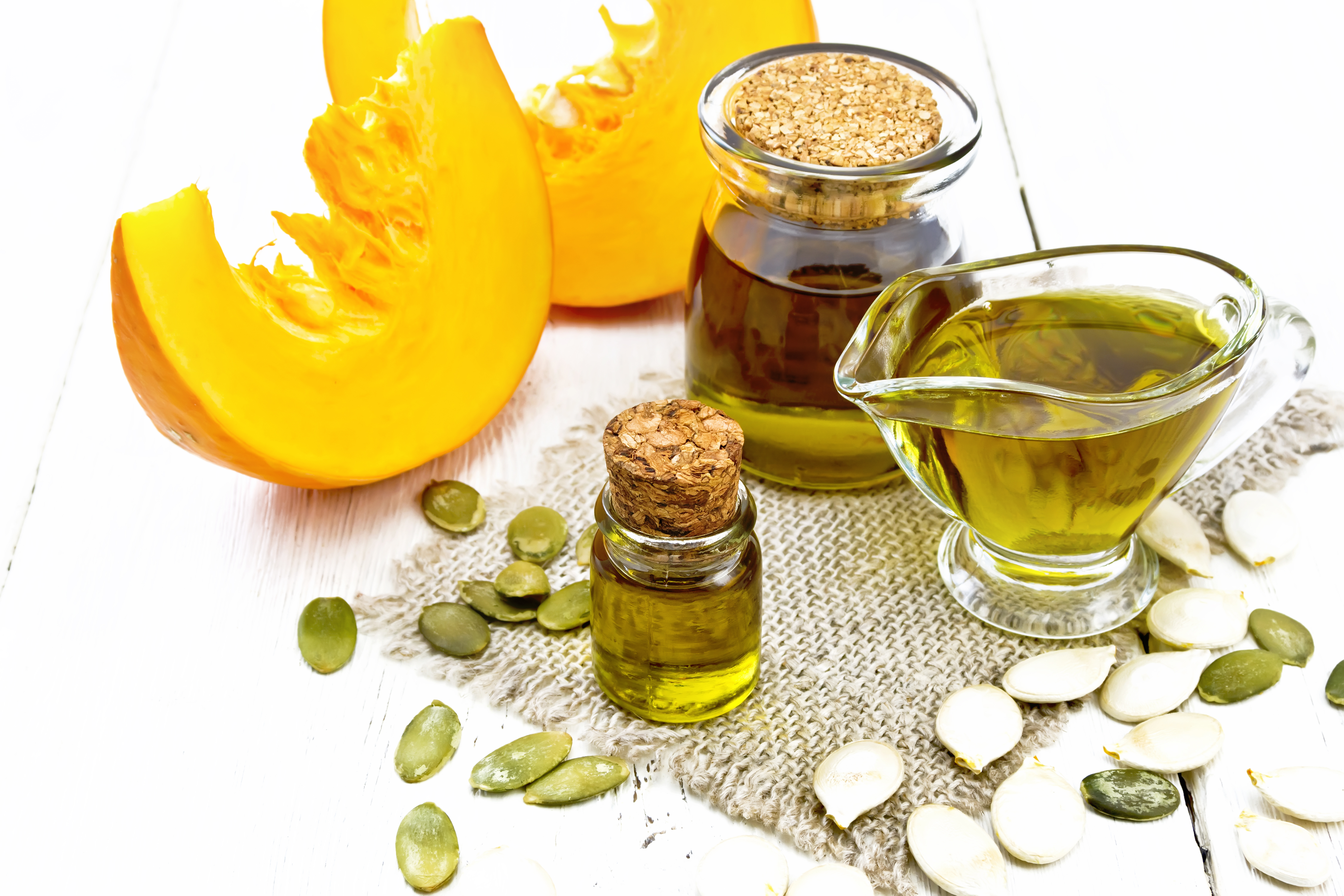
Pumpkin seed oil (PSO), extracted from pumpkin (Cucurbita pepo) seeds, has emerged as a promising natural ingredient for supporting hair growth. Its phytochemical composition, particularly its phytosterols, essential fatty acids and antioxidant compounds, has attracted attention for its potential role in managing hair loss. Preliminary clinical evidence has also suggested beneficial effects of PSO supplementation on hair density in individuals with AGA.
Bioactive constituents and potential mechanisms of action
Pumpkin (C. pepo) is recognised as a rich source of phytosterols.
- These plant-derived compounds possess antioxidant and potential antiandrogenic properties, which may contribute to their therapeutic effects. Among the phytosterols present in PSO, β-sitosterol has received particular attention because of its potential inhibitory activity against 5α-reductase, an enzyme responsible for converting testosterone into dihydrotestosterone (DHT).
- DHT plays a central role in the development of AGA by promoting progressive miniaturisation of genetically susceptible hair follicles. By potentially inhibiting 5α-reductase activity, β-sitosterol may reduce DHT production and help maintain the scalp's hormonal environment, thereby limiting follicular miniaturisation and supporting hair growth.
- Additionally, PSO contains essential fatty acids, including gamma-linolenic acid, along with vitamins and antioxidant constituents. These compounds may contribute to scalp health by supporting skin barrier function and reducing oxidative stress. However, their individual contributions to hair growth have not been conclusively established.
Clinical evidence: Does pumpkin seed oil promote hair growth?
The therapeutic potential of PSO in managing AGA was investigated by in a randomised, double-blind, placebo-controlled study involving 76 men with mild-to-moderate hair loss.
- Participants received either 400 mg of an oral PSO-containing supplement or a placebo daily for 24 weeks. Changes in hair count and patient-reported satisfaction were evaluated to determine treatment efficacy.
- A significant improvement in hair growth was demonstrated in the PSO-treated group compared with the placebo group. Following 24 weeks of supplementation, mean hair count increased by approximately 40% among participants receiving PSO, compared with a 10% increase in the placebo group.
- Furthermore, improvements in self-assessed hair growth and treatment satisfaction were significantly greater in the PSO group than in the control group. Participants receiving PSO also reported greater hair growth following treatment than at baseline.
- The incidence of adverse effects was comparable between the two groups, suggesting that the intervention was generally well tolerated. These findings provided preliminary clinical support for the potential use of oral PSO supplementation in men with AGA.
Limitations and future research directions
Despite the encouraging clinical findings, certain limitations should be considered when interpreting the therapeutic potential of PSO. The supplement evaluated in the clinical trial contained additional constituents, including gamma-linolenic acid and other nutrients, which may have contributed to the observed improvements. Consequently, the specific effects attributable to PSO alone cannot be established. Further investigations involving standardised PSO preparations are required to clarify its independent contribution to hair growth.
Additionally, the clinical evaluation was primarily focused on hair loss involving the vertex region, and the effects on frontal scalp hair loss were not adequately characterised. Since AGA can present with different patterns of hair loss across scalp regions, further studies should assess treatment responses in both frontal and vertex areas.
Conclusion
Pumpkin seed oil represents a promising plant-derived approach to supporting hair growth, particularly in individuals with AGA. Its phytosterol content, especially β-sitosterol, may contribute to its potential benefits through the inhibition of 5α-reductase and the subsequent reduction of DHT production. Essential fatty acids and antioxidant constituents may provide additional support for scalp and hair health. Although preliminary clinical evidence has demonstrated improvements in hair count and patient satisfaction following PSO supplementation, the contribution of individual constituents remains uncertain. Further well-designed clinical studies are warranted to establish its efficacy, underlying mechanisms and long-term safety before its routine use can be recommended as a hair-loss intervention.1,2
References:
- Ahmed A, Alali AM, Abdullah E, et al. Herbal Remedies for Hair Loss: A Review of Efficacy and Safety. Skin Appendage Disord. 2025;11(4):360-371. doi:10.1159/000542876 https://pmc.ncbi.nlm.nih.gov/articles/PMC12324729/#s3
- Cho YH, Lee SY, Jeong DW, et al. Effect of pumpkin seed oil on hair growth in men with androgenetic alopecia: a randomized, double-blind, placebo-controlled trial. Evid Based Complement Alternat Med. 2014;2014:549721. doi:10.1155/2014/549721 https://pmc.ncbi.nlm.nih.gov/articles/PMC4017725/