Anaemia remains a major global public health concern, disproportionately affecting young children, pregnant and postpartum women, and adolescent girls and women who menstruate.
- Socioeconomic disparities: Low- and lower-middle-income countries bear the greatest burden of anaemia, particularly among rural populations, people living in poverty, and individuals with no formal education.
- Global prevalence: WHO estimates indicate that anaemia affects approximately 40% of children aged 6–59 months, 37% of pregnant women, and 30% of women aged 15–49 years worldwide.1
Classical Ayurvedic properties and therapeutic uses of Shigru (Moringa oleifera)
Classical Ayurvedic texts, including the Charaka Samhita, Sushruta Samhita, and Bhavaprakasha Nighantu, describe Shigru in detail, highlighting its pharmacological attributes. It is characterized by tikta-katu rasa (bitter-pungent taste), laghu-tikshna guna (light and penetrating qualities), ushna virya (hot potency), and katu vipaka (pungent post-digestive effect). These properties are traditionally associated with its use as an antipyretic (jwaraghna), anti-inflammatory (shothahara), digestive stimulant (dipana-pachana), and detoxifying agent. Shigru is also indicated in classical Ayurvedic practice for conditions such as prameha (metabolic disorders, including diabetes), arsha (piles), vrana (wounds), and krimi (parasitic infections).2
Moringa oleifera: Nutritional support for anaemia
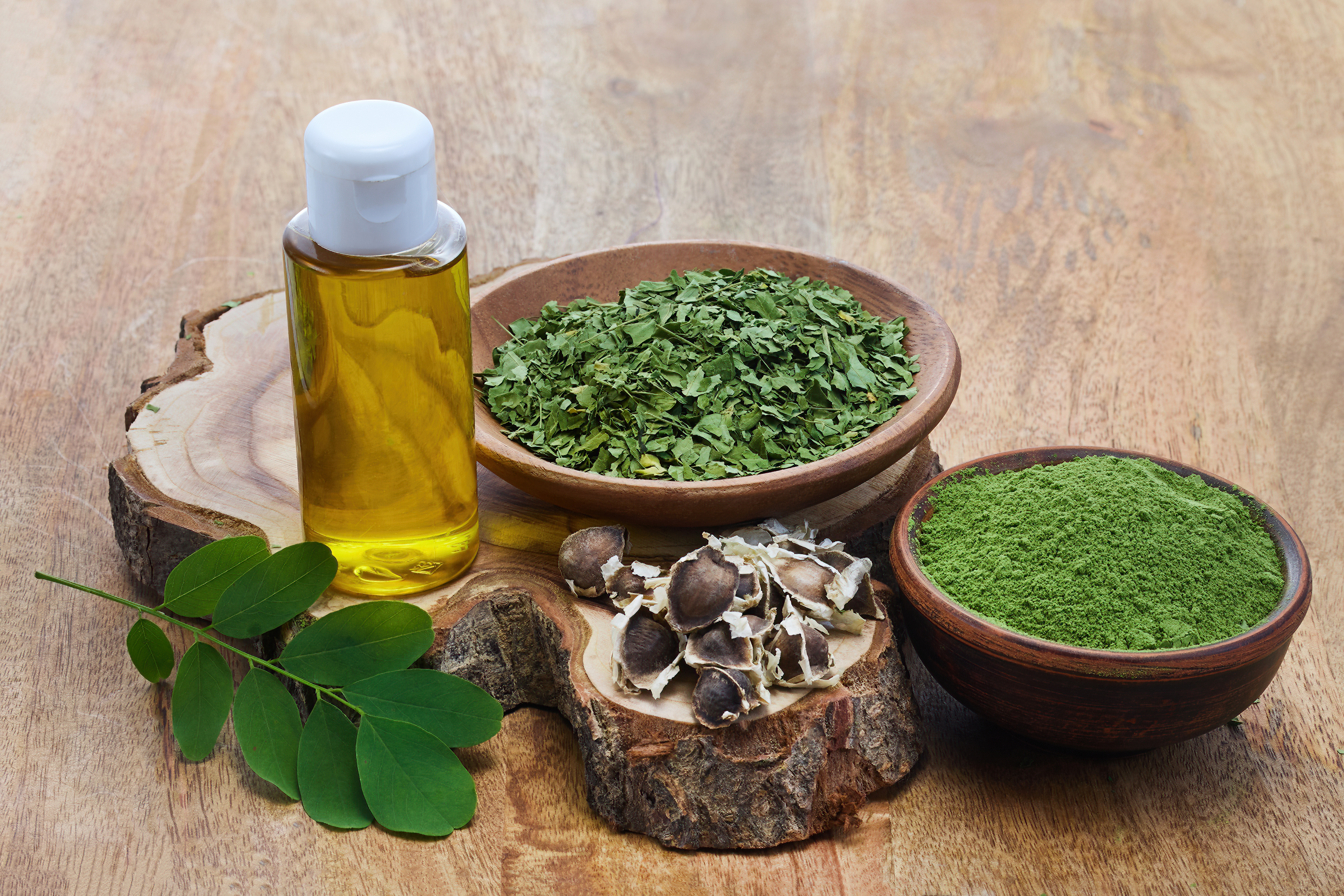
Moringa oleifera, the most widely cultivated species in the monogeneric family Moringaceae, thrives in tropical and subtropical regions. In Indonesia, it is commonly known as kelor and is often referred to as the “miracle tree” because various parts—including the leaves, bark, seeds, flowers and roots—are used in nutritional supplements, traditional medicine and industrial applications.
The leaves of M. oleifera are rich in nutrients, antioxidants and diverse bioactive compounds. They are reported to provide substantial amounts of iron (28.2 mg/100 g), calcium (2,003 mg/100 g), vitamin A (16.3 mg/100 g), B-complex vitamins, vitamin C and other essential minerals. Moringa is exceptionally rich in iron and folate, which are crucial in preventing nutritional anemia.
Owing to its nutritional composition, moringa has been explored as a potential dietary supplement to help address nutritional deficiencies and support dietary adequacy. However, its nutritional contribution depends on the preparation, serving size, bioavailability and overall dietary context.
Note: The statement that WHO and the United Nations have recommended Moringa specifically as an alternative to dietary supplementation should be verified against the original source before publication, as this wording may overstate the organisations’ endorsement.2,3
Clinical evidence
Numerous studies have investigated the potential therapeutic properties of Moringa oleifera leaves, reporting a range of pharmacological activities, including anti-inflammatory, analgesic, antipyretic, antihypertensive, wound-healing, antidiabetic, antiasthmatic, anticancer, anti-arthritic, antiepileptic, antiviral and antianaemic effects, among others. However, the strength of evidence varies across these applications, and further clinical research is needed to establish their efficacy and safety in humans.
A preclinical study reported increased haemoglobin levels, red blood cell counts, haematocrit and total iron content following six days of treatment with Moringa oleifera leaf extract. Another study found increases in haemoglobin, haematocrit, red blood cell count and total white blood cell count on days 8 and 15 of Moringa oleifera leaf extract administration. These findings suggest a potential role for Moringa in supporting haematological parameters.3
Clinical trials have demonstrated that Moringa leaf supplementation can improve haemoglobin levels in anaemic women of reproductive age, potentially addressing a major contributor to maternal morbidity. Additionally, its naturally occurring folate content may support erythropoiesis and fetal development during pregnancy.2,4 Additionally, Shigru may support Rasa–Rakta Dhatu Poshana and haematological health in adolescents.5
Conclusion
Moringa oleifera (Shigru) demonstrates potential as a nutrient-rich dietary adjunct for supporting haemoglobin levels and haematological health, with traditional Ayurvedic applications and emerging preclinical and clinical evidence. However, further robust clinical studies are needed to establish its efficacy, safety, and role alongside standard anaemia management strategies.
References:
- Anaemia. World Health Organization. 10 February, 2025. Accessed on 27 October, 2026. https://www.who.int/news-room/fact-sheets/detail/anaemia
- Monika, Singh DC, Kumar V. Nutraceutical potential of Shigru (Moringa oleifera): Ayurvedic superfood for the future. World J Pharm Res. 2025;14(19):728-738. doi:10.5281/zenodo.17242290. https://wjpr.s3.ap-south-1.amazonaws.com/article_issue/441035ac9c829fe50e53c92326051737.pdf
- Nurhayati T, Fathoni MI, Fatimah SN, Tarawan VM, Goenawan H, Dwiwina RG. Effect of Moringa oleifera Leaf Powder on Hematological Profile of Male Wistar Rats. J Blood Med. 2023;14:477-485. Published 2023 Aug 23. doi:10.2147/JBM.S407884. https://pmc.ncbi.nlm.nih.gov/articles/PMC10460593/
- Rotella R, Soriano JM, Llopis-González A, Morales-Suarez-Varela M. The Impact of Moringa oleifera Supplementation on Anemia and other Variables during Pregnancy and Breastfeeding: A Narrative Review. Nutrients. 2023;15(12):2674. Published 2023 Jun 8. doi:10.3390/nu15122674. https://pmc.ncbi.nlm.nih.gov/articles/PMC10301989/
- Pawar YH, Jain SS, Wasnik V. Nutritional and therapeutic potential of Shigru (Moringa oleifera) in Rasavaha and Raktavaha Srotodushti: a scoping review of iron and haematological outcomes. Ayushdhara. 2026;13(4):518-522. doi:10.47070/ayushdhara.v13i4.2916. https://ayushdhara.in/index.php/ayushdhara/article/view/2916