
Introduction
Spondylosis refers to a degenerative cascade resulting from age-related changes in the spinal column. These spondylotic changes may lead to direct compressive and ischemic dysfunction of the spinal cord, a condition known as cervical spondylotic myelopathy (CSM).
Clinical presentation of cervical spondylotic myelopathy
The symptoms of CSM generally develop gradually and may significantly affect functional capacity. Clinical manifestations include neck stiffness and deep aching pain involving the neck, arms, and shoulders, which may occur unilaterally or bilaterally. Difficulties in walking due to stiffness or clumsiness may also be present.
Characteristic features of CSM include:
- Weakness or stiffness in the arms.
- Clumsiness of hand movements.
- Weakness involving both the hands and legs.
- Impairment of coordinated limb function.
These manifestations represent the hallmark clinical features associated with the condition.
Ayurvedic perspective
In Ayurveda, the brain and spinal cord are considered forms of Majjadhara Kala (membrane surrounding the bone marrow). Certain neurological manifestations, including Bhrama and Tamahapravesha (temporary vision loss), are described among the symptoms of Majja-pradoshaja Vikaras.
This conceptual framework provides the basis for employing therapeutic measures directed toward the management of disorders affecting the spinal cord and associated neurological functions.
Panchakarma interventions
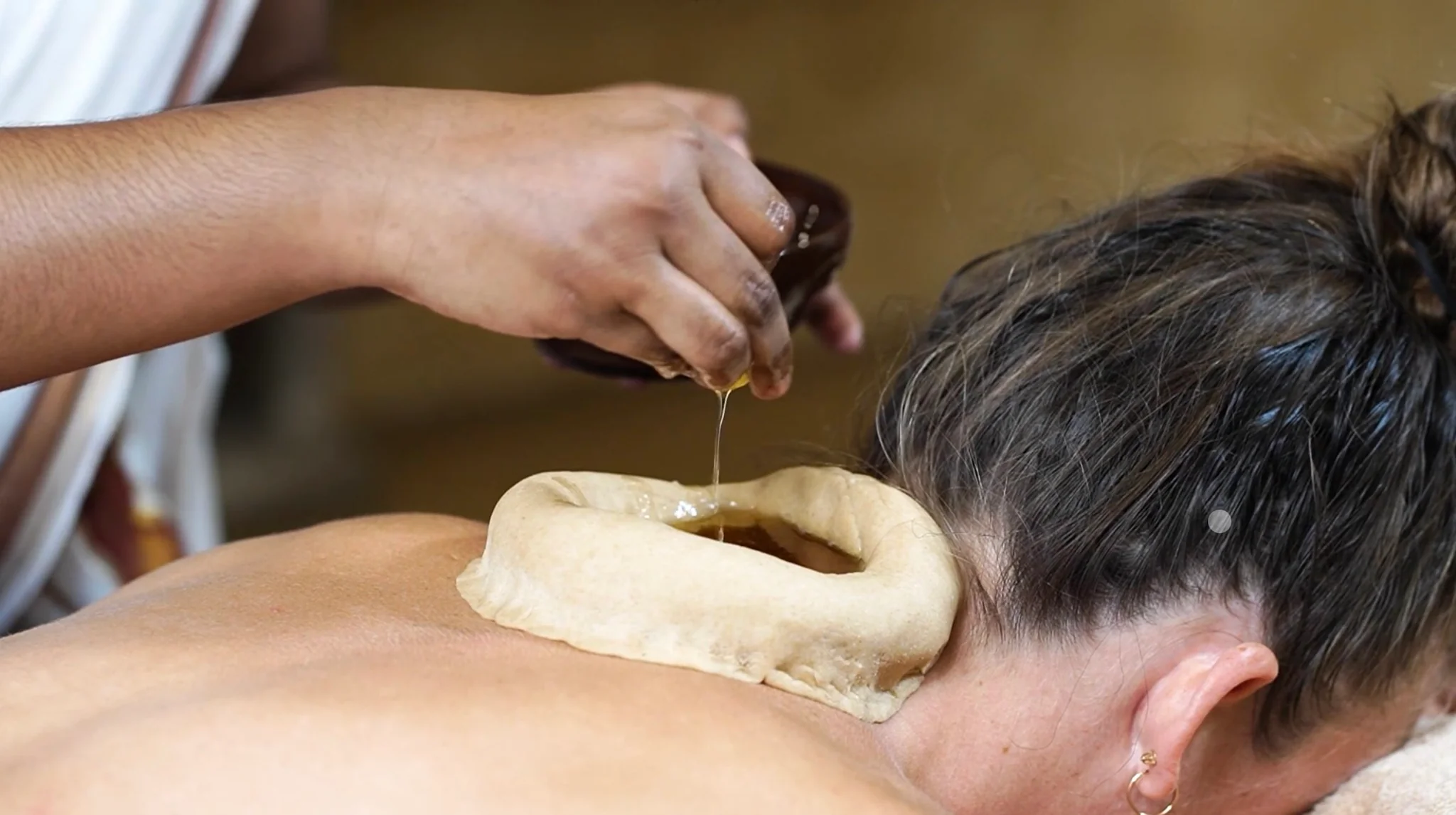
A comprehensive therapeutic approach may incorporate multiple Panchakarma procedures. Mridu Virechana using castor oil in a dose of 20 ml with lukewarm milk may be administered at night before initiating the primary treatment regimen.
Subsequent interventions may include:
- Shalishastika Pinda Svedana for 30 days.
- Mustadi Yapana Basti for 16 days.
These procedures form part of an integrated Ayurvedic management strategy for CSM.
Oral Ayurvedic formulations
Alongside Panchakarma interventions, selected Ayurvedic oral medications may be employed, including:
- Brihatavata Chintamani Rasa
- Ekangaveera Rasa
- Ardhangavatari Rasa
- Amrita Satva (starch of Tinospora cordifolia Willd)
- Muktasukti Pisti
- Aswagandha Churna (powder of Withania somnifera Dunal)
- Dashmool Kvatha Ghana (solid extract of Dashmool Kvatha) 500 mg
- Trayodashanga Guggulu
These formulations are utilized as part of the overall therapeutic protocol for managing the condition.
Therapeutic considerations
Various non-surgical management strategies are used in clinical practice for CSM, including:
- Cervical traction.
- Cervical immobilization using a collar or neck brace.
- Skull traction.
- Physical therapy.
Ayurvedic management incorporates Panchakarma procedures and selected oral formulations within a structured therapeutic framework intended for the management of cervical spinal cord dysfunction associated with spondylotic changes.
Conclusion
Cervical spondylotic myelopathy represents a degenerative spinal condition characterized by neurological and musculoskeletal manifestations affecting the neck, upper limbs, and lower limbs. From an Ayurvedic perspective, its management may involve a combination of Panchakarma procedures, including Mridu Virechana, Shalishastika Pinda Svedana, and Mustadi Yapana Basti, together with selected oral formulations. The therapeutic approach is aligned with the Ayurvedic understanding of Majjadhara Kala and Majja-pradoshaja Vikaras, providing a comprehensive framework for clinical management. 1,2
References:
- Lebl DR, Hughes A, Cammisa FP Jr, O'Leary PF. Cervical spondylotic myelopathy: pathophysiology, clinical presentation, and treatment. HSS J. 2011;7(2):170-178. doi:10.1007/s11420-011-9208-1. https://pmc.ncbi.nlm.nih.gov/articles/PMC3145857/
- Singh SK, Rajoria K. Ayurvedic management in cervical spondylotic myelopathy. J Ayurveda Integr Med. 2017;8(1):49-53. doi:10.1016/j.jaim.2016.08.011. https://pmc.ncbi.nlm.nih.gov/articles/PMC5377481/