
Introduction
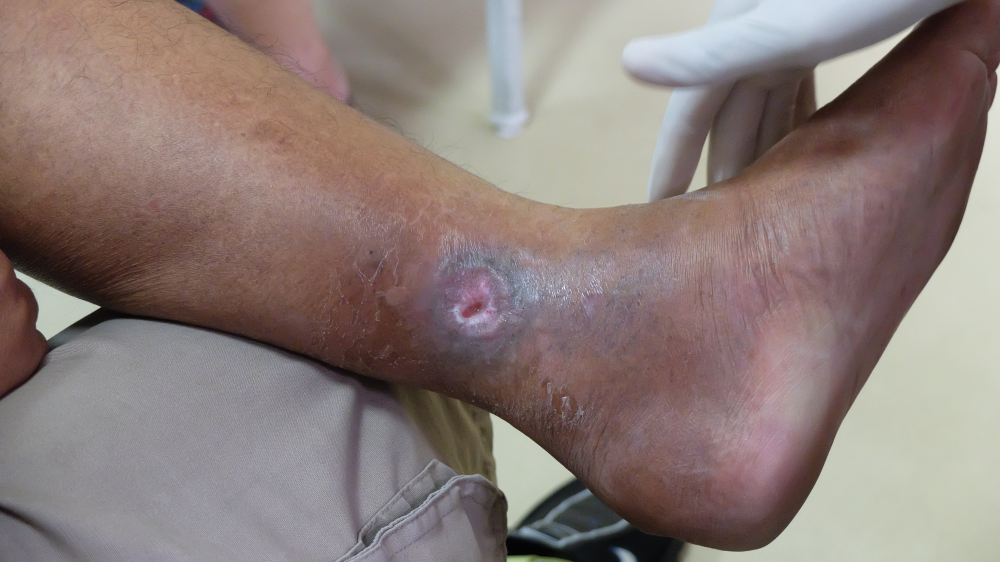
Chronic ulcers, including diabetic ulcers, venous ulcers, pressure sores, and traumatic non-healing wounds, represent a significant healthcare challenge. Persistent infection, excessive inflammation, and impaired tissue regeneration frequently delay healing. Ayurveda describes such wounds as Dushta Vrana and recommends therapies possessing both Vrana Shodhana (wound cleansing) and Vrana Ropana (wound healing) properties. Jatyadi Taila is among the most widely used Ayurvedic formulations for this purpose and has been traditionally applied to promote wound cleansing, tissue regeneration, and scar maturation.1
Major plants and their therapeutic roles
Jati (Jasminum officinale):
Jati serves as the principal ingredient of Jatyadi Taila and is traditionally recognized for its Vrana Ropana activity. Leaves and flowers contain flavonoids, iridoid glycosides, and phenolic compounds that exhibit anti-inflammatory and antioxidant properties. Experimental studies suggest that Jati promotes fibroblast proliferation, collagen synthesis, and epithelialization, thereby accelerating wound contraction and tissue repair. Its antimicrobial activity further contributes to wound cleansing and infection control.
Nimba (Azadirachta indica):
Nimba is renowned in Ayurveda for its Krimighna (antimicrobial) and Shothahara (anti-inflammatory) properties. Rich in bioactive compounds such as nimbidin, azadirachtin, and quercetin, neem exhibits broad-spectrum antibacterial and antifungal activity against common wound pathogens.2 By reducing microbial colonization and suppressing inflammatory mediators, Nimba creates a favorable environment for ulcer healing and prevents progression of wound infection.
Haridra (Curcuma longa):
Haridra is a well-established medicinal herb known for its active constituent curcumin. Curcumin possesses potent anti-inflammatory, antioxidant, and antimicrobial properties.3 It modulates inflammatory cytokines, reduces oxidative stress, and enhances fibroblast proliferation and collagen deposition. These actions facilitate granulation tissue formation, wound contraction, and re-epithelialization, making Haridra an important component in chronic ulcer management.
Daruharidra (Berberis aristata):
Daruharidra contains the isoquinoline alkaloid berberine, which exhibits strong antibacterial, antifungal, anti-inflammatory, and antioxidant activities. Berberine inhibits microbial growth, disrupts biofilm formation, and reduces inflammatory responses in infected wounds.4 Studies suggest that it also stimulates angiogenesis and collagen synthesis, supporting tissue regeneration and wound closure in chronic ulcers.
Karanja (Pongamia pinnata):
Karanja is traditionally used for ulcers, skin diseases, and infected wounds. Its bioactive constituents, including karanjin and pongamol, possess antimicrobial, anti-inflammatory, and antioxidant properties. Karanja helps reduce wound contamination, controls local inflammation, and promotes healthy granulation tissue formation. These actions contribute significantly to the healing of chronic and infected ulcers.
Synergistic role in chronic ulcer healing
The therapeutic efficacy of Jatyadi Taila arises from the synergistic actions of its constituent herbs. Together, they provide:
- Broad-spectrum antimicrobial activity against wound pathogens
- Reduction of inflammation and oxidative stress
- Promotion of fibroblast proliferation and collagen synthesis
- Enhancement of angiogenesis and granulation tissue formation
- Acceleration of epithelialization and wound contraction
- Improved scar maturation and tissue remodeling
This multifaceted approach addresses the major pathological factors responsible for delayed ulcer healing.
Clinical relevance
Clinical studies on Jatyadi Taila have demonstrated significant improvements in wound size reduction, granulation tissue formation, pain relief, discharge control, and overall healing rates in chronic ulcers. Its topical application is particularly beneficial in diabetic ulcers, pressure ulcers, traumatic wounds, and postoperative wounds. The formulation is well tolerated and remains an important component of integrative wound-care practices.
Conclusion
Jatyadi Taila represents a scientifically relevant Ayurvedic formulation for chronic ulcer management. The combined actions of Jati, Nimba, Haridra, Daruharidra, and Karanja provide antimicrobial, anti-inflammatory, antioxidant, and tissue-regenerative effects that facilitate wound cleansing and healing. By addressing infection, inflammation, and impaired tissue repair simultaneously, Jatyadi Taila offers a holistic and evidence-supported approach to chronic ulcer care.
Reference:
- Kulkarni YS, Emmi SV, Dongargaon TN, Wali AA. Wound healing effect of Vimlāpanakarma with Jātyādi tailam in diabetic foot. Anc Sci Life. 2015;34(3):171-174. doi:10.4103/0257-7941.157164 https://pmc.ncbi.nlm.nih.gov/articles/PMC4458909/
- Subapriya R, Nagini S. Medicinal properties of neem leaves: a review. Curr Med Chem Anticancer Agents. 2005 Mar;5(2):149-6. doi: 10.2174/1568011053174828. PMID: 15777222. https://pubmed.ncbi.nlm.nih.gov/15777222/
- Kumari A, Raina N, Wahi A, et al. Wound-Healing Effects of Curcumin and Its Nanoformulations: A Comprehensive Review. Pharmaceutics. 2022;14(11):2288. Published 2022 Oct 25. doi:10.3390/pharmaceutics14112288 https://pmc.ncbi.nlm.nih.gov/articles/PMC9698633/
- Imanshahidi M, Hosseinzadeh H. Pharmacological and therapeutic effects of Berberis vulgaris and its active constituent, berberine. Phytother Res. 2008 Aug;22(8):999-1012. doi: 10.1002/ptr.2399. PMID: 18618524. https://pubmed.ncbi.nlm.nih.gov/18618524/