
Abstract
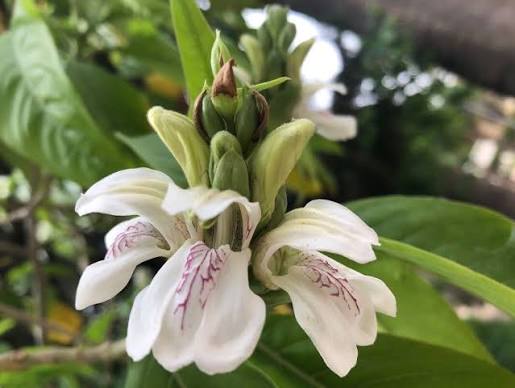
Kaumarbhritya, the Ayurvedic branch dedicated to child health, emphasizes disease prevention, immunity enhancement, and the management of childhood disorders through safe and effective herbal interventions. Among the medicinal plants described in Ayurvedic literature, Vasaka (Adhatoda vasica Nees), also known as Vasa or Malabar Nut, occupies an important place in the treatment of pediatric respiratory disorders. Traditionally used for Kasa (cough), Shwasa (dyspnea), and recurrent respiratory infections, Vasaka possesses Kaphahara, Shwasahara, and Kasahara properties. Modern pharmacological research has identified alkaloids such as vasicine and vasicinone as major bioactive compounds responsible for its bronchodilatory, mucolytic, anti-inflammatory, and antimicrobial activities. Recent studies further suggest protective effects on airway epithelial cells and regulation of pathological mucus secretion. This review highlights the classical Ayurvedic perspective and contemporary scientific evidence supporting the use of Vasaka in pediatric healthcare.
Introduction
Respiratory illnesses remain among the leading causes of morbidity in children. Recurrent cough, upper respiratory tract infections, allergic airway disorders, and bronchial inflammation can significantly affect growth and quality of life. Ayurveda describes these conditions under Kasa, Shwasa, and disorders of Pranavaha Srotas. Vasaka has been extensively recommended in classical texts for respiratory ailments because of its ability to facilitate expectoration, reduce airway obstruction, and improve breathing.
With increasing interest in evidence-based traditional medicine, Vasaka has gained scientific attention for its pharmacological effects relevant to pediatric respiratory care.
Ayurvedic perspective
According to Ayurvedic texts, Vasaka possesses:
- Tikta and Kashaya Rasa (bitter and astringent taste)
- Laghu and Ruksha Guna (light and dry qualities)
- Sheeta Virya (cool potency)
- Katu Vipaka
- Kaphapittahara action
- Kasahara (anti-tussive)
- Shwasahara (beneficial in respiratory disorders)
These properties make Vasaka particularly useful in conditions characterized by excess Kapha, mucus accumulation, cough, and breathing difficulty.
Phytochemical constituents
The principal bioactive compounds include:
- Vasicine
- Vasicinone
- Vasicinol
- Flavonoids
- Phenolic compounds
- Tannins
These phytochemicals contribute to the herb's respiratory protective and anti-inflammatory activities.
Contemporary pharmacological evidence
Bronchodilatory and expectorant activity:
Vasicine exhibits bronchodilatory and mucolytic effects, helping to reduce airway resistance and facilitate mucus clearance. These actions support its traditional use in cough and bronchial disorders.
Anti-inflammatory effects:
Airway inflammation is a major factor in pediatric respiratory illnesses. Experimental studies have demonstrated that Vasaka reduces inflammatory responses and protects respiratory tissues from inflammatory damage.1
Regulation of mucus hypersecretion:
Recent research has shown that Vasaka tea can inhibit excessive MUC5AC expression and reduce pathological mucus production in airway epithelial cells, suggesting a potential role in chronic inflammatory airway conditions.2
Antimicrobial and antioxidant activities:
Studies indicate that Vasaka possesses antimicrobial and antioxidant properties that may help reduce infection burden and oxidative stress associated with recurrent respiratory diseases.
Clinical applications in Kaumarbhritya
Recurrent cough:
Vasaka is traditionally administered in syrups, decoctions, and Avaleha formulations to reduce cough severity and promote expectoration.
Recurrent respiratory infections:
Its antimicrobial and immunomodulatory activities make it useful as a supportive therapy in children with recurrent respiratory tract infections.
Allergic airway disorders:
Bronchodilatory and anti-inflammatory actions may provide supportive benefits in children with allergic respiratory conditions and airway hyperreactivity.
Respiratory health promotion:
Vasaka-containing formulations are often incorporated into pediatric respiratory care to maintain airway health and reduce recurrence of symptoms.
Conclusion
Vasaka (Adhatoda vasica) remains one of the most valuable respiratory herbs described in Kaumarbhritya. Classical Ayurvedic literature highlights its efficacy in Kasa and Shwasa, while modern research supports its bronchodilatory, mucolytic, anti-inflammatory, antimicrobial, and airway-protective properties. Emerging evidence regarding mucus regulation and epithelial protection further strengthens its therapeutic relevance. Vasaka continues to serve as an important herbal intervention in pediatric respiratory healthcare and warrants further clinical investigation in childhood respiratory disorders.
Reference:
- Rudrapal M, Vallinayagam S, Aldosari S, et al. Valorization of Adhatoda vasica leaves: Extraction, in vitro analyses and in silico approaches. Front Nutr. 2023;10:1161471. Published 2023 Mar 17. doi:10.3389/fnut.2023.1161471 https://pmc.ncbi.nlm.nih.gov/articles/PMC10099809/
- Memon TA, Sun L, Almestica-Roberts M, Deering-Rice CE, Moos PJ, Reilly CA. Inhibition of TRPA1, Endoplasmic Reticulum Stress, Human Airway Epithelial Cell Damage, and Ectopic MUC5AC Expression by Vasaka (Adhatoda vasica; Malabar Nut) Tea. Pharmaceuticals (Basel). 2023;16(6):890. Published 2023 Jun 17. doi:10.3390/ph16060890 https://pmc.ncbi.nlm.nih.gov/articles/PMC10303053/