
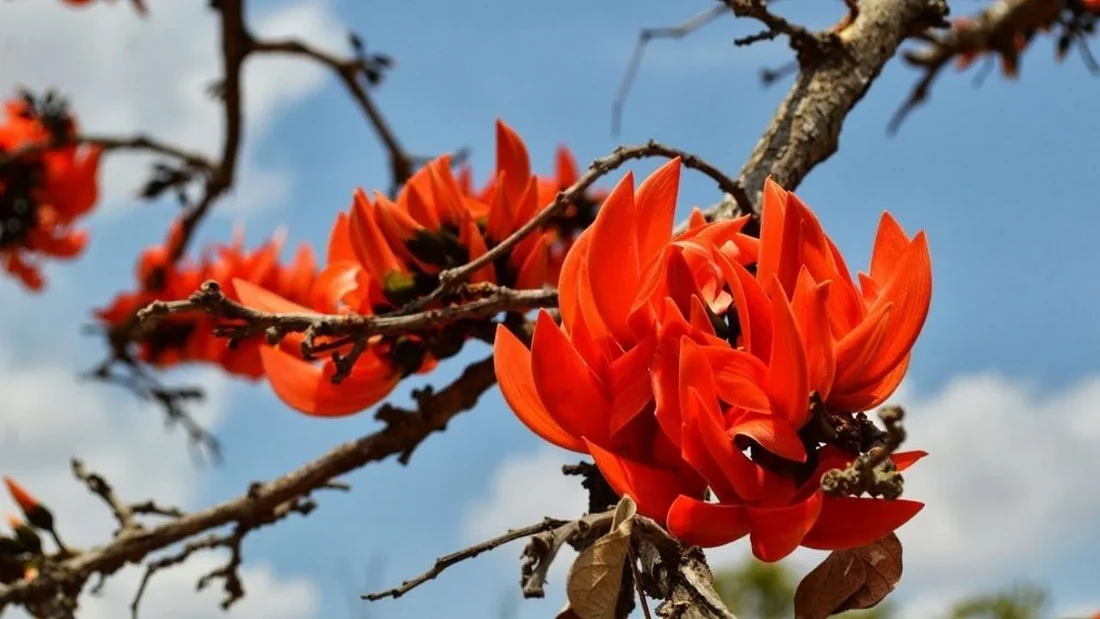
Introduction
Androgenetic alopecia (AGA) is a progressive, non-scarring hair loss disorder characterized by follicular miniaturization, shortened anagen phase, and gradual conversion of terminal hairs into vellus-like hairs. It is mediated primarily by genetic predisposition and androgen signaling, particularly the activity of dihydrotestosterone (DHT) acting on androgen-sensitive hair follicles in the frontal and vertex scalp.
Current standard therapies include 5α-reductase inhibitors (finasteride, dutasteride) and topical minoxidil; however, limitations such as adverse effects, variable response, and need for long-term adherence have encouraged exploration of phytotherapeutic alternatives. In this context, Butea monosperma (Palasha), a medicinal plant widely used in traditional systems of medicine, is being investigated for its potential role in hair follicle modulation and androgen-related alopecia.
Phytochemical profile of Butea monosperma relevant to hair biology
Butea monosperma contains a wide spectrum of bioactive constituents, including flavonoids (butrin, isobutrin), chalcones, triterpenoids, tannins, sterols, and glycosides. These compounds exhibit antioxidant, anti-inflammatory, antimicrobial, and endocrine-modulating properties that may be relevant in the pathophysiology of androgenetic alopecia.
Key phytochemical actions include:
- Flavonoids: antioxidant and anti-inflammatory effects
- Chalcones: modulation of cellular signaling pathways
- Tannins: astringent and follicular conditioning properties
- Sterols: potential influence on androgen metabolism pathways
Pathophysiology of androgenetic alopecia and therapeutic targets
AGA involves multiple interlinked mechanisms:
- Androgen-dependent miniaturization of hair follicles
- Conversion of testosterone to DHT via 5α-reductase enzyme
- Shortening of anagen phase and prolongation of telogen phase
- Perifollicular microinflammation
- Oxidative stress–mediated follicular damage
- Stem cell dysfunction in hair follicle bulge region
Therapeutic strategies therefore focus on:
- Inhibition of 5α-reductase activity
- Reduction of follicular inflammation
- Improvement of scalp microcirculation
- Antioxidant protection of dermal papilla cells
- Promotion of anagen phase re-entry
Mechanistic basis of Butea monosperma in androgenetic alopecia
Potential 5α-reductase modulatory activity:
Preclinical phytochemical analyses suggest that plant-derived flavonoids and sterols may influence androgen metabolism pathways, including partial inhibition of 5α-reductase activity. This could theoretically reduce DHT-mediated follicular miniaturization.
Anti-inflammatory effects on follicular microenvironment:
Chronic perifollicular inflammation contributes to progressive hair follicle damage in AGA. Butea monosperma exhibits anti-inflammatory properties via suppression of pro-inflammatory mediators such as cytokines and eicosanoids, potentially improving follicular survival.
Antioxidant protection of hair follicle cells:
Oxidative stress plays a key role in dermal papilla cell apoptosis and follicular aging. The flavonoid-rich fraction of Butea monosperma scavenges reactive oxygen species and may protect hair follicle stem cells from oxidative injury.
Improvement of scalp microenvironment:
Tannins and phytosterols may contribute to improved scalp conditioning, reduced microbial imbalance, and enhanced follicular anchorage through astringent and barrier-stabilizing effects.
Support of hair cycle regulation:
By modulating inflammatory and oxidative pathways, Butea monosperma may indirectly support prolongation of the anagen phase and delay follicular transition to catagen/telogen phases.
Experimental and evidence landscape
Although direct large-scale clinical trials on Butea monosperma in androgenetic alopecia are limited, related pharmacological studies on its extracts demonstrate antioxidant, anti-inflammatory, and cytoprotective properties relevant to hair follicle biology. These findings support its potential as a candidate phytotherapeutic agent in early-stage AGA and adjunctive hair care formulations.
Therapeutic role in androgenetic alopecia
Butea monosperma may contribute to AGA management through:
- Modulation of androgen-related pathways (potential 5α-reductase influence)
- Reduction of perifollicular inflammation
- Protection of dermal papilla cells from oxidative damage
- Support of hair follicle cycling and anagen maintenance
- Improvement of scalp health and follicular environment
Advantages of Butea monosperma–based phytotherapy
- Multitarget action addressing hormonal, inflammatory, and oxidative components
- Natural antioxidant and cytoprotective profile
- Potential role as adjunct to standard AGA therapies
- Lower risk of systemic hormonal side effects compared to synthetic anti-androgens
- Compatibility with topical and cosmeceutical formulations1
- Ethnomedicinal background supporting traditional use in skin and hair disorders
Limitations and research gaps
- Lack of robust randomized controlled clinical trials in AGA
- Insufficient standardized extraction and dosing protocols
- Limited mechanistic studies specifically on hair follicle signaling pathways
- Need for formulation optimization for scalp penetration and bioavailability
- Variability in phytochemical composition depending on plant source
Conclusion
Butea monosperma (Palasha) represents a promising phytotherapeutic candidate in androgenetic alopecia due to its antioxidant, anti-inflammatory, and potential androgen-modulating properties. Its multitarget biological actions align with key pathogenic mechanisms of follicular miniaturization and hair cycle disruption. However, current evidence remains largely preclinical, and well-designed clinical studies are required to validate its efficacy, safety, and therapeutic positioning in evidence-based trichology.
References:
- Dubey A, Upadhyay RK. Phytochemistry, pharmacological potential, and therapeutic uses of (Palash) Butea monosperma: A review. International Journal of Green Pharmacy. Jan-Mar 2026 • 20 (1). https://www.researchgate.net/profile/Ravi-Upadhyay/publication/405180515_Phytochemistry_pharmacological_potential_and_therapeutic_uses_of_Palash_Butea_monosperma_A_review/links/6a11077c8318ce33b324a97c/Phytochemistry-pharmacological-potential-and-therapeutic-uses-of-Palash-Butea-monosperma-A-review.pdf