
Introduction
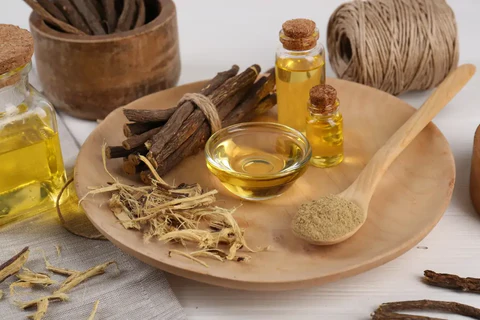
Yashtimadhu (Glycyrrhiza glabra Linn.), commonly known as licorice, is a well-known medicinal plant extensively used in Ayurveda for its Vrana Ropaka (wound healing), Shothahara (anti-inflammatory), and Rasayana (rejuvenating) properties. Chronic wounds, including diabetic ulcers, venous ulcers, pressure sores, and non-healing traumatic wounds, represent a major clinical challenge due to persistent inflammation, microbial colonization, and impaired tissue repair. Yashtimadhu has gained significant attention in both traditional and modern medicine for its ability to modulate inflammation, enhance tissue regeneration, and accelerate wound closure.
The primary bioactive constituent of Yashtimadhu is glycyrrhizin, along with flavonoids, saponins, and liquiritin, which contribute to its pharmacological effects. These compounds exhibit antioxidant, antimicrobial, and immunomodulatory activities, making the plant highly relevant in chronic wound management.1
Pharmacological basis of yashtimadhu in chronic wound healing (Concise)
- Anti-inflammatory activity: Glycyrrhizin and glycyrrhetinic acid suppress pro-inflammatory mediators (TNF-α, IL-1β, COX-2), reducing chronic inflammation and facilitating progression to the healing phase2
- Antimicrobial properties: Exhibits antibacterial and antifungal activity, limiting wound infection and microbial colonization, thereby promoting a healthier wound environment
- Antioxidant effects: Flavonoids neutralize free radicals and enhance antioxidant defenses, protecting cells from oxidative damage and supporting tissue repair
- Promotion of collagen synthesis: Stimulates fibroblast proliferation and collagen deposition, enhancing granulation tissue formation, wound contraction, and closure
- Immunomodulatory action: Regulates immune responses, improves macrophage function, and promotes clearance of necrotic tissue, thereby accelerating wound healing
Clinical applications in chronic wound management
Diabetic foot ulcers:
Yashtimadhu is beneficial in diabetic wounds by improving microcirculation, reducing inflammation, and enhancing tissue regeneration. It supports faster epithelialization and reduces infection risk.
Venous and pressure ulcers:
In long-standing ulcers, Yashtimadhu helps reduce chronic inflammation and promotes granulation tissue formation, leading to improved wound contraction and healing.
Infected wounds:
Due to its antimicrobial activity, it is useful in controlling bacterial load in infected and exudative wounds, thereby improving wound hygiene.
Topical and systemic use:
Yashtimadhu is used in topical formulations such as ointments, gels, and medicated oils, as well as in oral preparations for systemic anti-inflammatory and healing support.
Mechanism of wound healing (Vrana ropana)
Yashtimadhu supports wound healing through multiple pathways:
- Suppression of inflammatory cytokines
- Reduction of oxidative stress
- Inhibition of microbial proliferation
- Stimulation of fibroblast growth
- Enhancement of collagen synthesis
- Acceleration of epithelial regeneration
These combined actions contribute to efficient wound closure and reduced chronicity.
Conclusion
Yashtimadhu (Glycyrrhiza glabra) is a scientifically supported medicinal plant with strong therapeutic potential in chronic wound management. Its glycyrrhizin-rich composition provides anti-inflammatory, antimicrobial, antioxidant, and tissue-regenerative effects that collectively promote effective wound healing. By addressing key pathological factors such as infection, inflammation, and impaired tissue repair, Yashtimadhu serves as a valuable natural agent in the management of chronic wounds such as diabetic ulcers, venous ulcers, and pressure sores.3
Reference:
- Aly SH, Elissawy AM, Mahmoud AMA, et al. Synergistic Effect of Sophora japonica and Glycyrrhiza glabra Flavonoid-Rich Fractions on Wound Healing: In Vivo and Molecular Docking Studies. Molecules. 2023;28(7):2994. Published 2023 Mar 27. doi:10.3390/molecules28072994 https://pmc.ncbi.nlm.nih.gov/articles/PMC10096052/
- Sallustio V, Rossi M, Mandrone M, et al. A promising eco-sustainable wound dressing based on cellulose extracted from Spartium junceum L. and impregnated with Glycyrrhiza glabra L extract: Design, production and biological properties. Int J Biol Macromol. 2024;272(Pt 2):132883. doi:10.1016/j.ijbiomac.2024.132883 https://pubmed.ncbi.nlm.nih.gov/38838898/
- Sangkaew W, Sianglum W, Wunnoo S, Voravuthikunchai SP, Joycharat N. Bioactive substance contents and therapeutic potential for skin inflammation of an herbal gel containing Derris reticulata and Glycyrrhiza glabra. Pharm Biol. 2024;62(1):648-658. doi:10.1080/13880209.2024.2385456 https://pmc.ncbi.nlm.nih.gov/articles/PMC11332287/