
Introduction
Pain is one of the most common causes of disability and healthcare utilization worldwide. Although pharmacological therapies provide symptomatic relief, long-term use may be associated with adverse effects. Ayurveda offers several non-pharmacological interventions for pain management, among which Agnikarma occupies a prominent position. Described extensively by Sushruta, Agnikarma is indicated in disorders involving chronic pain, stiffness, inflammation, and degenerative changes.
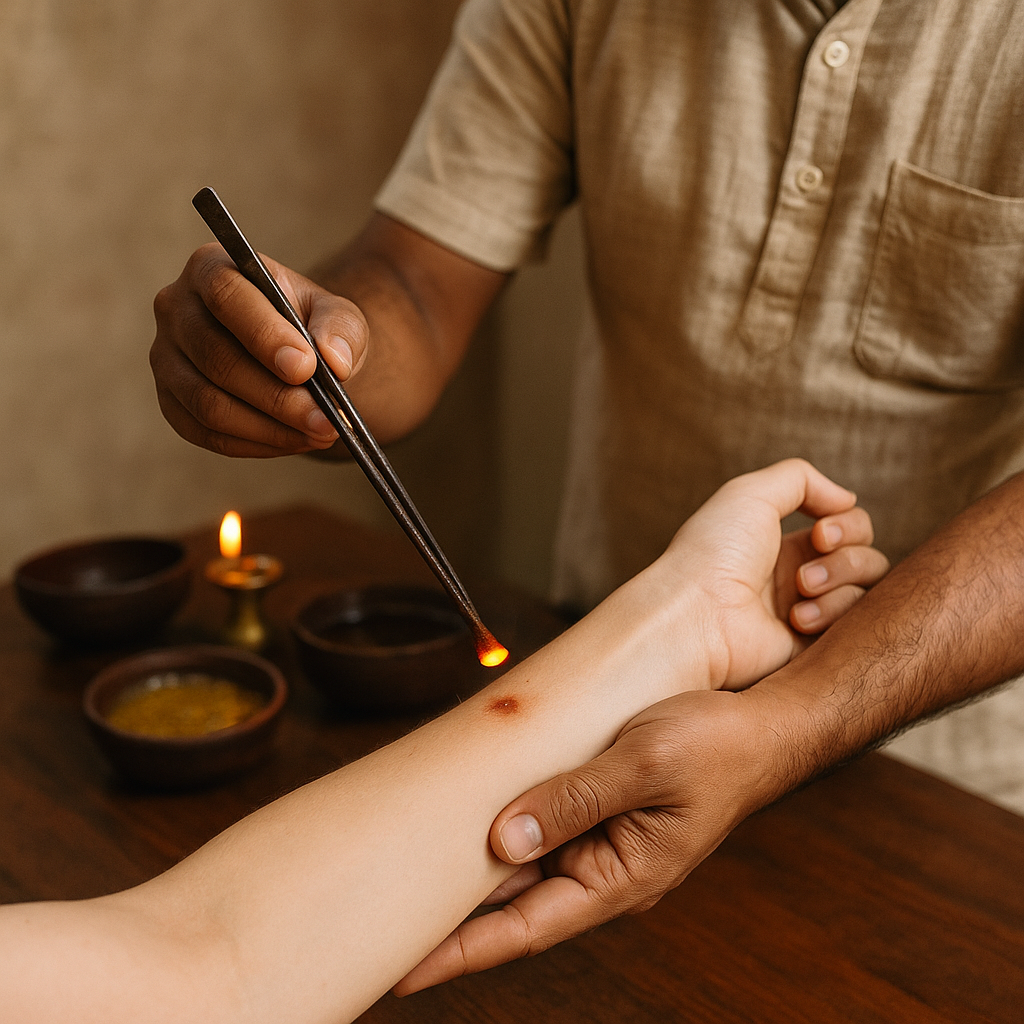
The procedure involves the application of controlled heat to specific points using heated instruments such as Shalaka (metal rods). Depending on the disease condition and tissue involved, different patterns and intensities of cauterization are employed. Ayurveda considers Agnikarma particularly effective because diseases treated with heat are believed to have a lower likelihood of recurrence.1
Mechanisms of thermal analgesia
The pain-relieving effect of Agnikarma can be explained through several physiological mechanisms. Local heat application stimulates thermoreceptors and modulates pain transmission pathways, reducing the perception of pain. Heat may activate the gate-control mechanism of pain modulation, thereby inhibiting nociceptive signals at the spinal level.
Thermal stimulation also increases local blood circulation, improving oxygen and nutrient delivery to affected tissues. Enhanced circulation facilitates the removal of inflammatory mediators and metabolic waste products, contributing to pain reduction and improved tissue function. Studies suggest that heat therapy may decrease muscle spasm and stiffness, further enhancing mobility and patient comfort.
Role in tissue healing
Beyond analgesia, Agnikarma may promote tissue repair through controlled thermal stimulation. Heat-induced vasodilation enhances cellular metabolism and supports regenerative processes. Increased blood flow facilitates fibroblast activity, collagen synthesis, and tissue remodeling. Experimental studies on thermal therapies have demonstrated stimulation of healing responses through activation of growth factors and improved microcirculation.
Ayurvedically, Agnikarma is believed to remove Srotorodha (channel obstruction), restore normal tissue function, and pacify aggravated Vata and Kapha doshas. These effects collectively contribute to pain relief and accelerated recovery.
Clinical applications
Agnikarma has been widely employed in the management of musculoskeletal disorders, including osteoarthritis, cervical and lumbar spondylosis, sciatica, frozen shoulder, plantar fasciitis, and tendinopathies. Clinical studies have reported significant reductions in pain intensity, tenderness, stiffness, and functional disability following treatment. The procedure is minimally invasive, cost-effective, and often performed on an outpatient basis.
Conclusion
Agnikarma represents a distinctive Ayurvedic therapeutic modality that combines the principles of thermal analgesia and tissue healing. Through controlled heat application, it alleviates pain, improves circulation, enhances tissue repair, and restores functional mobility. Growing clinical evidence supports its role as an effective non-pharmacological intervention for chronic musculoskeletal disorders. Further well-designed clinical trials are warranted to elucidate its mechanisms and establish standardized treatment protocols for broader integration into contemporary pain management.
Reference:
- Vats, Himanshi & Shindhe, Pradeep & Kumbar, Vijay & Killedar, Ramesh & Nadaf, Rubeen. (2025). Effect of Agnikarma in the Pain Management of Janu-Sandhigata Vata (Knee-Osteoarthritis) W.S.R to Inflammatory Biomarkers (hs-CRP, TNF-α and IL6)-An Open Labelled Clinical Trial. Asian Journal of Biological and Life Sciences. 14. 139-146. 10.5530/ajbls.20251410. https://www.researchgate.net/publication/390917671
- Samota B, Sharma S, Singh M, Sharma R, Garg P. Role of Agnikarma along with Ayurveda medication in management of trigger thumb - A Case Report. J Ayurveda Integr Med. 2026;17(2):101339. doi:10.1016/j.jaim.2026.101339 https://pmc.ncbi.nlm.nih.gov/articles/PMC12996233/