
Introduction
Honey production and global significance
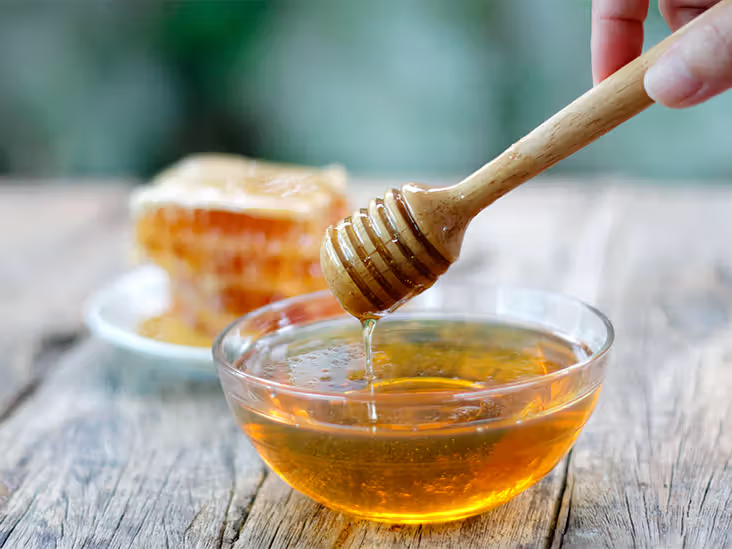
Honey is a natural sweet substance produced by honey bees (Apis mellifera) through the collection, enzymatic transformation, and concentration of floral nectar, plant secretions, or excretions of plant-sucking insects [1]. Globally, honey production is estimated at approximately 1779.6 metric tons, with steady market growth projected in the coming years. Major producers include China (≈28% of global output), followed by Turkey, Iran, the United States, and India. Key exporting countries are China, New Zealand, Argentina, Germany, Ukraine, India, and Spain, whereas major importers include the United States, Germany, Japan, France, the United Kingdom, Italy, and China.
Composition and physicochemical characteristics
Honey is a complex natural matrix with highly variable composition influenced by botanical source, geographical origin, and environmental conditions. It primarily consists of sugars (80–85%), water (15–17%), and small amounts of proteins (0.1–0.4%). In addition, it contains enzymes, organic acids, vitamins, minerals, and bioactive phytochemicals, which collectively contribute to its nutritional value, sensory properties, and functional activities.
Its color ranges from nearly white to dark brown and is largely influenced by phenolic content, mineral composition, and floral origin. Based on botanical source, honey is classified into:
- Monofloral honey: Derived predominantly from a single plant species
- Multifloral honey: Derived from multiple floral sources
Bioactive compounds and functional properties
Honey is widely recognized for its antioxidant, anti-inflammatory, antimicrobial, and antiviral properties,1 which have contributed to its growing relevance in functional food and therapeutic research. These biological activities are primarily attributed to its phenolic constituents, although other components may also contribute synergistically.
Phenolic compounds are plant-derived secondary metabolites synthesized under both normal physiological and stress conditions. They play important ecological roles, including plant defense against pathogens, protection from ultraviolet radiation, and attraction of pollinators. Structurally, they are characterized by one or more aromatic rings with hydroxyl substitutions. Their concentration varies depending on floral origin, agronomic practices, harvesting time, storage conditions, and climatic factors.
Recent studies have reported wide variability in total phenolic content (TPC) among different honey types, ranging from 0.65 ± 0.42 to 84.17 ± 30.40 mg/100 g. The predominant phenolic constituents include flavonoids and phenolic acids, which are considered key contributors to honey’s biological and therapeutic potential.
Effects of honey on cardiovascular risk factors2
|
Honey |
Dose |
Duration |
Subjects |
Physiological Parameter |
Effect |
|
Natural honey |
70 g/d vs. sucrose |
6 w |
Healthy males |
TG |
↓ |
|
TC |
↓ |
||||
|
LDL |
↓ |
||||
|
HDL |
↑ |
||||
|
Natural, unprocessed honey purchased from Ilyas Traders, Charsadda, Khyber Pakhtunkhwa, Pakistan |
Diet + 70 g/d vs. diet |
1 m |
Healthy Pakistani males |
Increase in FBG |
↓ |
|
TG |
↓ |
||||
|
TC |
↓ |
||||
|
LDL |
↓ |
||||
|
HDL |
↑ |
||||
|
Mixture of four types of clover honey obtained from Golden Heritage Foods, Smitty Bee Honey, Millers Honey Company, and Marshall’s Farm Natural Honey |
1.5 g/kg/d honey vs. sucrose |
1 m |
Healthy subjects |
FBI |
= |
|
TC |
↓ |
||||
|
LDL |
↓ |
||||
|
HDL |
↓ |
||||
|
Iranian natural honey |
70 g/d vs. sucrose |
1 m |
Overweight or obese subjects |
TG |
↓ |
|
TC |
↓ |
||||
|
LDL |
↓ |
||||
|
HDL |
↑ |
||||
|
FBG |
↓ |
||||
|
CRP |
↓ |
||||
|
BW |
↓ |
||||
|
BF |
↓ |
||||
|
BMI |
↓ |
||||
|
Wild flowers-forest-thyme honey produced by Attiki |
Diet + 15 g/d vs. diet + marmelade |
6 m |
Obese girls |
BMI |
↓ |
|
TG |
↓ |
||||
|
TC |
↑ |
||||
|
LDL |
↑ |
||||
|
HDL |
↑ |
||||
|
OGT |
↑ |
Effects of honey on glucose tolerance
|
Honey |
Dose |
Test Duration |
Subjects |
Physiological Parameter |
Effect |
|
Basswood (linden) honey |
75 g vs. glucose-fructose |
120 min |
Healthy men |
Increase in BGL |
↓ |
|
AUC for glucose |
↓ |
||||
|
Increase in BIL |
↓ |
||||
|
Increase in C-peptide |
↓ |
||||
|
Natural honey |
75 g vs. dextrose |
180 min |
Healthy subjects |
Increase in BGL |
↓ |
|
Increase in BIL |
↓ |
||||
|
Increase in C-peptide |
↓ |
||||
|
70 g vs. glucose |
Type II diabetic patients |
Increase in BGL |
↓ |
||
|
Sue Bee honey (clover honey) 100% pure |
75 g honey vs. glucose |
120 min |
Type II diabetic patients |
Increase in BGL |
↓ |
Effects of honey on appetite and food intake
|
Honey |
Dose |
Duration |
Subjects |
Physiological Parameter |
Effect |
|
Mixture of four types of clover honey obtained from Golden Heritage Foods, Smitty Bee Honey, Millers Honey Company, and Marshall’s Farm Natural Honey |
1.5 g/kg/d honey vs. sucrose |
1 m |
Healthy subjects |
Increase in energy intake |
↓ |
|
Increase in carbohydrate intake |
↓ |
||||
|
Increase in sugar intake |
↓ |
||||
|
Pure clover honey |
42.7 g vs. 35.5 g of sucrose |
1 d |
Healthy women |
Increase in post-prandial glucose |
↓ |
|
Increase in post-prandial insulin |
↑ |
||||
|
Post-prandial leptin |
↑ |
||||
|
Post-prandial ghrelin |
↓ |
||||
|
Post-prandial peptide YY |
↑ |
||||
|
Hunger rate |
↓ |
||||
|
Satiety rate |
↑ |
||||
|
Thermogenesis |
↑ |
||||
|
Energy intake |
↑ |
||||
|
Carbohydrate intake |
↑ |
||||
|
Sugar intake |
↓ |
||||
|
Iranian natural unprocessed honey collected from Samans kandeh, Neka, Sari City |
1 g/kg/d first 2 w |
8 w |
Type II diabetes |
Energy intake |
↓ |
|
Energy from protein |
↓ |
||||
|
Energy from carbohydrate |
↑ |
||||
|
Energy from fat |
↓ |
||||
|
Sugar intake |
↑ |
Effects of honey on alcohol metabolism
|
Honey |
Dose |
Duration |
Subjects |
Physiological Parameter |
Effect |
|
Freshly harvested Nigerian citrus (Citrus sinensis Osbeck) honey from the delta region of the River Niger |
0.5 mL/kg of ethanol + 1 mL/kg of honey |
1 d |
Healthy subjects |
Blood alcohol clearance rate |
↓ |
|
Intoxication time |
↓ |
||||
|
Intoxication degree |
↓ |
||||
|
Freshly harvested Nigerian citrus (Citrus sinensis Osbeck) honey from the delta region of the River Niger |
0.5 g/kg of ethanol + 1.25 mL/kg of honey |
1 d |
Healthy men |
Intoxication time |
↓ |
|
Intoxication degree |
↓ |
||||
|
TG |
↑ |
||||
|
Blood pressure |
↑ |
Effects of honey on cancer patients
|
Honey |
Dose |
Duration |
Subjects |
Physiological Parameter |
Effect |
|
Natural Baran-Baghro honey from Iran |
1:20 honey:water |
4 w |
Acute myeloid leukemia patients receiving chemotherapy |
Mucositis severity |
↓ |
|
Body weight |
↑ |
||||
|
Pure and filtered thyme honey |
1:5 |
6 m |
Head and neck cancer patients receiving radiotherapy |
Mucositis severity |
↓ |
|
Weight loss |
↓ |
||||
|
Global health |
↑ |
||||
|
Life quality |
↑ |
||||
|
Western Ghats forests honey |
20 mL |
6 w |
Oral carcinoma patients receiving radiotherapy |
Mucositis severity |
↓ |
|
Pure and filtered natural clover honey |
20 mL pure honey |
7 w |
Head and neck cancer patients receiving chemotherapy 48.20 ± 15.63 years |
Mucositis severity |
↓ |
|
Candida colonization |
↓ |
Effects of honey on cough and gastroenteritis in children
|
Honey |
Dose |
Duration |
Subjects |
Physiological Parameter |
Effect |
|
Buckwheat honey |
Children aged 2 to 5 (1/2 teaspoon), 6 to 11 (1 teaspoon), 12 to 18 (2 teaspoons) |
1 d |
Children with upper URTIs |
Cough frequency |
↓ |
|
Combined symptom score |
↓ |
||||
|
Bothersome cough |
↓ |
||||
|
Cough severity |
↓ |
||||
|
Sleep quality |
↑ |
||||
|
Parents’ sleep quality |
↑ |
||||
|
Iranian natural honey from Kafi-Abad, Yazd |
2.5 mL |
1 d |
Children with URTIs |
Cough frequency |
↓ |
|
Cough severity |
|||||
|
Sleep quality |
↑ |
||||
|
Parents’ sleep quality |
↑ |
||||
|
Eucalyptus, citrus or Labiatae honey |
10 g |
1 d |
Children with URTIs |
Cough frequency |
↓ |
|
Combined symptom score |
↓ |
||||
|
Bothersome cough |
↓ a |
||||
|
Cough severity |
↓ |
||||
|
Sleep quality |
↑ |
||||
|
Parents’ sleep quality |
↑ |
||||
|
Nairobi dark honey |
Children aged 1 to 2 (2.5 mL), 2 to 6 (5 mL), 6 to 12 (7.5 mL) |
5 d |
Children with a common cold |
Cough frequency |
↓ |
|
Combined symptom score |
↓ |
||||
|
Bothersome cough |
↓ |
||||
|
Cough severity |
↓ |
||||
|
Cough duration |
↓ |
||||
|
Sleep quality |
↑ |
||||
|
Parents’ sleep quality |
↑ |
||||
|
Two kinds of Iranian honey: Kimia honey and Golha honey |
Children aged 1 to 6 (2.5 mL), 7 to 12 (5 mL), |
2 d |
Children with URTIs |
Cough frequency |
↓ |
|
Combined standard score |
↓ |
||||
|
Bothersome cough |
↓ |
||||
|
Sleep quality |
↑ |
||||
|
Parents’ sleep quality |
↑ |
||||
|
Acacia honey |
3 mL |
2 d |
Children with URTIs |
Cough frequency |
↓ |
|
Combined symptom score |
↓ |
||||
|
Bothersome cough |
↓ |
||||
|
Cough severity |
↓ |
||||
|
Cough duration |
↑ |
||||
|
Sleep quality |
↑ |
||||
|
Pure honey |
50 mL/L of rehydration solution vs. 50 mL/L of glucose |
Duration of gastroenteritis |
Children with gastroenteritis |
Bacterial gastroenteritis recovery time |
↓ |
Effects of honey on wounds
|
Honey |
Dose |
Duration |
Subjects |
Physiological Parameter |
Effect |
|
Multifloral processed honey |
1:1 |
5 d |
Healthy subjects |
Tooth plaque |
↓ |
|
Iranian honey from Chaharmahal and Bakhtiari region |
70:30 |
7 d |
Women with vulvovaginal candidiasis |
Inflammation |
↓ |
|
Discharge |
↓ |
||||
|
Itching |
↓ |
||||
|
Natural raw honey |
Honey-soaked gauze vs. medical solution |
21 d |
Children with pyomyositis abcesses |
Wound healing |
↑ |
|
Duration of hospital stay |
↓ |
Main effects of honey on human health
|
Condition |
Subjects |
Parameter |
Effect |
|
Cardiovascular risk factors |
Healthy subjects |
FBG |
↓ |
|
TG |
↓ |
||
|
TC |
↓ |
||
|
LDL |
↓ |
||
|
HDL |
↑ |
||
|
Glucose tolerance |
Healthy subjects |
Increase in BGL |
↓ |
|
Increase in BIL |
↓ |
||
|
Alcohol metabolism |
Healthy subjects |
Intoxication time |
↓ |
|
Cancer |
Patients with acute myeloid leukaemia |
Mucositis severity |
↓ |
|
Body weight |
↑ |
||
|
URTIs |
Children with URTIs |
Cough frequency and severity |
↓ |
|
Combined symptom score |
↓ |
||
|
Sleep quality |
↑ |
||
|
Parent’s sleep quality |
↑ |
||
|
Wounds |
Children with pyomyositis abscesses |
Wound healing |
↑ |
|
Discharge |
↓ |
Discussion
Overall health effects of honey:
Available evidence indicates that honey derived from various botanical sources (e.g., clover, citrus, thyme, tea plant, buckwheat, eucalyptus, Manuka, and others) may exert beneficial effects on cardiometabolic risk factors, appetite regulation, glucose metabolism, upper respiratory tract infections (URTIs), oral mucositis, wound healing, and related clinical outcomes. However, responses vary according to honey type, dose, and study population.
Effects on glucose metabolism and insulin regulation:
Honey may improve glycaemic control through multiple mechanisms. It has been associated with enhanced insulin secretion and improved insulin sensitivity, potentially mediated by hydrogen peroxide–related signaling and nitric oxide (NO)-dependent pathways. Its fructose content may promote hepatic glucose uptake via glucokinase activation, thereby attenuating postprandial hyperglycaemia.
Additionally, honey contains micronutrients such as zinc and copper that support glucose-insulin homeostasis. Unlike refined fructose, honey does not consistently demonstrate adverse metabolic effects, possibly due to its antioxidant matrix (phenolics and vitamins) that mitigates fructose-induced metabolic stress. Flavonoids and phenolic acids may further reduce glucose absorption by inhibiting intestinal α-amylase activity.
Antioxidant and anti-inflammatory mechanisms:
The biological activity of honey is largely attributed to its phenolic constituents, flavonoids, vitamins, and trace elements. These compounds exert antioxidant effects by scavenging reactive oxygen species (ROS), donating electrons/hydrogen, and chelating metal ions. Honey also enhances endogenous antioxidant defense systems, including superoxide dismutase (SOD), catalase (CAT), glutathione peroxidase (GPx), and related enzymes.
Furthermore, phenolics may support gut microbiota balance and reduce oxidative stress–induced inflammatory signaling, contributing to systemic metabolic benefits.
Effects on lipid profile and cardiovascular health:
Honey consumption has been associated with reductions in total cholesterol, LDL, triglycerides, and oxidized LDL, along with increases in HDL in several studies. These effects may be mediated by antioxidant vitamins (C, β-carotene), trace elements (Zn, Se, Mn, Cu), and phenolic compounds.
Niacin content may contribute to reduced hepatic triglyceride synthesis and improved lipoprotein metabolism. Enhanced lipolysis regulation via insulin-mediated pathways and improved fatty acid oxidation may further support lipid-lowering effects. Phenolic compounds also contribute to cardioprotection through improved endothelial function, reduced platelet aggregation, and enhanced coronary vasodilation.
Pancreatic function and C-peptide modulation:
Increased C-peptide levels observed after honey intake suggest stimulation of endogenous insulin secretion and potential β-cell activity enhancement. This may be linked to honey’s antioxidant, anti-inflammatory, and antimicrobial properties, which could support pancreatic cell protection and functional recovery.
Probiotic-associated effects (via Lactobacillus and Bifidobacterium-related fermentation processes) may also contribute to reduced systemic inflammation and improved gut–pancreas axis regulation, relevant to diabetes pathophysiology.
Body weight and energy metabolism:
Although data remain inconsistent, honey has been associated with modest improvements in body composition in some studies. Possible mechanisms include increased diet-induced thermogenesis, improved antioxidant status, and enhanced metabolic efficiency. These effects may contribute to reduced weight gain compared with refined sugars, though further controlled trials are required.
Oral mucositis and wound healing:
Honey may improve oral mucositis through antimicrobial, anti-inflammatory, and analgesic actions. Its high osmolarity, low pH, and viscous barrier properties inhibit microbial growth and promote wound protection. Additionally, stimulation of salivary flow and mucosal hydration may enhance tissue repair.
In oncology patients, improved mucositis outcomes may secondarily reduce weight loss and improve nutritional intake. Potential immunomodulatory effects, including modulation of cytokines such as TNF-α and IL-1, may also support mucosal healing and neutrophil recovery, although clinical confirmation is still limited.
Respiratory and antitussive effects:
Honey demonstrates beneficial effects in cough and URTI symptoms due to its demulcent, antioxidant, anti-inflammatory, antiviral, and antimicrobial properties. Its sweetness may stimulate salivation and mucus secretion, improving airway lubrication and mucociliary clearance. Additionally, neurophysiological interactions between gustatory and cough reflex pathways may contribute to antitussive effects. Dark honeys, with higher phenolic content, may exhibit stronger efficacy.
Clinical considerations and safety:
Evidence suggests that moderate honey intake may provide cardiometabolic and immunological benefits depending on dose and population. However, clinical heterogeneity exists across studies. Importantly, honey should not be administered to infants under 12 months due to the risk of infant botulism.
Conclusion
Current evidence on honey is limited by a small number of studies, substantial methodological heterogeneity, and wide variation in intervention duration, participant characteristics, honey types, and dosages. These inconsistencies prevent clear dose–response relationships or attribution of specific effects to defined honey varieties.
Despite its high sugar content, available data suggest that honey exerts more beneficial than adverse effects, particularly when used as a substitute for refined sweeteners. The most consistent benefits are observed in cardiovascular risk reduction, improved glucose tolerance, supportive effects in oral mucositis in cancer patients, relief of URTI symptoms in children, and enhanced wound healing.
Overall, honey may be considered a potentially safe adjunct functional food for individuals older than one year when used in moderation. However, given its sugar content and variability in composition, it should not be consumed indiscriminately. Further well-designed, standardized clinical studies are required to establish clear therapeutic guidelines and dose recommendations.
References:
- Ogwu MC, Izah SC. Honey as a Natural Antimicrobial. Antibiotics (Basel). 2025;14(3):255. Published 2025 Mar 1. doi:10.3390/antibiotics14030255. https://pmc.ncbi.nlm.nih.gov/articles/PMC11939154/
- Palma-Morales M, Huertas JR, Rodríguez-Pérez C. A Comprehensive Review of the Effect of Honey on Human Health. Nutrients. 2023;15(13):3056. Published 2023 Jul 6. doi:10.3390/nu15133056. https://pmc.ncbi.nlm.nih.gov/articles/PMC10346535/