
Introduction
Ayurveda, the traditional Indian medical system, represents a well-established therapeutic tradition grounded in philosophical, experiential, and experimental foundations. With increasing demand for safer therapeutic options, emphasis has expanded toward ensuring the quality, safety, efficacy, and standardization of Ayurvedic formulations. Within this framework, classical preparations such as Sitopaladi Churna remain widely relevant in respiratory care. 1
Composition and formulation profile
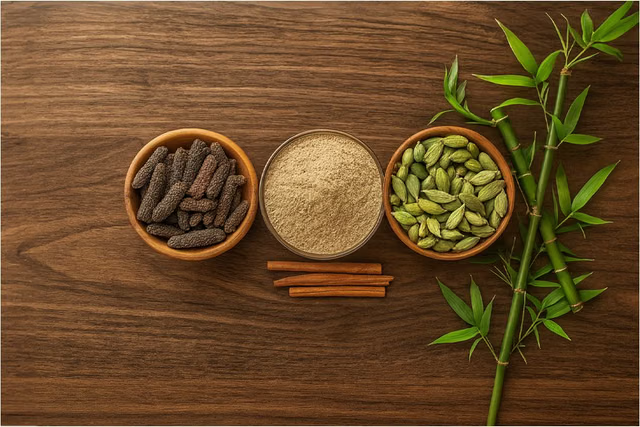
Sitopaladi Churna is a classical Ayurvedic formulation composed of Cinnamomum zeylanicum, Elettaria cardamomum, Piper longum, Bambusa bambos, and cane sugar. It is traditionally described as having antihistaminic properties and is widely utilized in conditions involving upper respiratory congestion and bronchial disorders. 2
Each component contributes to the formulation’s overall therapeutic profile through synergistic actions that support respiratory clearance and symptomatic relief in airway-related conditions.
Therapeutic properties and systemic actions
The formulation is associated with multiple beneficial effects on systemic and respiratory health. Sitopala (as a key component) is described as beneficial for eye health, reduction of fatigue, mild laxative activity, improvement of reproductive strength, and regulation of acid balance. It is also associated with relief from nausea and vomiting, indicating broader systemic effects beyond respiratory support.
Key functional actions of Sitopaladi Churna include:
- Support in managing fever associated with influenza and respiratory congestion
- Use in upper and lower respiratory tract conditions such as cold, cough, bronchitis, pneumonia, and tuberculosis-related symptoms
- Expectorant activity facilitating loosening and expulsion of phlegm
- Mild cough-suppressant properties supporting airway comfort
Its antioxidant and anti-inflammatory properties contribute to modulation of respiratory infections and inflammatory airway responses.
Role in cough management and respiratory conditions
Cough in Ayurvedic classification is categorized into five types:
- Vataja Kasa (dry cough with minimal mucus)
- Pittaja Kasa (moderate sticky mucus cough)
- Kaphaja Kasa (productive cough with heavy mucus and congestion)
- Kshataja Kasa (cough associated with chest injury)
- Kshayaja Kasa (chronic disease-related cough, including tuberculosis)
Sitopaladi Churna is considered a versatile formulation applicable across all types of cough due to its balancing and expectorant properties. Depending on clinical presentation, it is administered with different anupanas such as honey, water, or ghee, or combined with other herbal formulations to enhance therapeutic outcomes.
Clinical relevance and integrative use
The formulation’s broad-spectrum activity supports its application in respiratory congestion, inflammatory airway conditions, and infectious respiratory diseases. Its antihistaminic, antioxidant, and anti-inflammatory actions contribute to symptomatic relief and improved airway function. The adaptability of Sitopaladi Churna in various clinical contexts enhances its relevance in individualized Ayurvedic respiratory care.
Conclusion
Sitopaladi Churna remains a significant classical Ayurvedic formulation with wide applicability in respiratory disorders. Its multi-component composition supports expectorant, anti-inflammatory, and symptomatic relief actions across diverse types of cough and respiratory congestion. Its adaptability across clinical presentations reinforces its value as a versatile therapeutic option in Ayurvedic respiratory management.3
References:
1. Humber JM. The role of complementary and alternative medicine: accommodating pluralism. JAMA. 2002;288(13):1655‑1656. https://www.scirp.org/reference/referencespapers?referenceid=2556368
2. Pandey R, Saraf S, Saraf S. Development of UV spectrophotometric fingerprint method for evaluation of Sitopaladi churna. Biosci Biotechnol Res Asia. 2009;6(1). https://www.biotech-asia.org/vol6no1/development-of-uv-spectrophotometric-fingerprint-method-for-evaluation-of-sitopaladi-churna/
3. Negi J, Prashar B, Gupta J. Sitopaladi churna as antitussive: a review. Int J Health Clin Res. 2019;2(6):1‑5. https://ijhcr.com/index.php/ijhcr/article/view/43