
Introduction
Male reproductive health depends on endocrine balance, testicular function, and cellular energy metabolism. Androgen deficiency is commonly associated with low testosterone levels, fatigue, reduced libido, and impaired spermatogenesis. Male infertility often presents as oligospermia, asthenozoospermia, or teratozoospermia, influenced by oxidative stress and mitochondrial dysfunction.
In Ayurveda, reproductive impairment is described under Shukra Dhatu Kshaya, often linked with aggravated Vata and systemic depletion. Classical texts highlight Rasayana therapies for restoring vitality and reproductive strength. Among these, Shilajit is regarded as one of the most potent natural rejuvenators.
Ayurvedic perspective of Shilajit
Shilajit is described as:
- Rasa Rasayana (tissue rejuvenator)
- Yogavahi (enhances bioavailability of co-administered substances)
- Tridoshahara (balances all three doshas)
- Shukrala (enhances semen and reproductive strength)
- Balya (strength-promoting)
- Vajikarana (aphrodisiac and fertility enhancer)
Its classical use includes management of Klaibya, fatigue, and reproductive debility.
Phytochemical composition
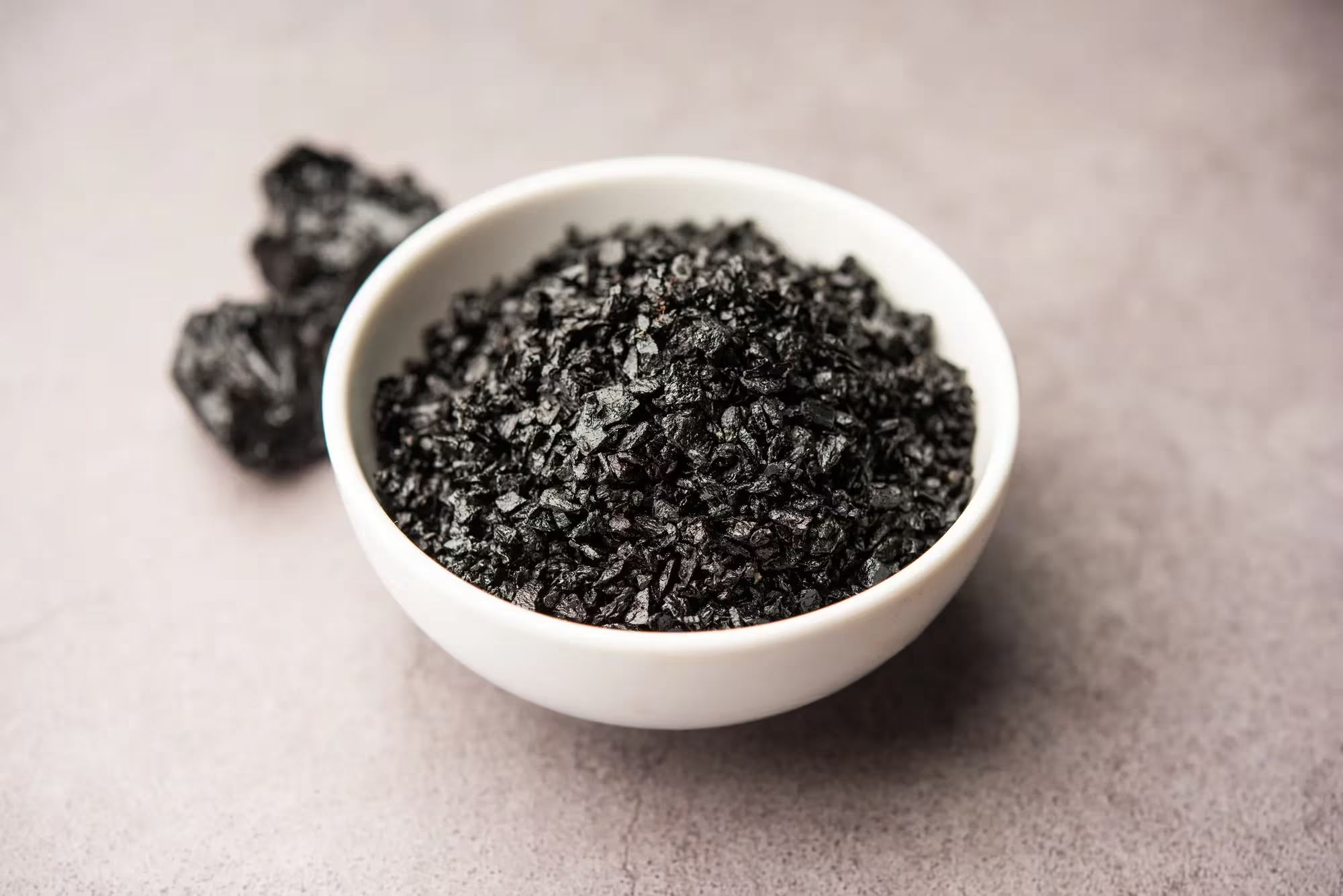
Shilajit is a complex natural exudate rich in:
- Fulvic acid
- Humic acid
- Dibenzo-α-pyrones
- Trace minerals (iron, zinc, selenium)
- Amino acids and organic compounds
These constituents contribute to antioxidant, anti-inflammatory, and mitochondrial-enhancing effects.
Mechanisms in androgen deficiency
Testosterone enhancement:
Clinical studies show that purified Shilajit supplementation significantly increases total and free testosterone levels in healthy and infertile men.1 This supports improved androgenic function and libido.
Improvement in spermatogenesis:
Shilajit enhances sperm count, motility, and overall semen quality by supporting Sertoli and Leydig cell function. This contributes to improved fertility outcomes in oligospermic individuals.
Mitochondrial energy optimization:
Fulvic acid and dibenzo-α-pyrones improve mitochondrial electron transport and ATP production, enhancing sperm motility and testicular energy metabolism.
Antioxidant and DNA protection:
Shilajit reduces reactive oxygen species and lipid peroxidation, protecting sperm DNA integrity and preventing oxidative infertility.
Stress and endocrine modulation:
As an adaptogenic Rasayana, Shilajit helps regulate the hypothalamic–pituitary–gonadal axis, reducing stress-mediated suppression of testosterone synthesis.
Role in male fertility disorders
Oligospermia and asthenozoospermia:
Shilajit improves sperm concentration and motility through enhanced mitochondrial function and hormonal regulation.
Erectile and libido dysfunction:
Improved testosterone levels and neuroendocrine balance contribute to enhanced sexual desire and performance.
Idiopathic male infertility:
Its multi-target antioxidant and endocrine actions make it beneficial in unexplained infertility cases.
Safety considerations
- Only purified Shilajit should be used
- Raw or unprocessed forms may contain heavy metal contaminants
- Mild gastrointestinal discomfort may occur in some individuals
- Caution is advised in patients with iron overload conditions
Conclusion
Shilajit is a powerful Rasayana agent with strong relevance in androgen deficiency and male fertility disorders. Its ability to enhance testosterone production, improve sperm parameters, reduce oxidative stress, and optimize mitochondrial function aligns with its classical Ayurvedic description as a Shukrala and Vajikarana substance.2 Contemporary clinical evidence supports its integration into male reproductive health management as a natural bioenhancer and endocrine modulator.
Reference:
- Pandit S, Biswas S, Jana U, De RK, Mukhopadhyay SC, Biswas TK. Clinical evaluation of purified Shilajit on testosterone levels in healthy volunteers. Andrologia. 2016 Jun;48(5):570-5. doi: 10.1111/and.12482. Epub 2015 Sep 22. PMID: 26395129. https://pubmed.ncbi.nlm.nih.gov/26395129/
- Carrasco-Gallardo C, Guzmán L, Maccioni RB. Shilajit: a natural phytocomplex with potential procognitive activity. Int J Alzheimers Dis. 2012;2012:674142. doi:10.1155/2012/674142 https://pmc.ncbi.nlm.nih.gov/articles/PMC3296184/